


Zanzibar tours
Nungwi and Kendwa, the eastern lagoons, Stone Town, the islands and a mainland safari. Choose your shore by tide and season, a hotel and trips, and save your wishes for a tour proposal.
The DAMAX guide to Zanzibar
How to choose a shore, hotel and safari in Zanzibar
Zanzibar is an island in the Indian Ocean off the coast of Tanzania, and its shores differ: in the north you can swim almost any time and watch the sun set over the sea, while on the east and south-east coasts low tide mostly takes the water far out. Stone Town is a UNESCO old town, and small planes fly from Zanzibar to the safari parks. So choose the format and season first, then the shore, hotel and trips.
Read at your own pace. Adding wishes is optional.
Progress shows your reading position. Wishes are saved separately.
Chapter 1 of 6Your holiday style
A Zanzibar holiday: beach, lagoon, couple, family or safari
Start with the format: beaches and sunsets in the north, a tidal lagoon in the east, a honeymoon, a holiday with children, snorkelling and diving, or a combined tour with a mainland safari. You will choose the shore and hotel next.
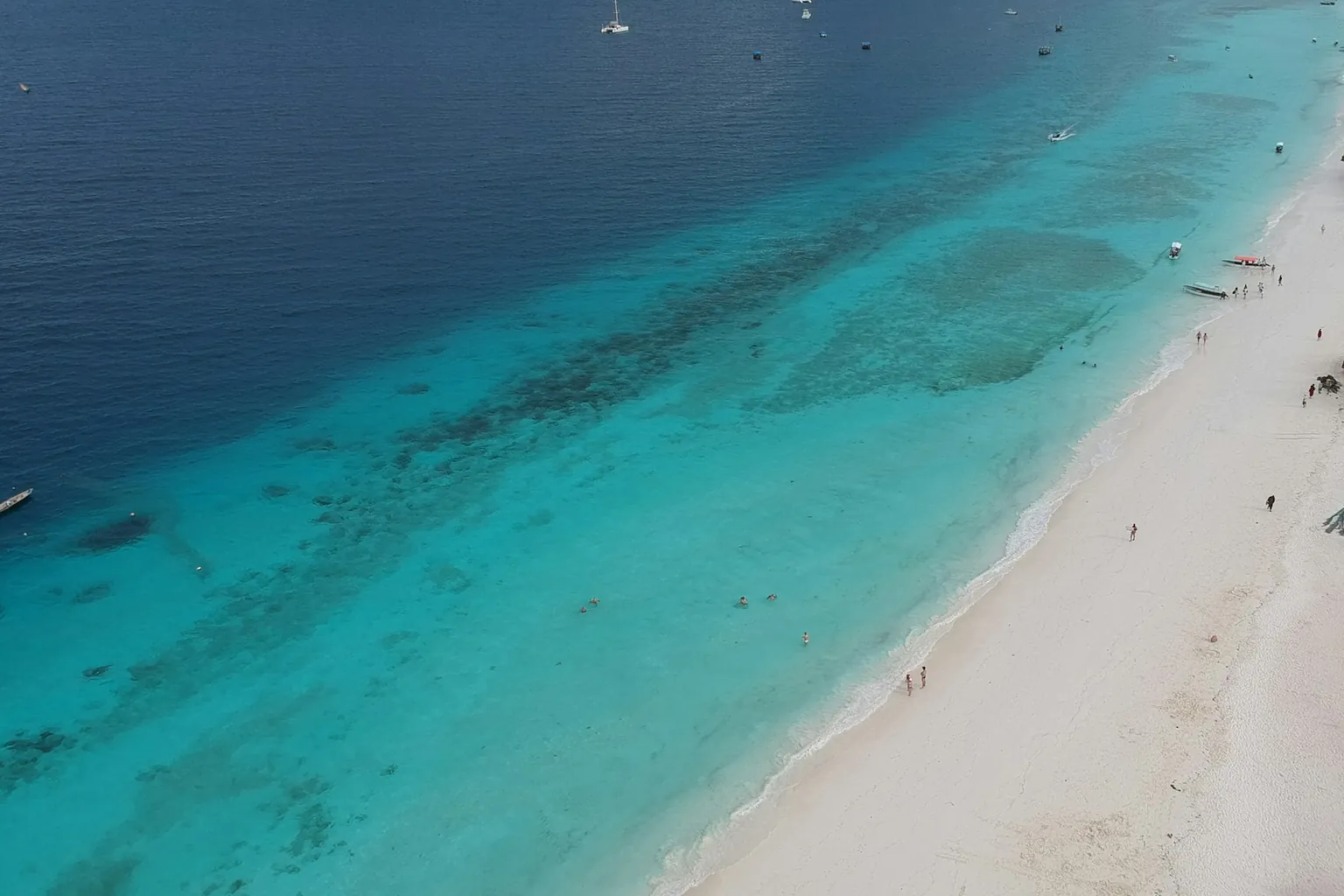
Northern beaches and sunsets
Nungwi and Kendwa in the north: you can swim almost any time and the sun sets straight into the sea. Shore first, then the hotel.
Tidal lagoon
On the east and south-east coasts low tide mostly takes the water far out, so swim closer to high tide or in the pool.
A holiday for two
Honeymoon or quiet for two: villas with private pools, a Stone Town rooftop dinner, a private island. The quiet depends on the shore.
A holiday with children
Children do well at a hotel with a pool and kids club; at the beach mind tide and depth; check safari minimum ages.
Snorkelling and diving
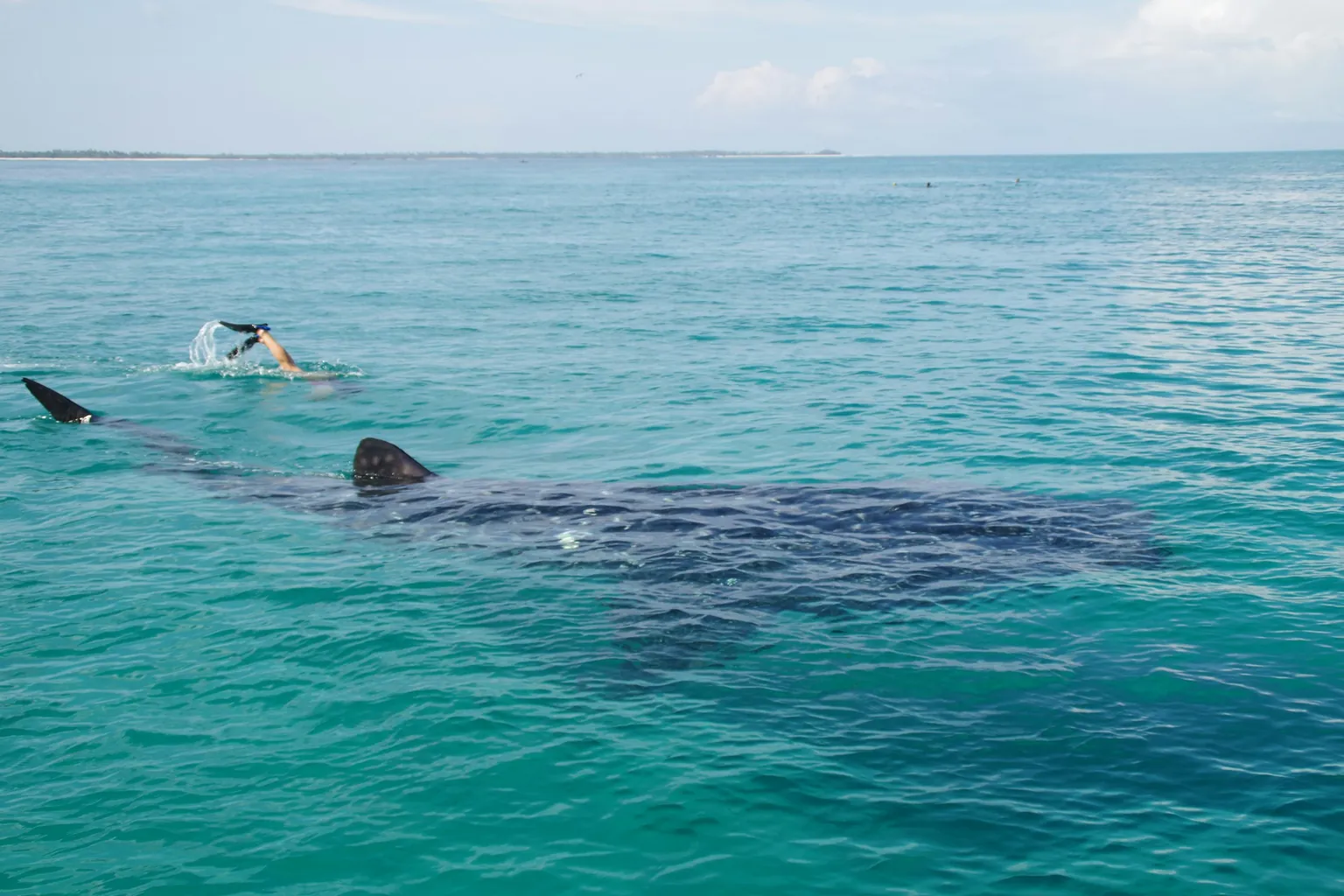
The reef around Mnemba Island, dolphins off Kizimkazi, dive walls off Pemba and whale sharks off Mafia in season.
Combined tour: safari and beach
Beach plus safari: small planes fly to the Serengeti and Nyerere (a short safari, usually overnight); Ngorongoro Crater is reached by road from Arusha.
Chapter 2 of 6Where to stay
Where to stay: the north, the east, Stone Town, islands or safari
Choose the shore first: it decides whether you swim almost any time or plan the sea around high tide. Open a card to compare the villages: they differ in tides, the way into the water, sunsets and the drive from the airport. Further down are Mnemba, Pemba and Mafia islands and the mainland safari.
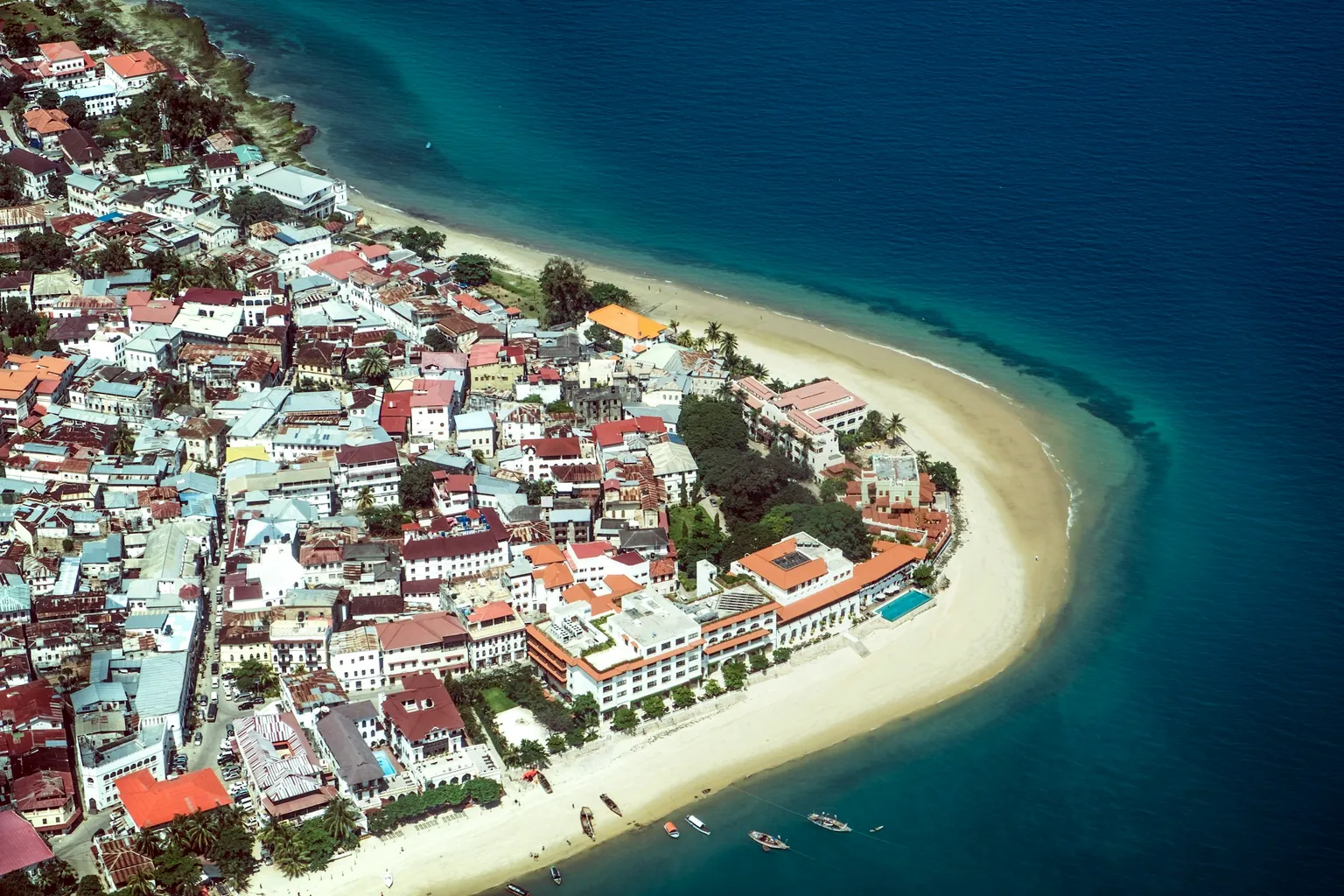
Below are Zanzibar’s shores, islands and safari parks, grouped by shore. In the tour search you choose Zanzibar under the country “Tanzania”, with the villages as separate resorts; saving a wish does not change the search settings.
The villages, islands and parks inside a card show neighbouring options to compare, not administrative boundaries.
The north: Nungwi and Kendwa
The tide is less noticeable than in the east: swim almost any time, sunsets over the sea, but the water deepens faster, so watch children.
Nungwi
A white beach on the northern tip: the sea stays close at low tide, so swimming works almost any time; beyond the hotels, a lively village.
Reefs off the shore are good for diving; local companies run sunset cruises and kitesurfing.
Kendwa
A north-west shore of white sand and coral rocks: no strong tidal swings, swimming all day long and snorkelling straight off the beach.
A full-moon party is held on the beach every month and can run late into the night.
The east: from Matemwe to Chwaka
A quiet coast running to the mangroves of Chwaka Bay: at low tide the water usually draws back hundreds of metres, so swims follow high tide.
Matemwe
A quiet fishing village facing Mnemba Island: in the lagoon, the tide sets the pace of the day.
The exception is Muyuni Beach: swimming there works almost any time, rare on the east coast.
Kiwengwa
Kilometres of white beach behind a long reef: at low tide you walk the sandbanks towards it, past starfish, coral and seaweed farms.
Some hotels sit atop a coral cliff with steps or a path down; swim at high tide.
Neighbouring villages and parks
Pwani Mchangani
A village on the Kiwengwa road on the north-east coast: a white sandy beach under mature coconut palms.
Days here follow the tide, so plan lagoon swims around it.
Pongwe
A secluded cove between coral outcrops: at high tide the sea reaches the hotels, at low tide flats appear and you can walk round headlands to nearby coves.
Snorkel by swimming across the lagoon close to high tide, wearing reef shoes.
Uroa
A long white beach on the east coast: resorts here advise swimming and snorkelling at high tide and shore walks at low tide.
On a low-tide walk you may see locals gathering seaweed.
Neighbouring villages and parks
Marumbi
A small east-coast town on white sand; from the resorts a long jetty runs far out to sea, with a bar and steps into the water.
From the steps at the end of the jetty you can swim even at low tide.
Chwaka
A village on its namesake bay, next to a UNESCO biosphere reserve of mangroves, tropical forest and the island’s only national park.
The same reserve holds Jozani Forest, home to the endemic red colobus.
South-east: Michamvi, Paje and Jambiani
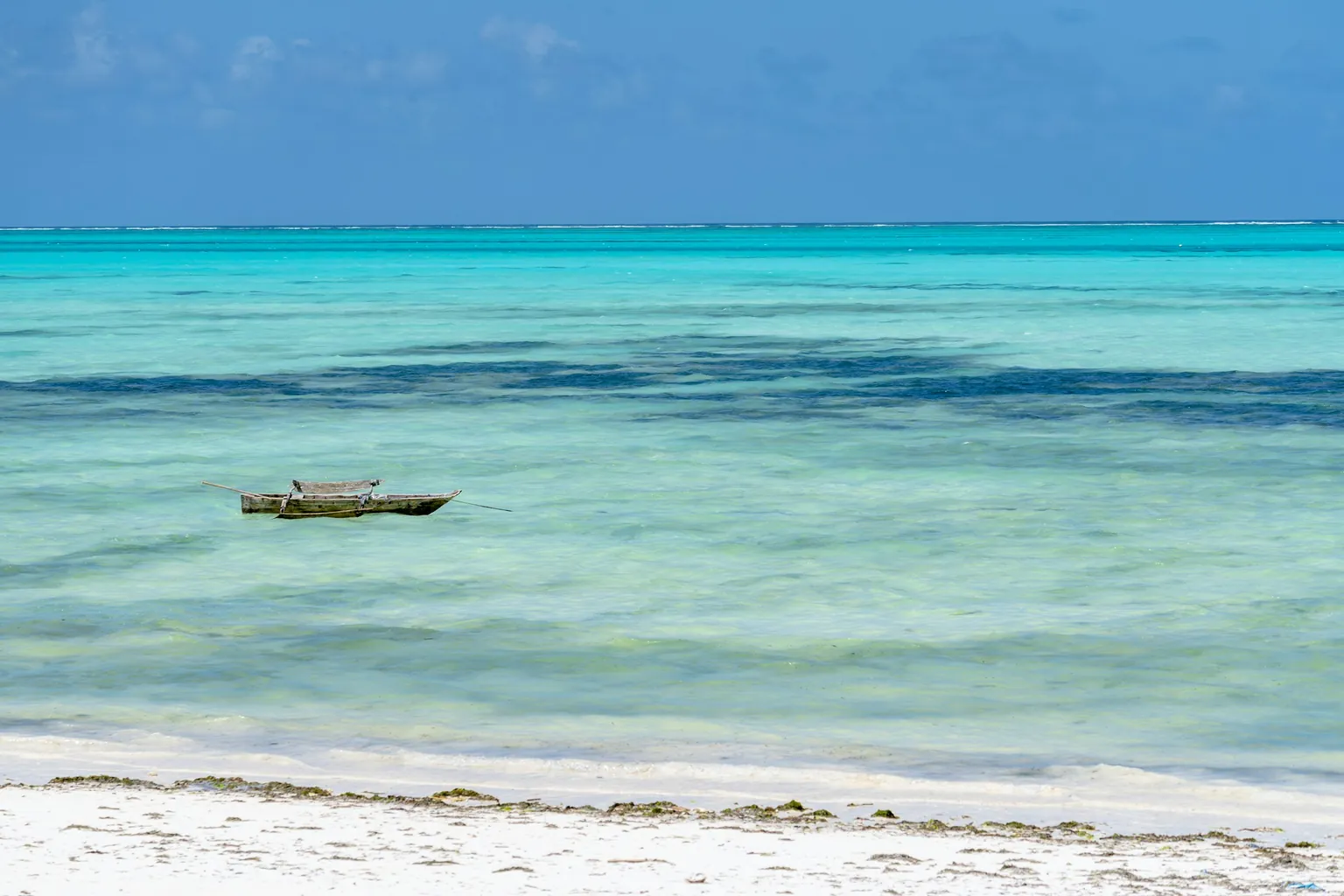
The shore barely slopes: at low tide the water retreats far towards the reef, so people swim at high tide or in the hotel pool.
Michamvi
A south-eastern peninsula: its west shore, Michamvi Kae, faces Chwaka Bay and the sunsets; its east shore, Michamvi Pingwe, faces the ocean.
To swim most of the day, choose the west shore: the tides there are gentler.
Neighbouring villages and parks
Pingwe
The east side of the Michamvi peninsula: The Rock restaurant stands on a rock in the sea here, and at low tide the water retreats hundreds of metres.
Starfish and sea urchins dot the sandy flats; swimming is best at high tide.
Dongwe
A wide strip of white sand under palms on the south-east coast; at low tide you can walk out to the shallow reefs.
For snorkelling and diving, the reefs further offshore are easy to reach.
Bwejuu
A fishing village with a long, palm-lined white beach, quieter than Paje; at low tide a wide coral lagoon with seaweed farms appears.
Bring water shoes for low-tide walks in the lagoon: there are sea urchins and corals.
Paje
A wide lagoon: low tide bares the seabed right out to the reef, leaving warm shallow pools, and high tide brings back a turquoise sea for swimming.
Flat water inside the reef and the kusi and kaskazi monsoons have made Paje a kitesurfing hub.
Jambiani
An old fishing village stretching several kilometres: at low tide the ocean pulls far back, revealing sand and seaweed farms tended by women; swim at high tide.
Kitesurfers get a shallow lagoon and steady wind; the village itself is calmer than Paje.
Makunduchi
The island’s south-east tip: an old fishing village and a newer part, wide white-sand beaches with fewer people; at low tide the sea retreats very far.
The village celebrates Mwaka Kogwa, the Shirazi New Year; the dates shift every year.
Stone Town and the west coast
The west coast: the sun sets straight into the ocean here, and ferries from the mainland dock in the heart of old Stone Town.
Stone Town and Zanzibar City
Stone Town, the old part of Zanzibar City and a UNESCO site, is a Swahili coastal trading town; every evening Forodhani Gardens turn into a food market.
Stay one or two nights at the start or end; spend the rest on the beaches.
Bububu
A quiet west-coast shore by a fishing village, with sunsets over the ocean and the ruins of a sultan’s palace.
Stone Town is within easy reach: a quiet shore and old-town walks in one stay.
Mangapwani
The north-west coast, with cliffs above the ocean and sunsets; the island’s only golf course is here.
The Mangapwani caves are close by, and Stone Town is not far.
The south: Kizimkazi, Fumba and Menai Bay
The south-west by Menai Bay, Zanzibar’s largest marine conservation area: dolphins are seen here, and dhows set sail from Fumba.
Kizimkazi
A quiet south-west coast with a long white-sand beach; boats leave Kizimkazi village to look for dolphins.
Low tide reveals sea creatures on the flats; high tide is best for swimming.
Fumba
A peninsula inside the Menai Bay Conservation Area: secluded beaches, with islets, sandbanks and the mangrove lagoon of Kwale Island out in the bay.
Dhows set off from here into Menai Bay, to sandbanks and snorkelling reefs.
Islands: Mnemba, Pemba and Mafia
Mnemba is a tiny one-lodge island with a reef around it. Pemba and Mafia are separate islands with dive reefs, reached by small plane.
Mnemba
A 1.5 km islet off Zanzibar’s north-east tip: only guests of the 12-banda &Beyond lodge stay here, and green turtles nest on its beaches.
Lodge guests snorkel straight off the beach; everyone else reaches the reef by boat.
Pemba
The archipelago’s second-largest island, the “Green Island”: hills, clove plantations and the coral reefs of the Pemba Channel, rich in marine life.
Fly in by small plane to the airport near Chake Chake, or take the Azam Marine ferry.
Mafia
The island’s marine park, protected since 1995, covers some 822 km² of sea and coast, with coral gardens for diving and snorkelling.
In season, whale sharks stay near Kilindoni Harbour; the island is quiet, with few hotels.
The mainland: safaris and Dar es Salaam
Northern safaris start in Arusha: Tarangire, Manyara, Ngorongoro, Serengeti. Southern Nyerere is a short flight from Zanzibar; Dar es Salaam is for connections.
Arusha
A city below Mount Meru and the gateway to northern safaris: international flights use Kilimanjaro airport (JRO), small planes fly to the parks from Arusha airport.
Arusha National Park is close by: guided walking safaris and canoeing.
Neighbouring villages and parks
Tarangire
A 2,850 km² park along the Tarangire River with Tanzania’s largest elephant herds and baobabs; in the dry season animals gather at the river.
Drive from Arusha or fly by small plane to Kuro airstrip inside the park.
Lake Manyara
A 648.7 km² park below the Great Rift Valley escarpment: groundwater forest, a soda lake with flamingos and tree-climbing lions.
It pairs with Ngorongoro and the Serengeti; day visits and overnight stays are both popular.
Ngorongoro
The world’s largest intact volcanic caldera: about 20 km across and 610 m deep, home to over 25,000 animals, the Big Five among them.
The rim is cooler than the crater floor and nights are cold: pack a sweater or jacket.
Serengeti
A national park since 1951 and a UNESCO site: each year over 1.5 million wildebeest, zebras and gazelles follow the rains across the plains - the Great Migration.
There are over 20 airstrips here: fly to the one nearest your camp or lodge.
Nyerere
Once the northern part of the Selous reserve: the Rufiji River with channels and lakes, elephants, hippos, crocodiles, wild dogs and few vehicles.
A short safari, usually overnight: fly in by small plane, then game drives and boat safaris.
Dar es Salaam
Tanzania’s largest city and commercial port, with Julius Nyerere International Airport; the Azam Marine ferry leaves daily for Zanzibar.
Take your passport for the ferry and buy tickets at Azam Marine offices, not on the street.
Those words are not in this guide yet. Try a place name or clear the search to see every option.
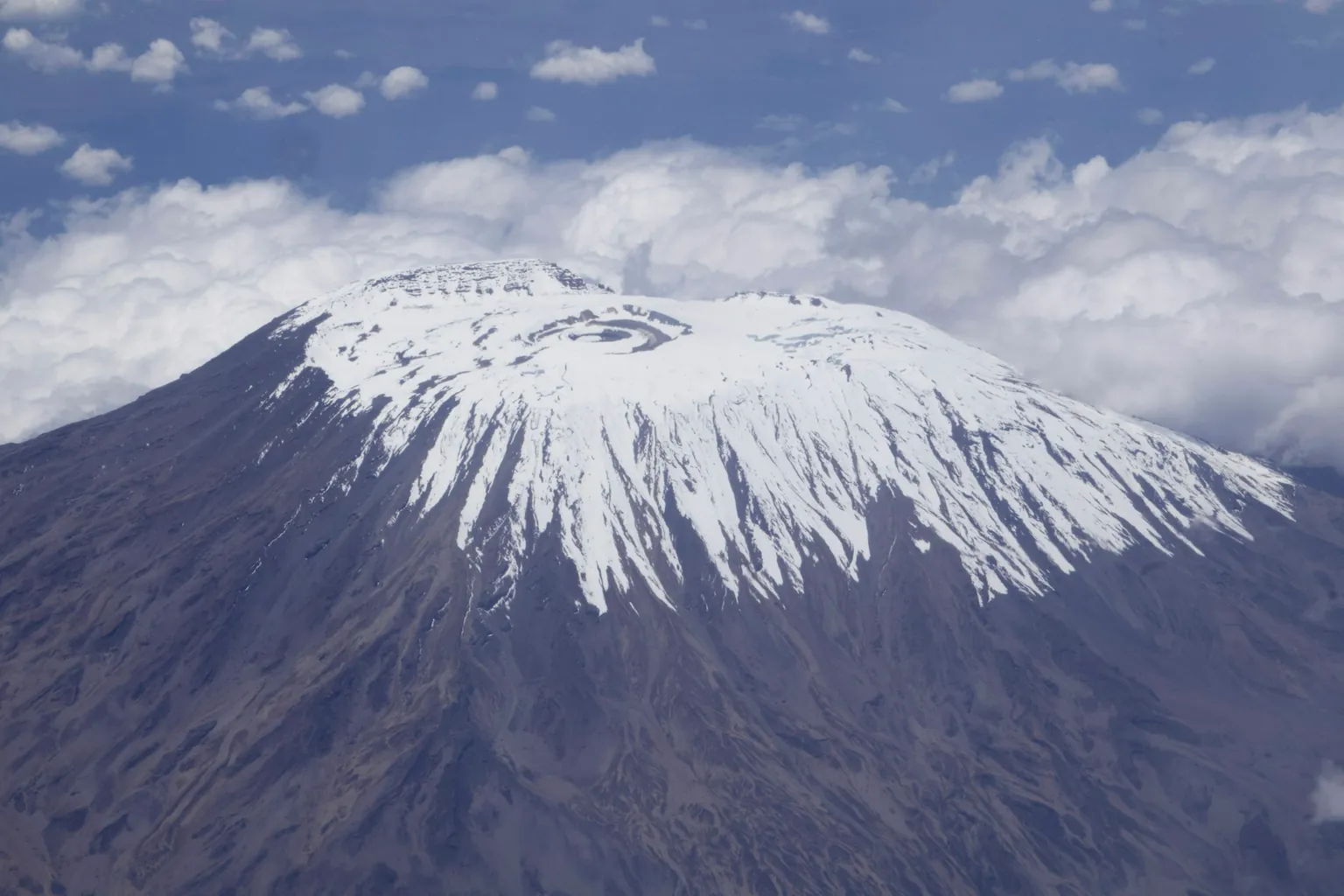
The airport and the road to your base
International flights land at Zanzibar airport (ZNZ) near Stone Town. What comes next depends on your base: the island’s coasts by car, Mnemba by car and boat, Pemba, Mafia and the safari parks by small plane; northern safaris can also start from Kilimanjaro airport (JRO).
From the airport to your base
Each diagram shows a typical route to your base. Times and distances are a guide from the official page of a hotel, carrier or park: boats depend on the weather, and small planes have strict luggage limits.
Nungwi and Kendwa
- Zanzibar airport (ZNZ)
- By car
- Kendwa, Nungwi
Kendwa, in the north-west, is about 90 minutes by car from the airport; Nungwi is another 3 km on.
Kiwengwa and Matemwe
- Zanzibar airport (ZNZ)
- By car
- Kiwengwa, Matemwe
Kiwengwa is 45-60 minutes by car from the airport; Muyuni Beach in Matemwe is about an hour, 56 km.
Paje, Jambiani and Michamvi
- Zanzibar airport (ZNZ)
- By car
- Paje, Jambiani, Michamvi
Paje is about an hour by car from the airport.
Stone Town
- Zanzibar airport (ZNZ)
- By car
- Stone Town
The airport is 8 km from Stone Town, 15-20 minutes by car; passenger ferries dock at Malindi Port in the town itself.
Mnemba Island
- Zanzibar airport (ZNZ)
- By car to the shore
- By open boat
- Mnemba
The lodge collects guests at the airport or in Stone Town: about 1.5 hours by car, then 10-15 minutes by open boat; no transfers after dark.
Safari by small plane
- Zanzibar airport (ZNZ)
- Small plane
- Nyerere or Serengeti
Auric Air flies daily between Zanzibar and Nyerere in about 45 minutes, and from the Serengeti to Zanzibar in about 1 hour 45 minutes; flights to the Serengeti often stop, including in Arusha.
Ngorongoro by road
- Kilimanjaro airport (JRO)
- By car via Arusha
- Ngorongoro
From Kilimanjaro airport (JRO) to Ngorongoro is about 227 km by road via Arusha, 74 km from Manyara airstrip; the main Loduare gate is 14 km from Karatu.
Pemba and Mafia
- Zanzibar airport (ZNZ)
- Small plane
- Pemba or Mafia
Small planes fly from Zanzibar to Pemba several times a day; Mafia is reached from Zanzibar or Dar es Salaam, about 30 minutes from Dar.
Chapter 3 of 6Hotels
Hotels on the shore, on the islands and on safari
Stone Town hotels, luxury resorts with villas and pools in Zanzibar’s north, east and south, private islands, safari lodges and tented camps. Each card says who the hotel suits and what to know before booking. It is a selection to compare, not a ranking or a confirmation of available rooms.
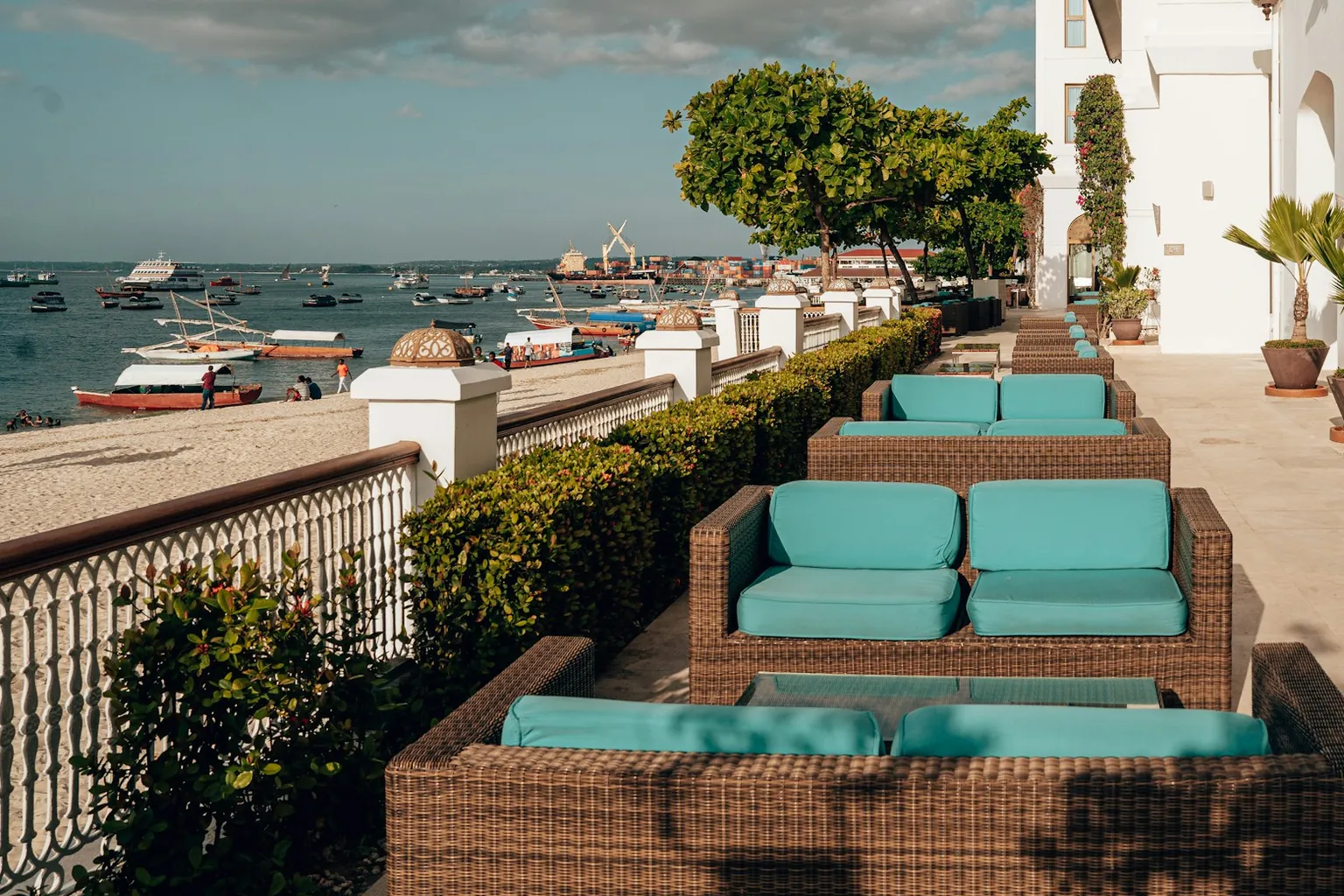
Stone Town: historic houses by the sea
Park Hyatt and Serena sit on the waterfront with pools and sea views; Emerson Spice is a small boutique in an old Swahili mansion.
Park Hyatt Zanzibar
Park Hyatt on the Stone Town waterfront: the historic Mambo Msiige mansion plus a new wing, 67 rooms including 11 suites; seafront rooms overlook the dhow harbour.
Forodhani Gardens and the Old Fort are a short walk away; there is an oceanfront infinity pool.
Zanzibar Serena Hotel
Serena occupies two restored 18th- and 19th-century seafront buildings in Stone Town: 51 Swahili-style rooms and suites, a rooftop restaurant and a pool.
Families get adjoining rooms, a children’s menu and babysitting with advance notice.
Emerson Spice
A boutique hotel in Stone Town, in the mansion of Zanzibar’s last Swahili ruler: 12 individually decorated rooms, all air-conditioned.
Windows face neighbouring houses, so you hear the town; the Aida duplex suits families with children.
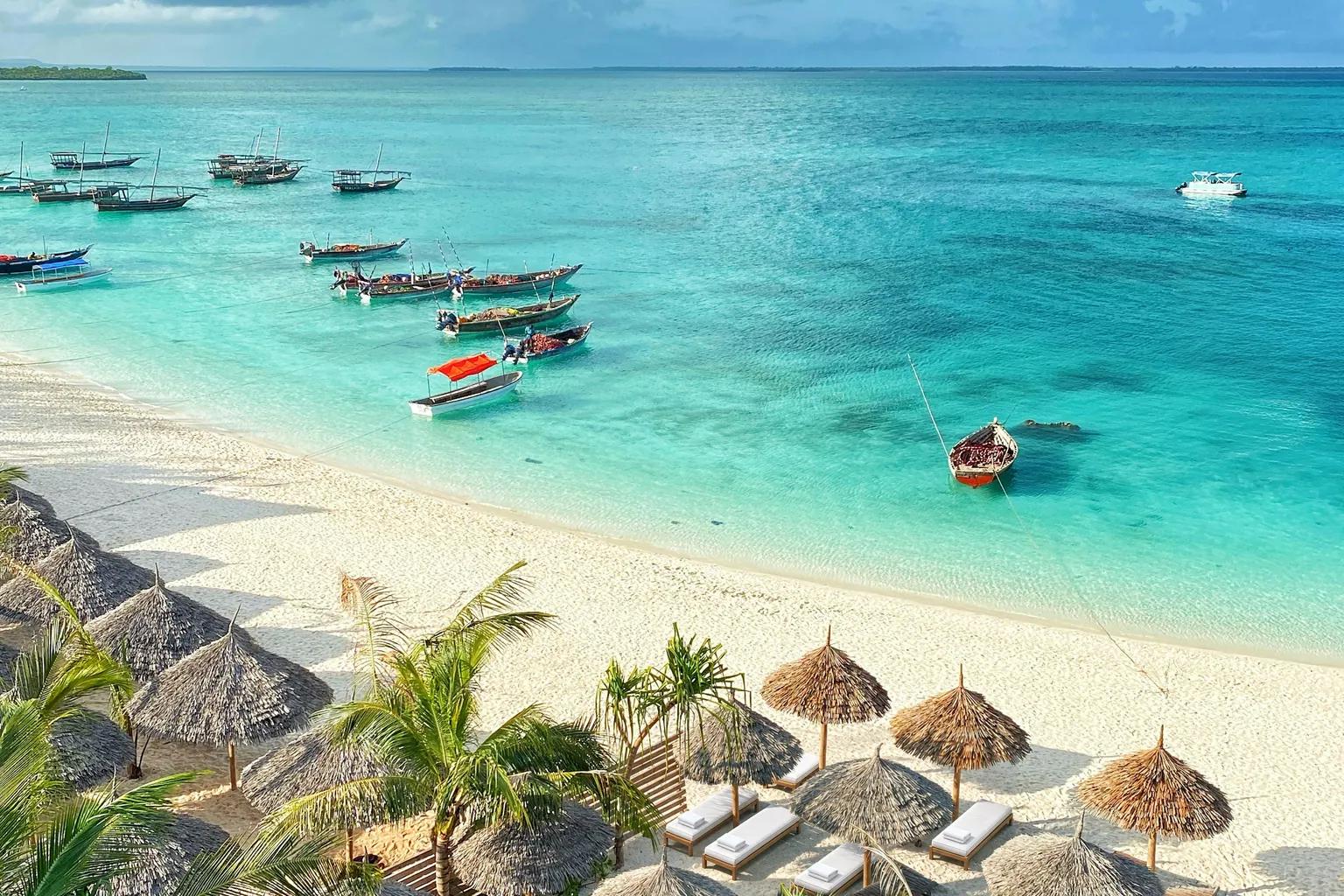
The north: Nungwi and Kendwa
Nungwi has RIU resorts, including a new adults-only one, and Essque Zalu; Kendwa has a boutique pool-villa hotel and beach resorts.
Riu Palace Swahili
A 5-star adults-only resort on Nungwi beach: 24-hour all-inclusive, 7 restaurants, 8 bars, three infinity pools and a spa.
Stairs lead down to the beach; Elite Club guests get their own lounge, restaurant and beach area.
Riu Palace Zanzibar
A RIU Palace resort on Nungwi beach: 24-hour all-inclusive, ocean-view suites, swim-up rooms and villas with private pools.
Three RIU hotels share about 600 m of beach; the resort has a spa, gym and medical service.
Essque Zalu Zanzibar
A 5-star resort in Nungwi: 40 suites and 8 three- to four-bedroom villas with ocean or garden views, a lagoon-style pool, two restaurants and three bars.
The villas suit big families; from the jetty you see both sunrise and sunset.
Kilindi Zanzibar
A boutique hotel in a tropical garden along a white beach: 15 white-domed pavilion villas, each with a private plunge pool and butler.
Rates are all-inclusive; two-bedroom villas are meant for families with children aged 18 and over.
Zuri Zanzibar
A 5-star resort in a tropical garden by Kendwa beach: 56 bungalows, suites and villas; suites and villas have their own jacuzzi.
Half board is included and all-inclusive costs extra; it suits couples and families alike.
Gold Zanzibar Beach House & Spa
A hotel on Kendwa beach: rooms from 70 m², 90 m² suites, three 200 m² villas right on the beach and new villas in a tropical garden.
The Gourmet plan is an extended all-inclusive with drinks, lunch and dinner à la carte.
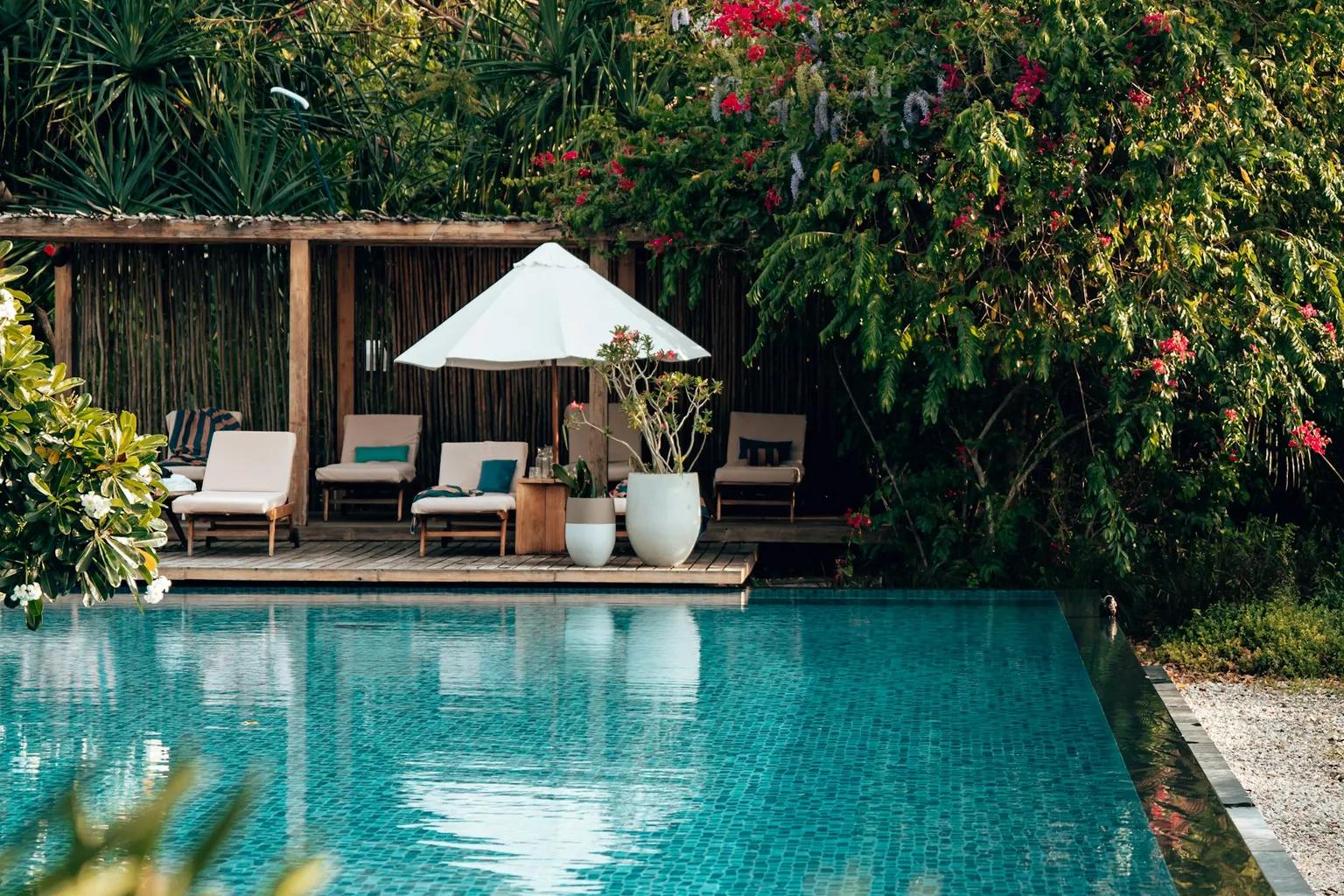
The east: from Matemwe to Pongwe
Matemwe has adults-only villas and a large all-suite resort; Pwani Mchangani a 5-star family resort; Pongwe clifftop villas and an islet lodge.
The Mora Zanzibar
A beach resort on Muyuni in Matemwe facing Mnemba Island: 250 suites, some with a private pool or whirlpool.
Families get tennis courts, water fun and boat hire for day trips to nearby islands.
Matemwe Attitude
A 4-star adults-only hotel in Matemwe: 74 villas, each with a private pool or direct access to an infinity pool.
Beach Retreat villas have a reserved beach area with cabana and loungers; Mnemba snorkelling includes a transfer.
Kappa Senses Zanzibar
A 5-star resort in Pwani Mchangani: 85 villas and suites in a tropical garden, beach and lagoon access, à la carte restaurants and a spa with an indoor pool.
The Mtoto kids’ club runs daily activities for children of all ages; diving, snorkelling and kitesurfing are available.
Tulia Zanzibar
A resort in Pongwe: clifftop villas above the sea facing the sunrise, some with a private pool; garden pool villas and bungalows.
All-inclusive covers premium drinks; airport transfers, yoga and the minibar come at no extra cost.
The Island Pongwe
An adults-only lodge on an islet in Pongwe Bay, 100 m offshore: six ocean-facing villas, including the Sultan Villa.
Villas have no air conditioning or TV; depending on the tide, you reach the shore by canoe.
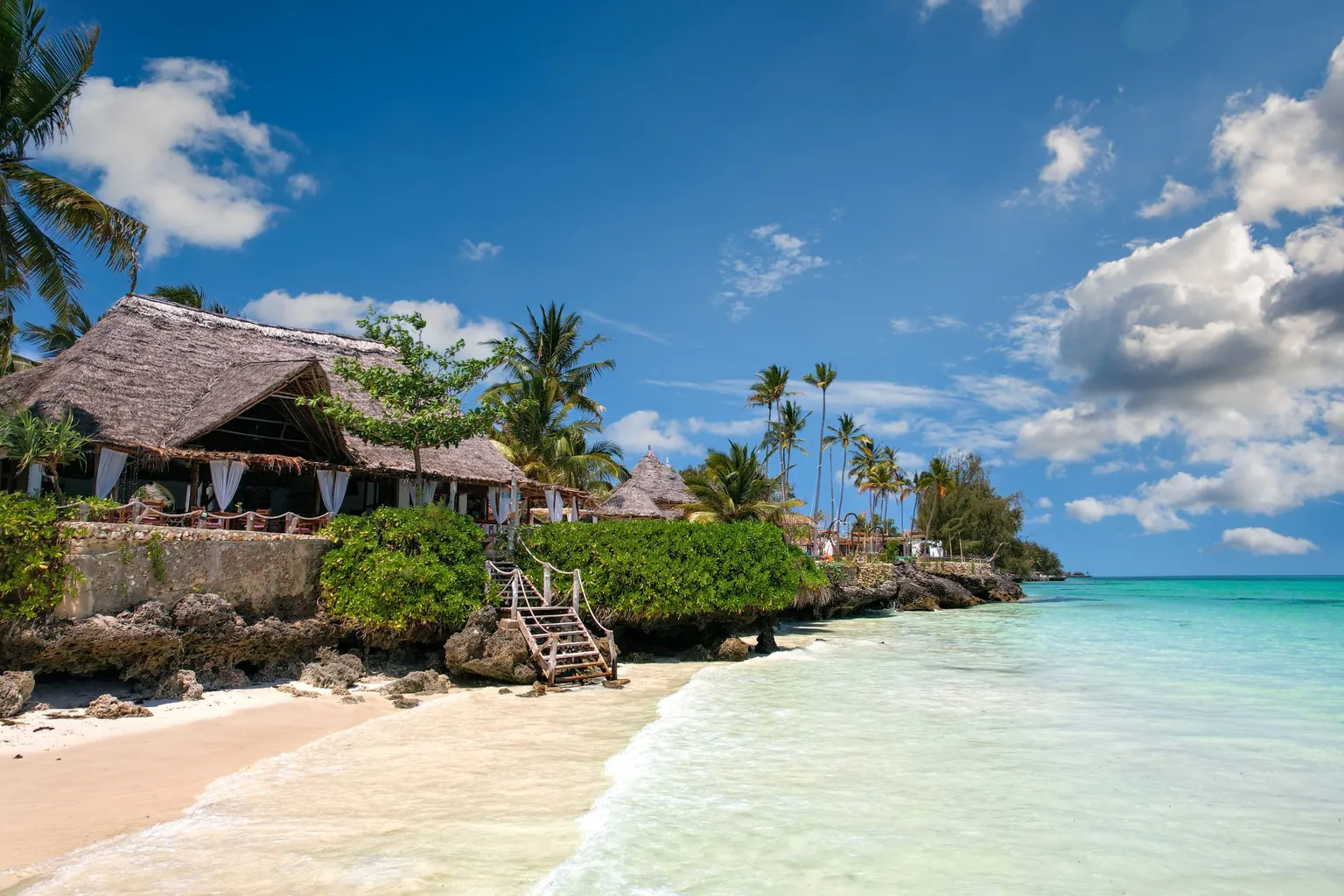
South-east and south: from Michamvi to Kizimkazi
Michamvi has a resort overlooking Chwaka Bay; Dongwe and Paje pool villas on white sand; Kizimkazi a villa-only resort.
Konokono Beach Resort & Spa
A resort on the Michamvi peninsula overlooking Chwaka Bay: beach pavilions and 135 m² ocean-view villas, with several kilometres of white beach.
Family villas with a private plunge pool sleep 2 adults and 2 children aged 1-12.
Xanadu Luxury Villas & Retreat
Nine villas on the white beach of Dongwe, each with a private pool, two with rooftop pools; a personal butler and all-inclusive dining.
Dine in your villa, by the main pool or on the beach.
Zanzibar White Sand Luxury Villas & Spa
A Relais & Châteaux resort on Paje beach: 19 villas and 3 rooms; each villa has a private pool or hot tub, and every unit a butler.
Half board, yoga, snorkelling, kayaks and SUP are included; there are no motorised water sports.
ENVI Paje
A wellness lodge on Paje beach: villas of 50 to 150 m² with gardens, Ocean Front villas with a private plunge pool; a spa and a kite house with instructors.
Swimming is best from 2 hours before to 2 hours after high tide; the sandy shore slopes gently.
The Residence Zanzibar
A villa-only resort in 32 hectares of gardens by a mile-long beach: 66 villas, each with a 1.2 m deep private pool and bicycles.
A beachfront pool villa sleeps 3 adults, or 2 adults with 2 children under 8.
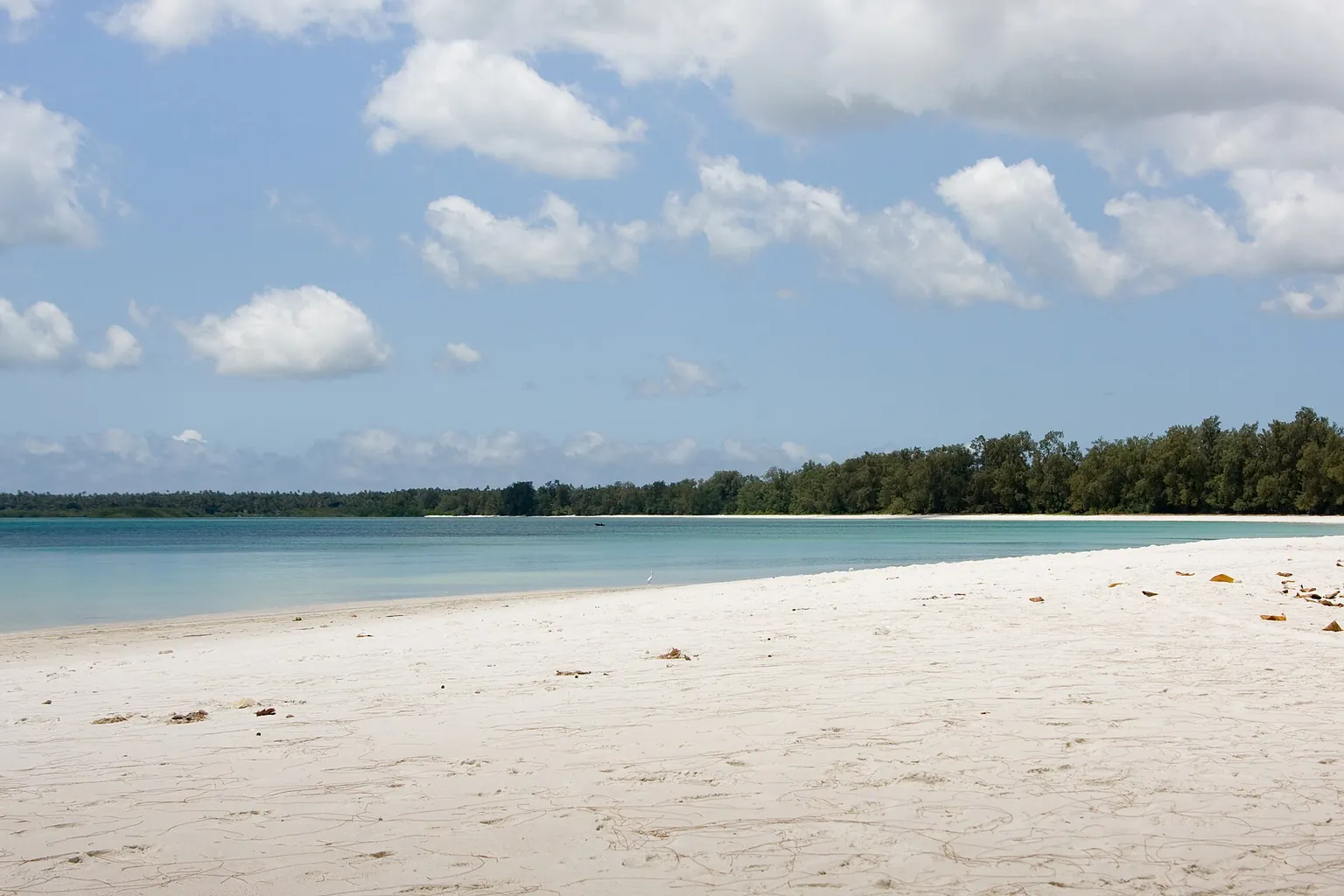
Private islands, Pemba and Mafia
From all-inclusive bungalows on Mnemba and villas on Bawe Island to an underwater room on Pemba and a whole private island near Mafia.
&Beyond Mnemba Island
Open-air bungalows with no doors or windows right by the sea, including a family one; all-inclusive, with transfers, snorkelling and dives for PADI-certified divers.
Closes yearly for part of the long rains; at most two children under 12 at a time.
Bawe Island
An island 15 minutes by speedboat from Stone Town: 70 villas, each with a pool and butler, including overwater villas and sunset-view suites.
Families can take a suite with two extra beds or a two-bedroom beach villa.
The Manta Resort
An underwater room about 250 m offshore, its bedroom 4 m below the surface above the reef; seafront villas include a family one with a plunge pool; children from 7.
Meals, drinks and one spa treatment a day are included; snorkelling and diving cost extra.
Fundu Lagoon
Thatched tented rooms and suites on the hillside and by a mangrove-fringed beach, suites with plunge pools; meals included, boat access only, children from 12.
Book a flight that lands on Pemba before evening: the hotel does not accept later arrivals.
Thanda Island
The island is booked only as a whole: a villa for 10 adults with five air-conditioned suites opening onto the pool and beach, plus two beach chalets.
Children of all ages are welcome, babysitting on request; minimum stay five nights.
Kinasi Lodge
A 15-room lodge on an old cashew and coconut plantation above Chole Bay in Mafia Island Marine Park; rooms face the garden or sea, plus a pool.
The lodge runs its own diving and whale shark trips by boat and dhow.
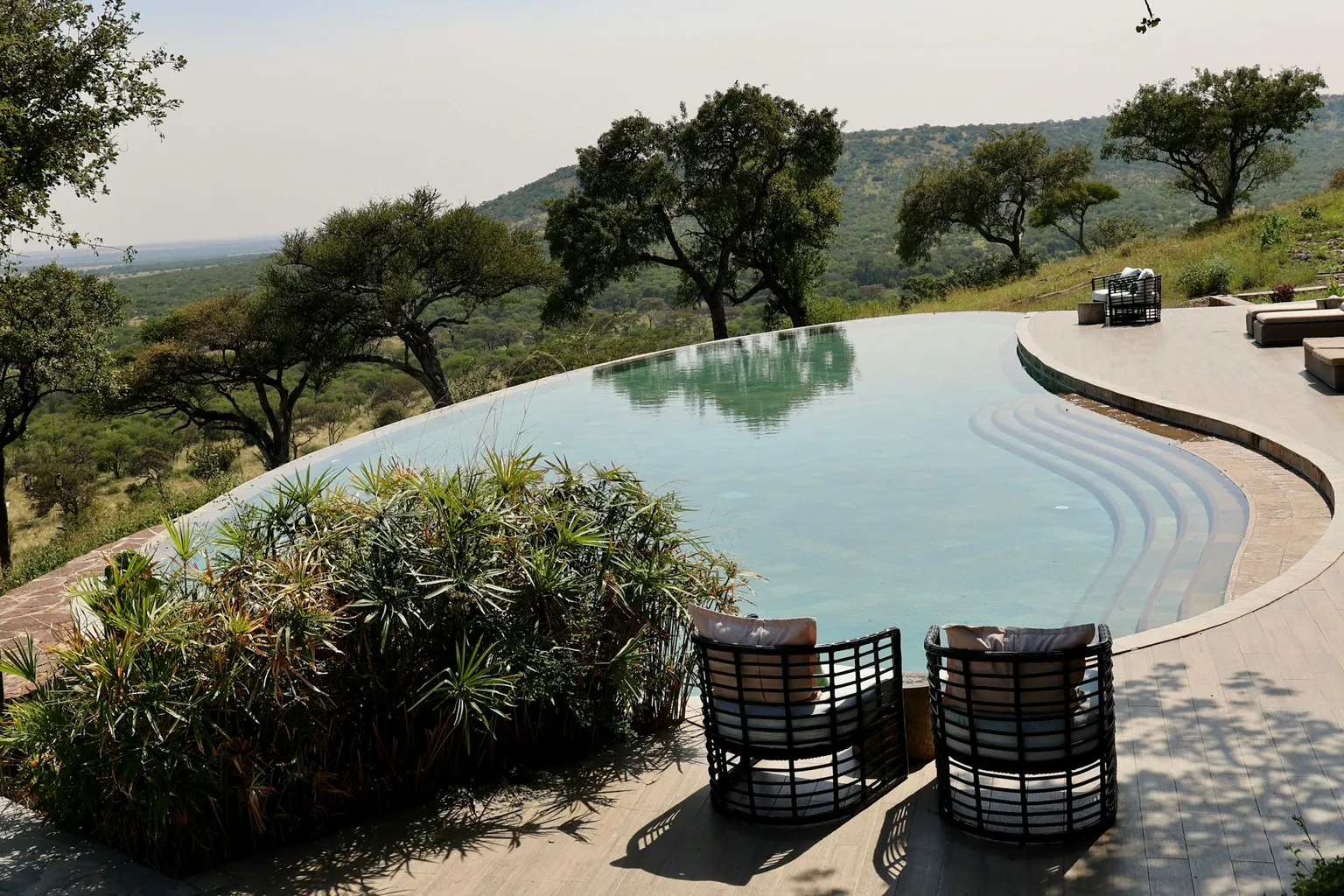
Safari: lodges and tented camps
A mobile camp following the Great Migration, a manor on the Serengeti’s edge, lodges by Ngorongoro Crater, a Nyerere camp and an Arusha coffee estate.
Four Seasons Safari Lodge Serengeti
A lodge in the central Serengeti National Park with rooms, suites and freestanding villas; two watering holes on site, and the infinity pool overlooks one that elephants visit.
Kids and teens have the Kijana Klub, and a Discovery Centre hosts talks on wildlife.
Singita Sasakwa Lodge
A lodge styled as an old manor house in the Singita Grumeti reserve, which borders Serengeti National Park; cottages of 1-4 bedrooms, each with a plunge pool.
Meals, drinks and two game drives a day are included; bush walks from age 16.
&Beyond Serengeti Under Canvas
Two mobile tented camps of nine tents each relocate across Serengeti National Park to follow the Great Migration; each tent has a flushing toilet and outdoor hot shower.
All-inclusive, game drives included; children from 6, and a family tent sleeps four.
Warangi Ridge
A tented lodge perched high above the plains of the central Serengeti: 13 tents and a family suite for up to 5, each with its own plunge pool.
Meals and house drinks included; game drives and airstrip transfers extra unless in a package.
&Beyond Ngorongoro Crater Lodge
The lodge by Ngorongoro Crater has closed for a full rebuild and will reopen as a new lodge.
Until it reopens, &Beyond offers partner lodges in the crater area.
The Highlands
Eight canvas-and-perspex domed suites on the slopes of Olmoti Crater in the Ngorongoro Conservation Area, including a family suite and a honeymoon suite with an outdoor hot tub.
Full board, house drinks and game drives are included; children from 5, crater hikes from 12.
Lemala Osonjoi Lodge
A lodge on a hill just back from the crater rim, near the Lemala Gate descent road: suites with wood stoves and bathtubs, two with two bedrooms; heated indoor pool.
Full board with house drinks, game drives extra; lunch can be set up on the crater floor.
Roho ya Selous
A tented camp on a peninsula overlooking Lake Nzerakera in the heart of Nyerere National Park: 8 tents, one family tent for up to 5, a pool; children from 5.
Full board, game drives and boat safaris are included; the camp closes during the long rains.
Arusha Coffee Lodge
A lodge of 30 plantation houses among coffee fields on Arusha’s western edge below Mount Meru; suites have terrace log fires, rooms an indoor fire; there is a pool.
Rates include breakfast only; lunch, dinner and the coffee estate tour with tasting cost extra.
Chapter 4 of 6Experiences and trips
What to see and where to set off from
Mnemba’s reef and dolphins, the tortoises of Prison Island and the Nakupenda sandbank, Jozani Forest with its red colobus, Stone Town and the Forodhani market, a combined tour with safari in the Serengeti and Ngorongoro, a Kilimanjaro climb, diving off Pemba and whale sharks off Mafia. Each card says where to set off from, what to book ahead and, where it matters, how much time to allow.
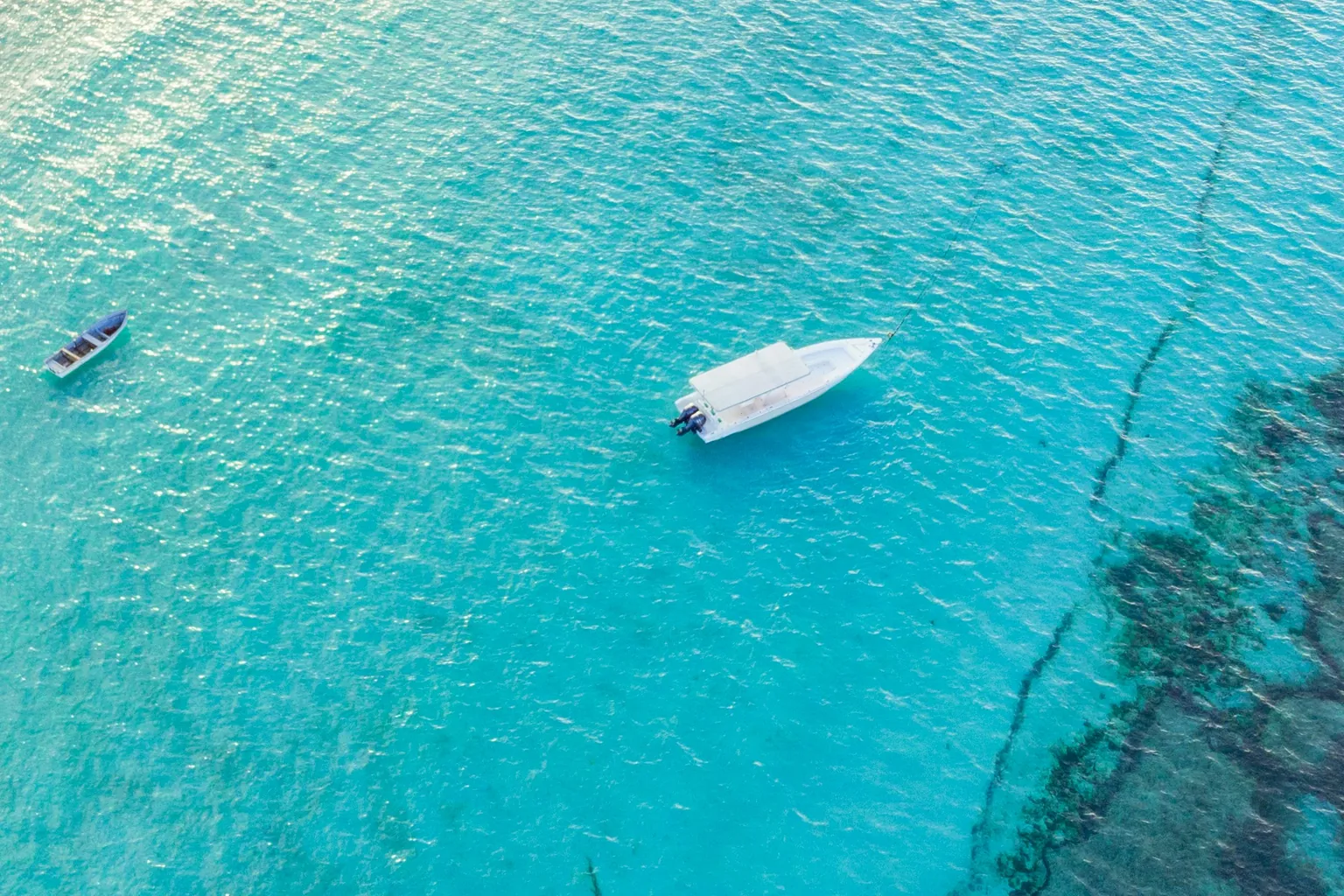
The tag above a card shows how long the trip or activity itself lasts according to its organiser, venue or park; add the journey from your hotel and back separately.
The sea: Mnemba, dolphins and dhows
Mnemba’s reef, Kizimkazi’s dolphins, a dhow in Menai Bay, sunsets and kiting in Paje: trips depend on tide and wind.
Mnemba: snorkelling, diving and dolphins
The reef around Mnemba Island lies in a marine conservation area: 2-30 m deep, usually 15-20 m visibility, with dolphins often seen from the boat.
Boats leave from Matemwe, Nungwi and Kendwa; at low tide, east-coast guests go part of the way by road.
Dolphins off Kizimkazi
Resident pods of bottlenose and humpback dolphins live off the south coast; since 1992, boats from Kizimkazi village have taken visitors out to them.
Under Department of Fisheries guidelines, boats approach from the side or behind and wait for dolphins to come to them.
Safari Blue: a dhow day in Menai Bay
Wooden dhows sail from Fumba into the protected Menai Bay: guided snorkelling, a stop on a sandbank and a swim in a mangrove lagoon.
A seafood lunch is served on Kwale Island; bring water shoes, and book the transfer to Fumba separately.
Sunset by dhow
A wooden dhow under sail leaves Kendwa beach in the evening and cruises along the north coast as the sun sets over the sea.
In Stone Town, an evening dhow with beer, wine and snacks sails back to town after the sunset.
Kitesurfing in Paje’s lagoon
A reef about 1.5 km offshore breaks the swell, so Paje’s lagoon is flat and shallow over sand; at low tide you can stand almost anywhere.
Lessons are planned around wind and tide; children learn from age 8 if they weigh at least 35 kg.
By boat from Stone Town: Prison Island and Nakupenda
An islet with giant tortoises and a sandbank, both reached by boat from Stone Town, so they fit well around nights in the city.
Nakupenda sandbank
Reached by boat from Stone Town, this white sandbank widens at low tide and shrinks at high tide, the organiser says. Nakupenda is Swahili for “I love you”.
Lunch and fruit are served right on the sandbank, with snorkelling close by; bring a hat, sunscreen and a towel.
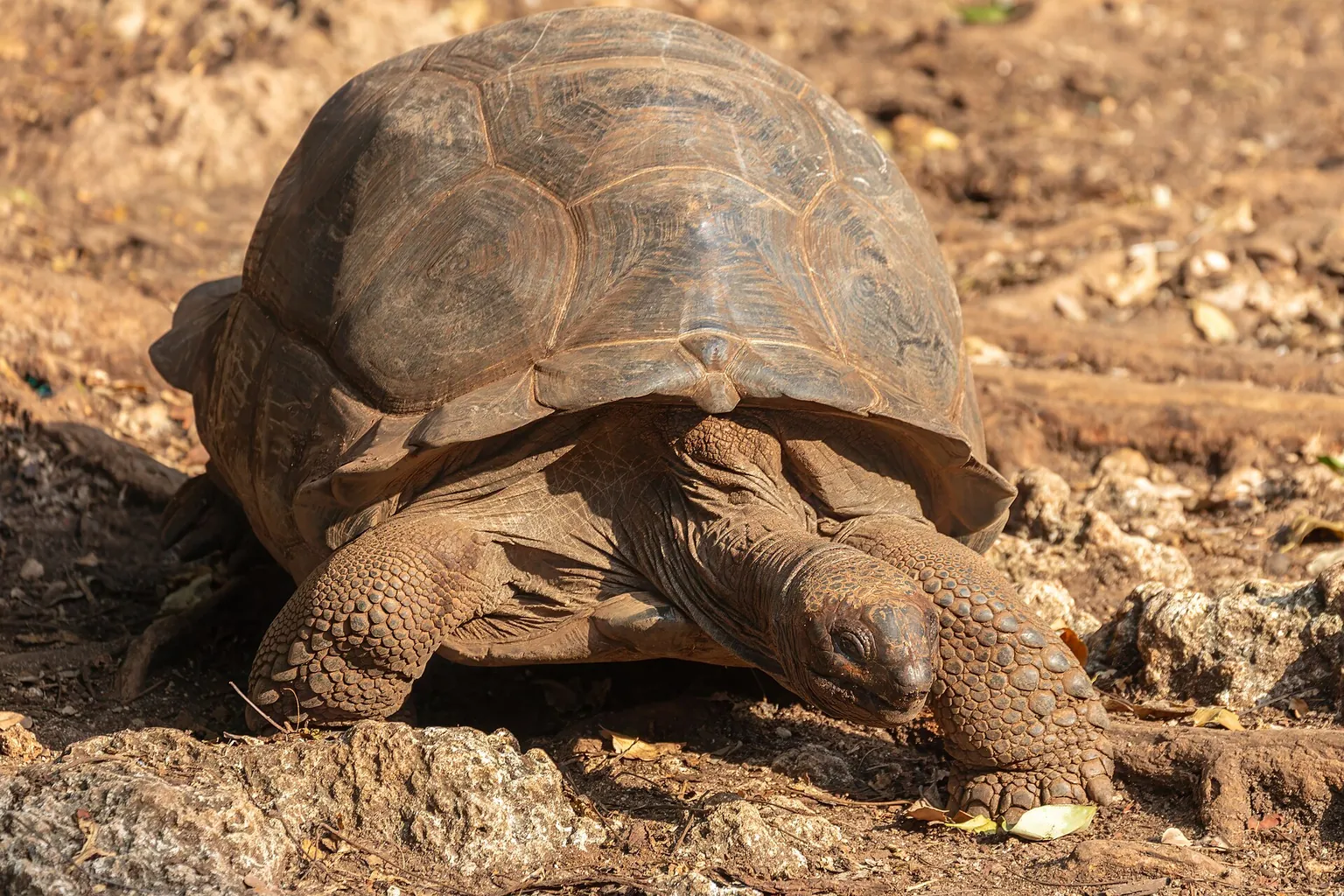
Prison Island (Changuu) giant tortoises
An islet 5 km off Stone Town with Aldabra giant tortoises, the first four a 1919 gift from the Seychelles’ British governor. Its prison never held inmates.
Visitors often snorkel off the island; seeing the tortoises costs a small fee.
Nature: colobus, spices and caves
Red colobus in Jozani Forest, caves near the east and south-east beaches, and spice farms north of Stone Town.
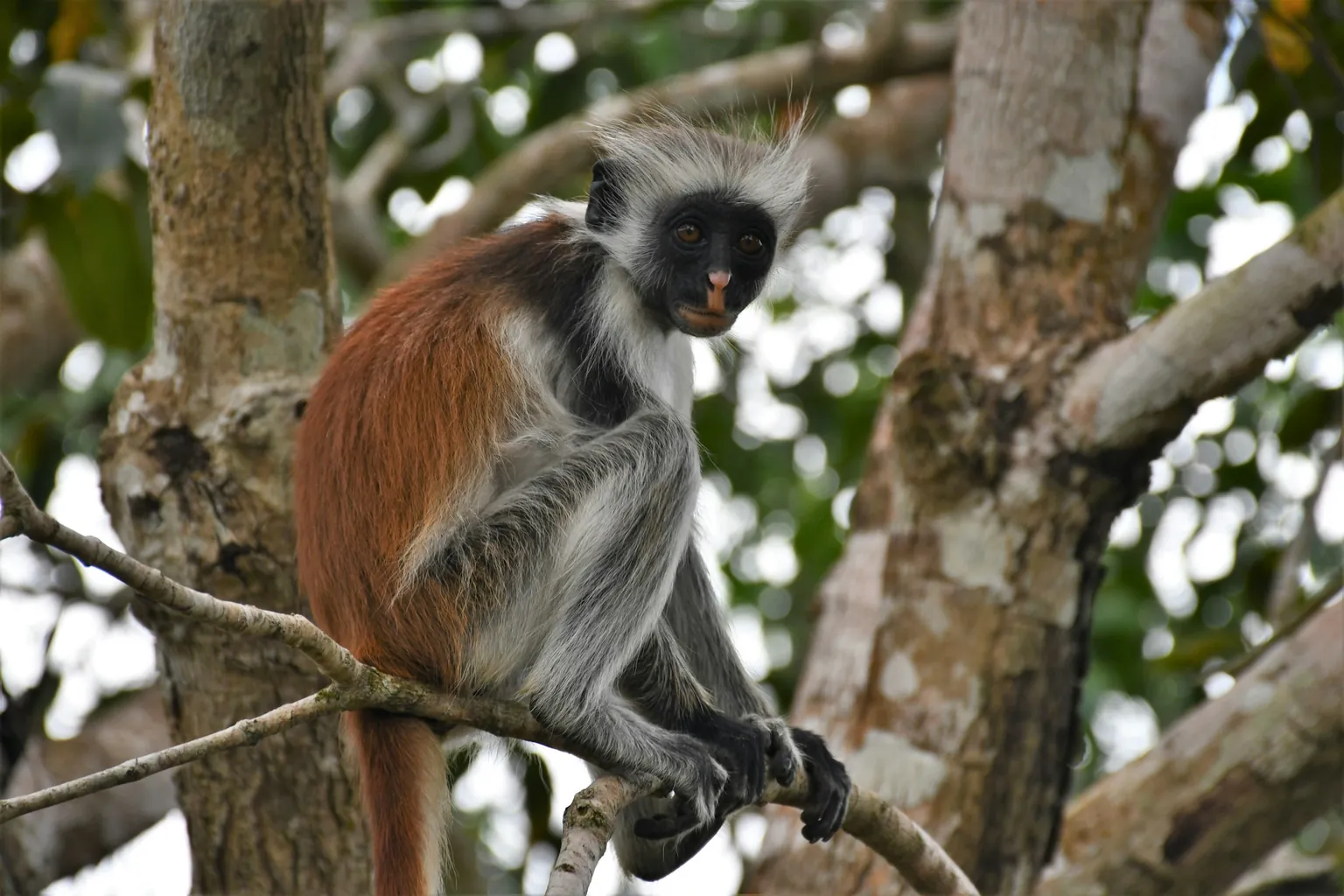
Jozani Forest: red colobus and mangroves
Zanzibar’s only national park, 35 km from Zanzibar City: red colobus monkeys found only on this island, and a wooden boardwalk through the mangroves.
The monkeys are most visible in the morning and late afternoon; a park guide leads, and photos are allowed.
Spice tour on a farm
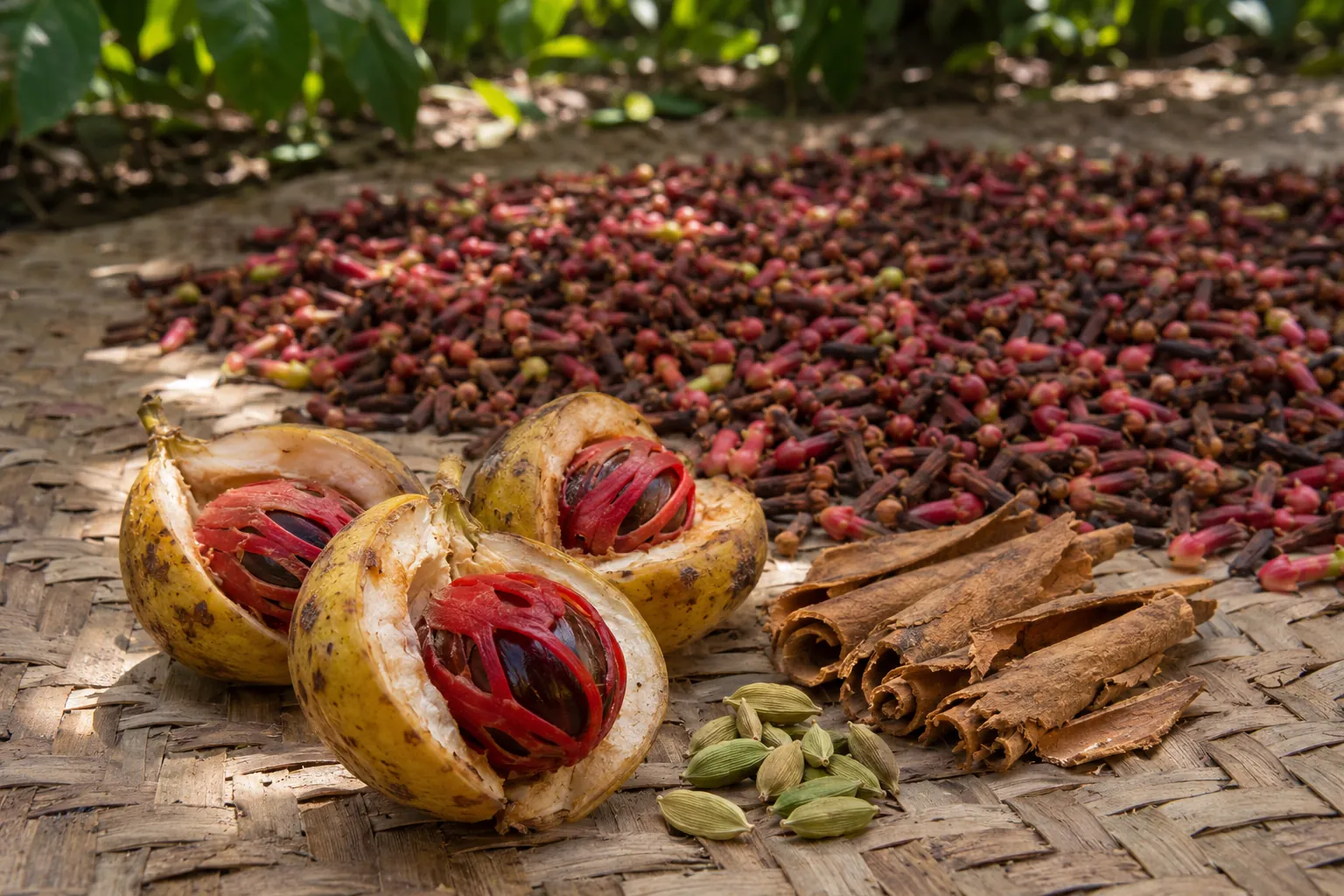
Spice farms lie near Kibweni, north of Stone Town: cloves, nutmeg, cinnamon, cardamom and black pepper. Zanzibar’s cloves are known worldwide.
A guide leads the walk, and you can touch, smell and taste the spices and tropical fruit.
Kiwengwa-Pongwe Forest caves and baobabs
A forest reserve on the east coast: limestone caves with stalactites and freshwater pools, bats, ancient baobabs and red colobus monkeys too.
Local guides lead the cave and forest walks, supporting nearby villages; book ahead.
Kuumbi Cave near Jambiani
People lived in this cave some 30,000 years ago: researchers found objects and human and animal remains here. Inside are fresh water and a high ceiling.
The cave is still revered as a shrine; tickets cost USD 5 per foreign adult and USD 2 per child.
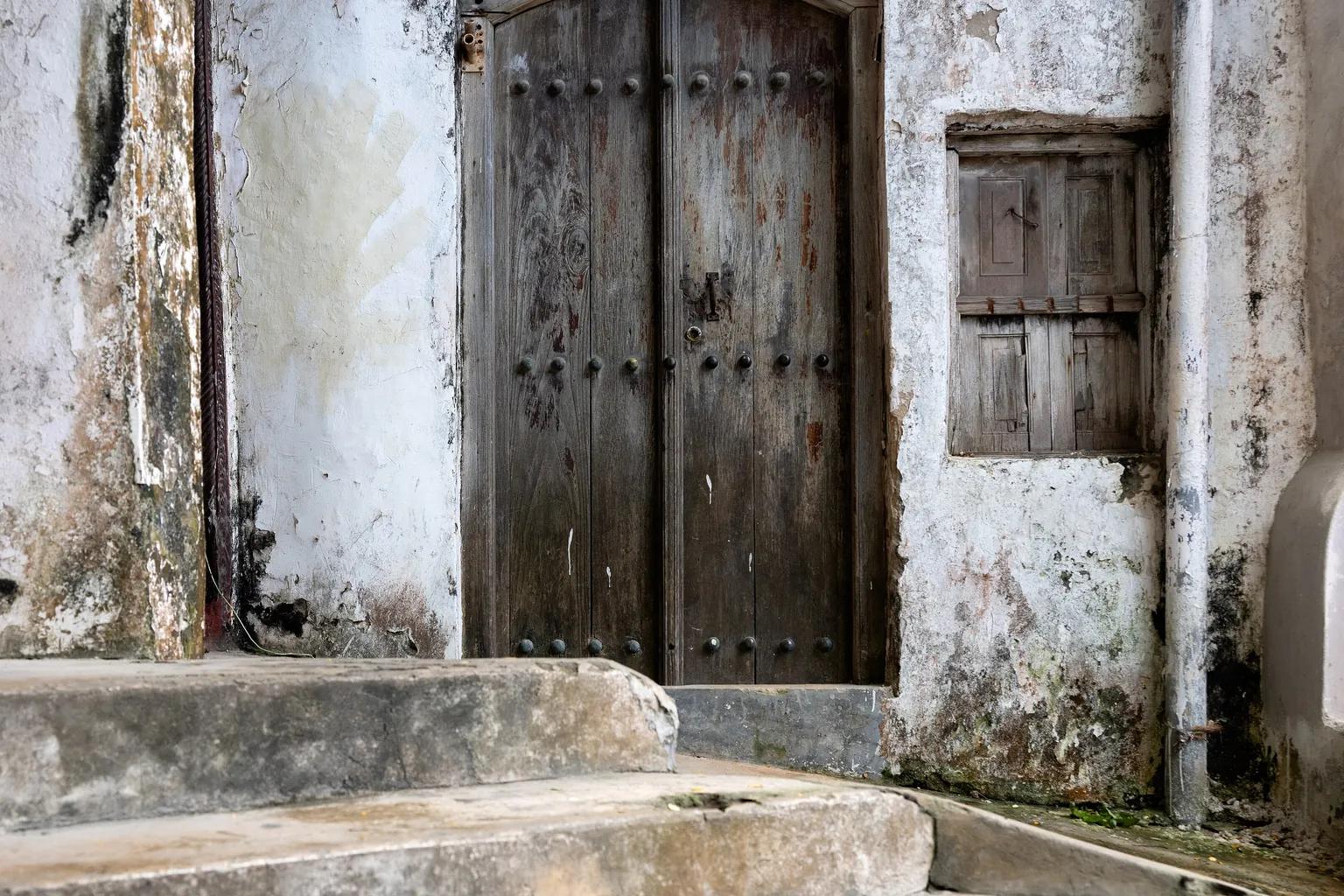
Stone Town: doors, lanes and history
The UNESCO-listed old town on foot: carved doors and lanes, a cathedral on the former slave market, the Forodhani seafront; sultans’ palace ruins lie beyond.
Stone Town’s carved doors and lanes
A UNESCO-listed old town of coral-stone walls, narrow lanes and carved doors with brass studs, mixing Indian, Omani, European and Swahili motifs.
The richer the carving, the more important the owner; your hotel can arrange a guide for the walk.
Christ Church and the slave trade exhibit
The Anglican cathedral was built in 1873-1880 on the former slave market; its altar stands where the whipping post was. Next door is the slave trade exhibit.
The exhibit includes recordings of local residents. The cathedral is still in use and sometimes closes to visitors for services.
Forodhani Gardens on the seafront
A seafront park, one of the few open spaces in the dense old town; in 2009 the Aga Khan Trust for Culture restored its paths, lighting and seawall.
Come at sunset, when dhows glide past the seafront.
Sultans’ palace ruins: Maruhubi and Mtoni
Mtoni, on the shore about 8 km from town, is Sultan Said’s oldest palace and Princess Salme’s birthplace; Barghash built Maruhubi, with its mango garden, in 1881.
Each site costs USD 5 per foreign adult and USD 2 per child; tickets are also sold online.
Food: Forodhani, spices and The Rock
An evening food market on the seafront, house-roasted coffee, a rooftop tasting dinner in Stone Town and a restaurant on a rock in the sea.
Forodhani night food market
An open-air market on the seafront: grilled squid, lobster and barracuda, samosas, fried bananas and Zanzibar pizza.
The market comes alive at sunset; try kahawa, the local spiced coffee, too.
Zanzibar Coffee House in Stone Town
A café in an old Arab house near Mkunazini market: the Arabica comes from sister estate Utengule in Tanzania’s Southern Highlands and is roasted on site.
Coffee with a 360° view is served on the rooftop only around midday; the café downstairs opens daily.
Tea House rooftop dinner in Stone Town
The Emerson Spice hotel’s rooftop restaurant: lunch and Swahili high tea by day, an eight-course seafood tasting menu at night, with optional wine pairings.
Book ahead and arrive early to catch the sunset over the rooftops before dinner.
The Rock, a restaurant on a sea rock
A rock in the sea off Pingwe beach, about 20 minutes’ drive from Paje and 90 minutes from Stone Town. Seafood from the surrounding reefs with Italian flair.
At high tide the restaurant’s boat takes you over; book online, with a deposit, for one of five daily sittings.
Combined tour: a fly-in safari from Zanzibar
By small plane: Nyerere is a short safari, usually overnight; the Serengeti takes a few days, with the Great Migration and a balloon over the plains.
Fly-in safari from Zanzibar
Nyerere, the former Selous reserve, is a short safari, usually overnight: flights are timed for the afternoon game drive; arrange boats and vehicles ahead.
The Serengeti needs at least one night; some Nyerere flights are suspended in the long rains.
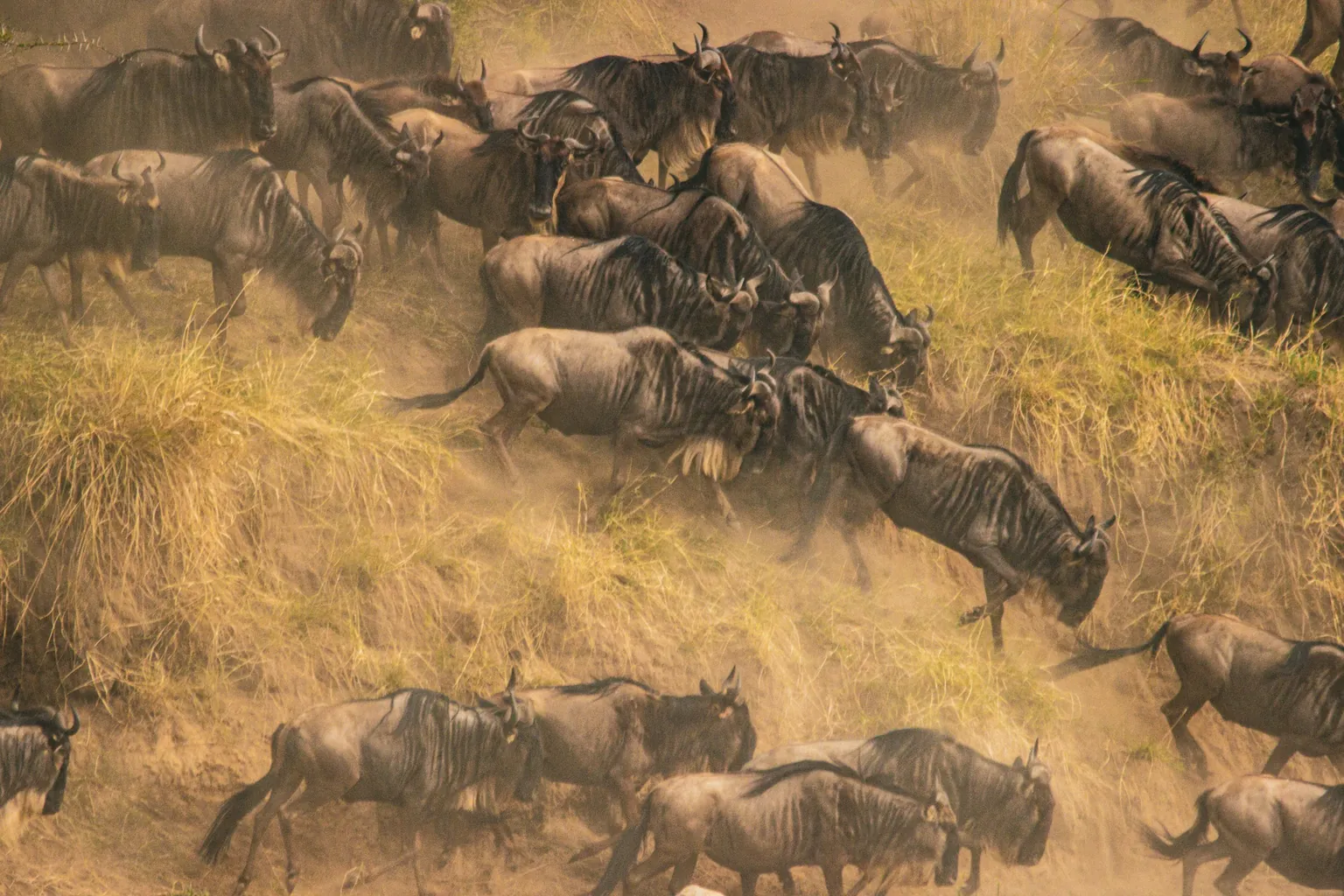
The Great Migration in the Serengeti
Wildebeest calves are born on the southern Ndutu plains, and up north the herds cross the Mara River; exact timing depends on the rains.
Sightings are never guaranteed; mobile camps move with the herds, and the migration does not enter Ngorongoro Crater itself.
Hot-air balloon over the Serengeti
Pickup before dawn, a wind-led flight over the plains, then a bubbly toast and breakfast under an acacia. Central Serengeti flights run year-round.
In the central Serengeti children fly from age 6; not suitable during pregnancy or with heart or back conditions.
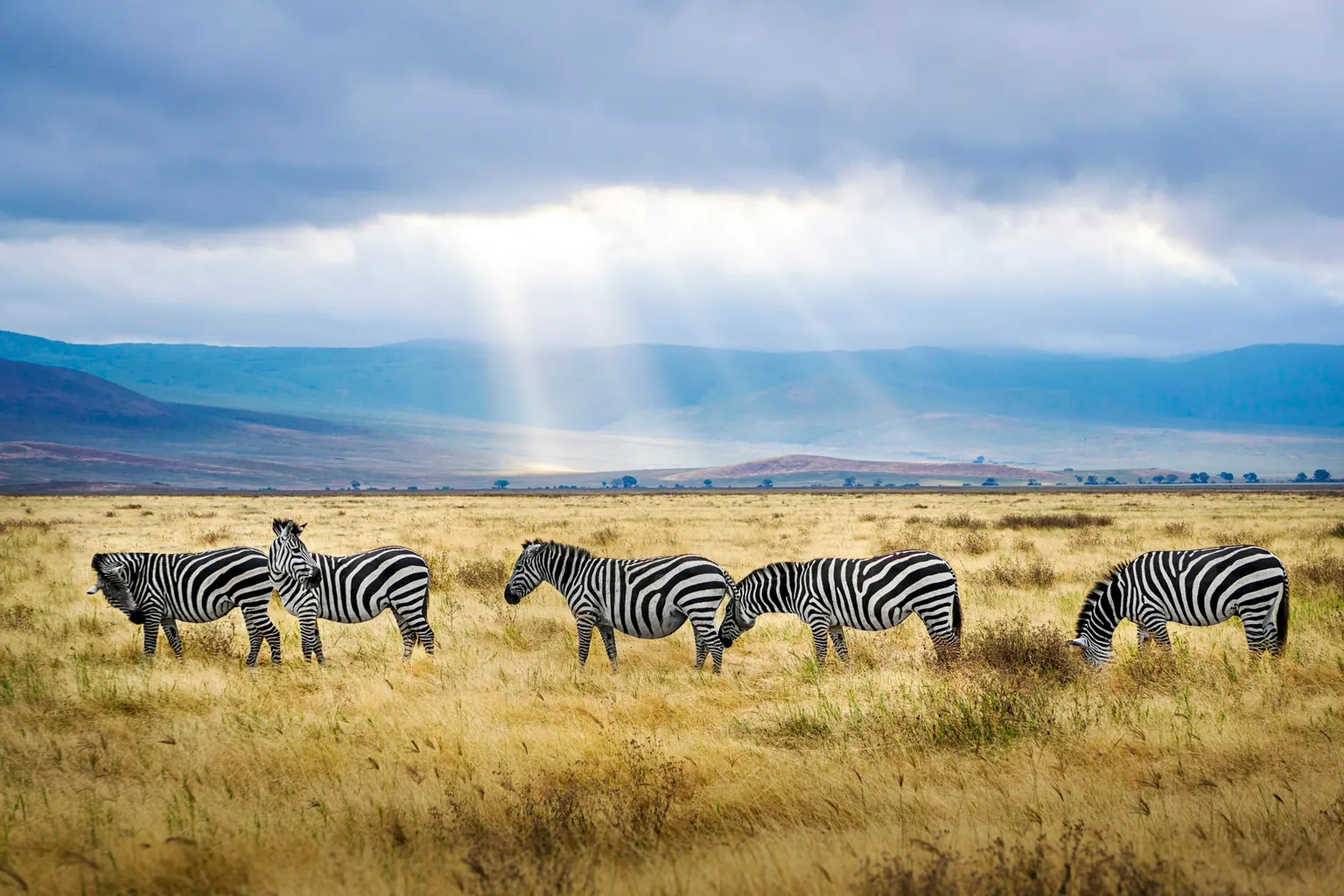
Combined tour: the northern parks and Kilimanjaro
A few days by road from Arusha: Tarangire or Manyara, Ngorongoro Crater and the Serengeti plains, then a Zanzibar beach; Kilimanjaro suits the well prepared.
Northern circuit: Arusha to the Serengeti
A multi-day road safari from Arusha: Tarangire’s elephants under baobabs or Manyara, 2-3 hours away, then Ngorongoro Crater and the Serengeti plains.
By road, Arusha to the Serengeti can take 7-8 hours, so flying back by light aircraft is easier.
Ngorongoro Crater: down to the floor
The road descends through forest to the grassy caldera floor, where grazers feed and predators hunt; thousands of flamingos often gather on a salt lake. Visited year-round.
Only 4×4s with a licensed guide; the descent gates close in the afternoon, so head down in the morning.
Kilimanjaro climb for prepared hikers
Uhuru Peak stands at 5,895 m. Multi-day routes start at the Marangu, Machame, Lemosho and Rongai gates; Marangu uses huts, the others tented camps.
Climbs require a licensed operator and acclimatisation days; without summiting, try a guided day hike.
Pemba and Mafia
Diving the Pemba Channel walls and Misali Island, seasonal whale sharks off Mafia, the reefs of Chole Bay and a walk on Chole Island.
Pemba: channel walls and Misali Island
Off Pemba’s west coast the deep Pemba Channel meets the reefs in near-vertical walls, while at Misali Island the reef starts right off the beach.
Gentle slopes near the shore suit beginners and snorkellers; deep walls with strong currents are for experienced divers.
Whale sharks off Mafia
Each season, whale sharks feed on tiny plankton shrimp in Kilindoni Bay off western Mafia, a few hundred metres from shore, and stay for long spells.
Trips leave by dhow from Kilindoni beach, close to the airport; bring your own life jacket for a small child.
The reefs of Chole Bay, Mafia
Chole Bay is the heart of Mafia Island Marine Park: coral reefs, turtles and rays at depths under 30 m that suit beginners too.
Boat dives run all year; departure times and visibility depend on the tide.
Chole Island: ruins and fruit bats
This Chole Bay islet has historic ruins and German colonial buildings; the village has an old mosque, a fruit bat sanctuary and a working dhow yard.
Walk on your own or with a local guide; cover shoulders and knees, and ask before photographing people.
Chapter 5 of 6Seasons, entry and travel
When to go to Zanzibar, entry and travel
Rains and winds by month, tides and the Great Migration, entry on a Ukrainian passport, the visa and insurance, the journey with a connection and by small plane, rules on the spot. Rules checked on 7 November 2026; confirm them for your dates and route before paying.
Season: rains, winds and tides
Rainfall by month
best: June-September; possible: January, February; wettest: March-May, October-December
Zanzibar, like the north of the mainland, has two rainy seasons: the long rains (masika) from March to May and the short rains (vuli) from October to December. January and February are relatively dry, and June to September is dry across Tanzania.
Great Migration
best: January, February, June-October; possible: March, April, December
Serengeti National Park suggests June to October for the migration and January to February for the wildebeest calving. From late December to April the herds usually graze the Ndutu plains in the south.
Whale sharks
best: October-February
In Kilindoni Bay off Mafia Island, whale sharks stay all year: from October to February close to shore, the rest of the year about 6 km offshore.
Air temperature
Daytime 29-33 °C all year
At the Zanzibar weather station the mean daily maximum runs from 28.6 °C in July to 32.8 °C in February, and the mean night minimum from 19.7 °C in September to 23.6 °C in April.
High and low tide
Spring tidal range about 3.2 m
The tide comes in and out twice a day. The highest highs and lowest lows come with the spring tides around new and full moon; near the quarter moons the range is only about 0.9 m. Plan swims and boat trips by the tide table.
Kite wind
Paje wind about 16 knots
The south-east kusi monsoon blows from June to October, the north-east kaskazi arrives in December, and the wind usually picks up towards evening. For beginners the beach school suggests mid-June to mid-October and late December to mid-March.
Cyclones
Cyclones rarely reach the coast
The Tanzania Meteorological Authority counts only three tropical cyclones or depressions that have made landfall in the country since records began.
Entry with a Ukrainian passport
Visa for Ukrainian citizens
Visa: USD 50
Ukrainian citizens get a tourist visa online on the Immigration portal (processed within 10 days) or on arrival. It is single-entry, valid up to 90 days, on both the mainland and Zanzibar. Each child needs a separate application; show a return ticket at the border.
Mandatory inbound insurance
Insurance: USD 44
Required even with your own policy. First entry via Zanzibar: buy from ZIC (child USD 22); via the mainland: from NIC (under 3 free, ages 3-17 USD 22). One policy covers the trip for up to 92 days; it can be bought online in advance.
Duty-free allowances
Duty-free up to USD 2,000
For adults (18+); the value limit requires over 24 hours outside the East African Community. Also duty-free: 2 litres of spirits or wine, 250 g of tobacco products, 0.5 litres of toilet water and perfume, of which perfume up to 0.25 litres.
Passport, timing and children Passport valid for 6 more months with a blank visa page. Apply for the e-visa 10 or more days ahead and fly only after approval, or the fee may be charged again on arrival. A child’s exit from Ukraine follows Ukrainian Border Guard rules.
Yellow fever certificate Needed at ages 1-60 if you fly from a risk country or changed planes there for 12 hours or more, including Addis Ababa or Nairobi; otherwise not needed from Ukraine. Get vaccinated at least 10 days before entry, or you may be refused entry.
Malaria and mosquitoes Malaria risk exists all year throughout Tanzania below 1,800 m. WHO advises mosquito-bite prevention and preventive medication; a doctor chooses the drug before the trip.
Flights and onward travel
By air with a connection
- Overland to a neighbouring country’s airport
- Flight via a hub or from Poland
- Zanzibar airport (ZNZ)
There are no direct flights from Ukraine, so the journey starts at an airport in a neighbouring country, then a flight connecting in Istanbul, Doha, Dubai, Addis Ababa, Nairobi or Muscat; Poland’s Enter Air also flies to Zanzibar from Warsaw and Katowice.
Arrival airport
Flights land at Abeid Amani Karume International Airport (ZNZ) near Zanzibar City, the archipelago’s main airport, with flights to East Africa, Europe and the Middle East.
Ferry from Dar es Salaam
Be at the Azam Marine terminal at least an hour before departure: late boarding means no refund. The fare includes 25 kg of luggage per person, more at a charge. The carrier sells foreigners tickets in US dollars, pounds sterling or euros.
Baggage on small planes
On small planes to the safari parks, Pemba and Mafia, the allowance is 15 kg per person with Coastal Aviation and 20 kg with Auric Air, including hand luggage and cameras. Extra weight flies only if there is room, at a charge; pack a soft bag.
Taxis
Use licensed taxis from a hotel, restaurant or official rank, and agree the fare first. Boda-boda motorbike taxis and bajaj three-wheelers often crash.
If you drive
Driving on the left Traffic keeps left. Avoid driving outside towns after dark; off main roads and in the rainy seasons a 4x4 may be needed. If police demand an on-the-spot fine, ask for a written one to pay later.
Money and local rules
Money: shillings, exchange and cards
Currency: Tanzanian shilling (TZS)
Under the Bank of Tanzania’s general rule, goods and services in Tanzania, Zanzibar included, are priced and paid for in shillings. Tourists exchange foreign currency at banks and bureaux de change and can also pay by bank card or other digital means.
Zanzibar infrastructure tax
Tax: USD 5 per person per day
Every guest of a 4-5 star hotel pays it for each day. In hotels on small Zanzibar islands and in underwater rooms the rate is USD 10 per person per day.
Emergency services
Emergency number 112
This number reaches the police, ambulance and fire service. Tanzania Police also lists direct numbers: ambulance 115, fire service 114.
Photographing people In Zanzibar, photograph local people only with their permission; in the Ngorongoro Conservation Area, only in designated cultural bomas, villages open to visitors.
Dress, Ramadan and protests
Away from Zanzibar resorts, especially in Stone Town, cover shoulders and knees: revealing clothes in public can bring a fine. During Ramadan (dates shift every year), do not eat or drink in the street. Keep away from protests: filming them is illegal.
Plastic bags
Leave plastic bags at home: mainland Tanzania has banned carrier bags of any thickness since 1 June 2019, and entry points have desks to hand them in. Zip-lock bags for toiletries are allowed, as they stay with you.
Ngorongoro fees
In the Ngorongoro Conservation Area the entry fee is per person per 24 hours: under 5 free, under 16 at the child rate. Each descent into the crater adds a separate per-vehicle fee. Foreigners’ rates are in US dollars; amounts are on the NCAA website.
NCAA tariffsDrones, shells and drugs
Drones Every drone needs registration and a Tanzania Civil Aviation Authority permit (apply 3-4 weeks before arrival) and third-party insurance. Maximum height 120 m. Never near military sites; without special permission, not at night, near airports or government buildings, over crowds or in national parks.
Shells and wildlife items Shells, horns and other wildlife items leave the country only with a certified permit from the Ministry of Natural Resources and Tourism, or you may be detained or fined. Do not bring animal-skin accessories either: they can lead to detention on departure.
Drugs and CBD Drug penalties are severe, even in transit; do not pack CBD skincare or vape refills.
Chapter 6 of 6Comfort and comparison
Comfort details: children, room, transfer
Mark the conditions you need for a comfortable holiday. These are preferences for planning, not a guaranteed service: the offer for your dates will show what is actually possible.
Quiet room
Away from the bar, the evening programme and the road. We will ask for the building, floor and side to be taken into account.
Room by the beach
A room or villa opening onto the beach, without long paths across the resort or down a hillside. Tick it and we will check its location.
Swimming at any tide
To swim at any time, not just at high tide, tick it: we will suggest a shore where the water stays close most of the day.
Step-free access
Some resorts stand on cliffs above the sea, so steps and distances matter. Tick it if anyone finds long walks hard.
Meal plan
Breakfast, half board, full board or all inclusive. Tick what you want and we will check what your hotel or lodge actually includes.
Private transfer
A car just for you from the airport, and a small plane that connects with your flight before a safari. We check times and baggage.
Child seat in the transfer
Tell us the children’s ages and number so the car has the right seats.
Villa with a pool
A villa with its own pool instead of a room in a block. Tell us how many beds you need and whether a sea view matters.
Late check-out
If your flight home is in the evening, we will ask for a late check-out or a day room where the hotel offers one.
Questions before your request
Can we save several options while we decide?
Yes. Save, say, Nungwi and Paje with hotels on both while you choose dates. In your request, say what the choice depends on: tides and season, a safari or the budget.
What should I put in a request?
Your dates and how flexible they are, who is travelling and the children’s ages, beach only or with a safari, the meal plan and what matters in a hotel. The wishes saved here go with it.
Wishes on your list: 0
Your Zanzibar trip is taking shape
Your saved options will carry over to the request form. There you can add a budget and your own wishes, then enter dates and your group at the details step.
Your list is empty for now. You can go ahead with a request and describe the Zanzibar holiday you need.
Wishes stay in this browser until you reset them or the form’s submission is confirmed.
Destination search: Zanzibar
Search opens with your chosen country. You choose the dates, travellers, meals and transport.
Send an enquiry to discuss the trip and current terms with DAMAX. An enquiry does not reserve a tour or require payment.
Questions about your choice?
Tell us what matters for your trip in your preferred messaging app. A hotel name or offer link will help us discuss the actual details.