


Spain tours
Beaches of Catalonia, Valencia and Andalusia, the Balearic and Canary Islands, and cities of palaces and museums. Choose a coast or island and a hotel, map out your trips and save your wishes to plan your tour.
The DAMAX guide to Spain
How to choose a coast, island and hotel in Spain
Spain is several very different holidays: sandy Mediterranean beaches on the mainland, the Balearic Islands with their coves, the Canaries with warm winters on the Atlantic, and cities people visit for museums and palaces. So choose the holiday style and season first, then the place and hotel.
Read at your own pace. Adding wishes is optional.
Progress shows your reading position. Wishes are saved separately.
Chapter 1 of 6Your holiday style
Holidays in Spain: beaches, islands or cities
Start with the holiday style: a week on one beach, winter sun on the Canaries or a few nights in a city before the sea. You will choose the place and hotel next.
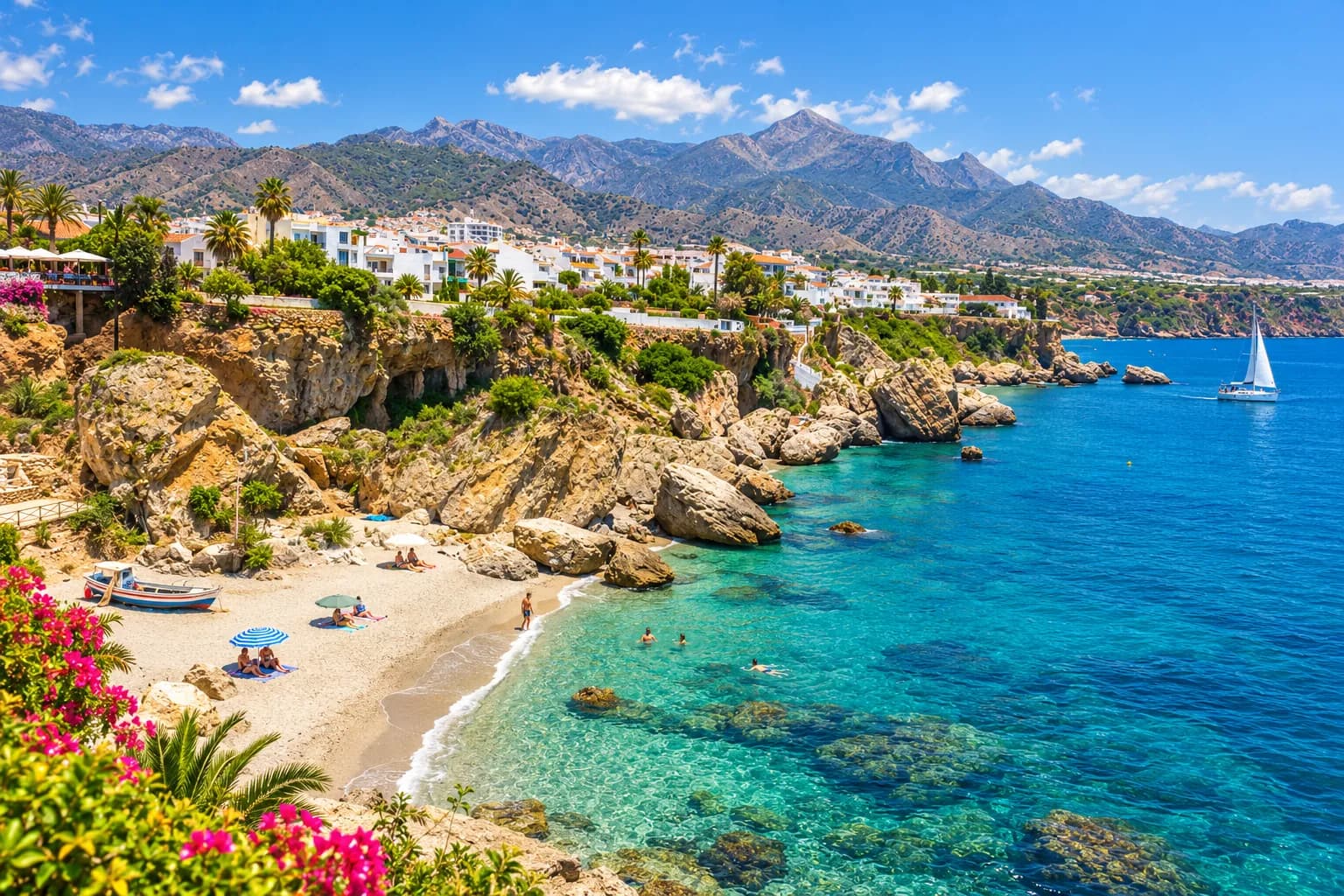
Beach holiday
One seaside base for a week or two. The key choice is the coast: the Mediterranean mainland and Balearics or the Atlantic Canaries.
Holiday with children
Small children need gentle water entry, a beach path without a road and a pool. So pick the beach and season first, then the hotel.
A trip for two
Quiet coves, dinners in an old town and adults-only hotels. Peace and quiet depend on what is nearby: a bar-lined promenade or a cove.
Cities and museums
A few nights in Barcelona, Madrid, Seville or Granada. Top sights sell timed tickets, so it helps to know your dates early.
Sea and city together
A few city nights, then a nearby coast: Barcelona and the Costa Brava, Málaga and the Costa del Sol, Valencia and the Costa Blanca.
Winter sun on the Canaries
When the mainland turns cool, the Canaries stay warm enough for the beach and walks. The islands differ in wind, beaches and how quiet they are.
Chapter 2 of 6Where to stay
Where to stay: a coast, an island or a city
First choose a region: Catalonia, Valencia and Murcia, Andalusia, Madrid and the north, the Balearic or the Canary Islands. Open a coast or island to compare its resorts: they differ in the beach, noise and the journey from the airport.
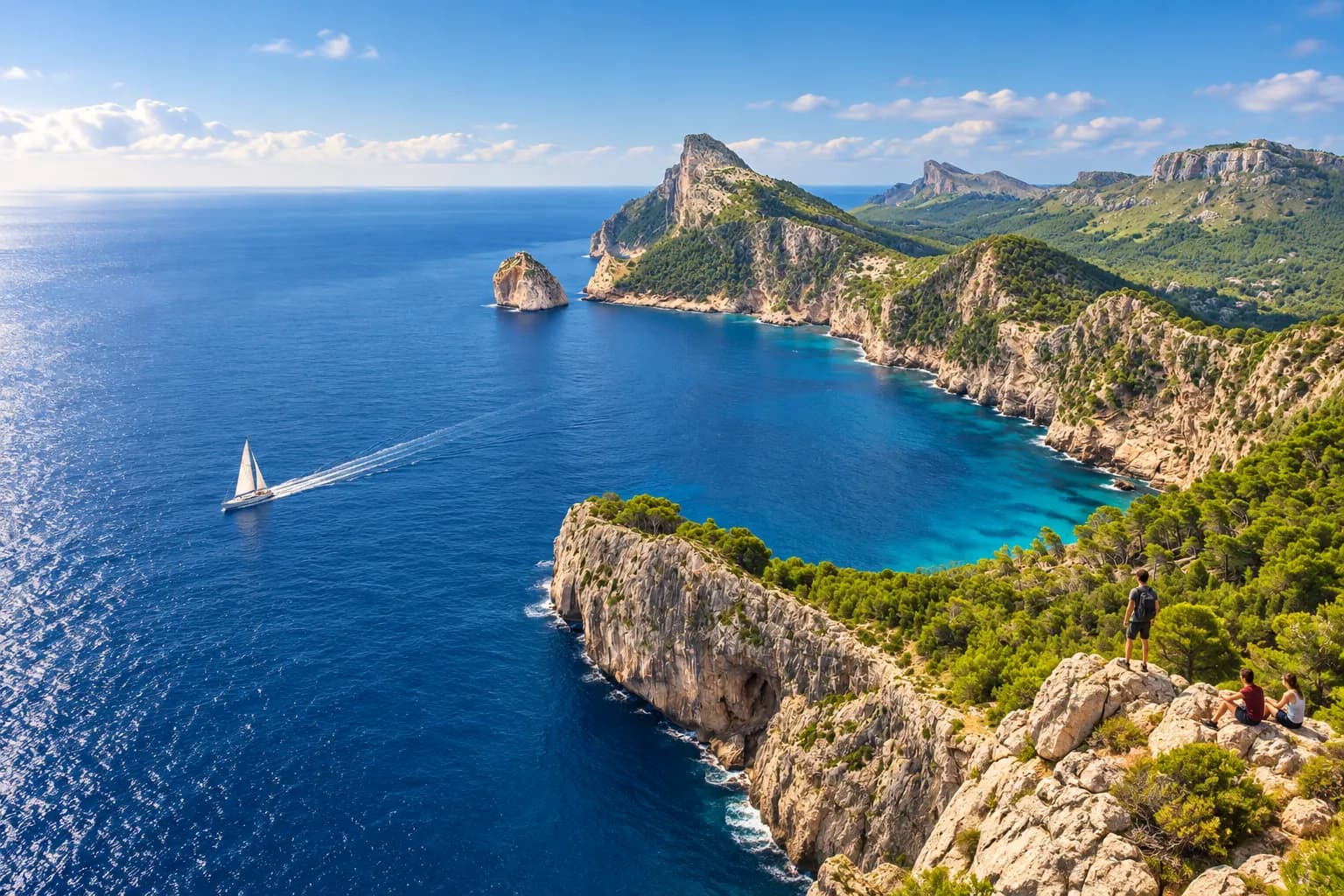
Below, resorts from the tour search are grouped geographically with other places. A search destination can cover a wider area than a beach or town, and saving a wish does not change the search filters.
Resorts and places inside a card show nearby options for comparison, not administrative boundaries.
Barcelona and Catalonia
Compare places by the sand and how the seabed shelves, whether a railway runs between hotel and beach, and the trip from the airport.
Barcelona
Nine city beaches line the seafront, with medium-grain sand and a fairly steep entry. Barceloneta is among the closest to the centre and very crowded in summer.
For a calmer day, try Nova Icària: one of the city’s quietest beaches, with a playground.
Costa del Maresme
The R1 commuter line follows the shore to Barcelona. Most Maresme beaches lie beyond the railway and a main road, reached by underpasses.
For frequent trips to Barcelona, Calella is handier: further north, R1 trains run less often.
Resorts and places nearby
Calella
Main beach: almost 1.5 km of fairly coarse sand, quite a steep entry. Behind it run the railway and a promenade with bars; underpasses reach the sand.
With children, mind the steep entry: neighbouring Pineda de Mar has gentler beaches.
Santa Susanna
Over 2 km of coarse sand with quite a steep entry. Most hotels line the promenade of the eastern beach; the town centre is about a kilometre inland.
The western beach among the fields is less crowded, and a children’s centre opens there in summer.
Malgrat de Mar
Over 4 km of beaches. The central beach has 900 m of coarse sand and a fairly gradual entry; underpasses beneath the railway lead to the sea.
The western beach has a children’s mini club in July-August, with music bars nearby too.
Pineda de Mar
Beaches run beside the railway, reached by tunnels; the station faces the beach nearest the centre. Coarse sand; the northern beach by the pines is shallow.
The shallow beach among the pines is farthest from the centre; its car park fills fast in summer.
Costa Brava
Countless coves and beaches between cliffs, from quiet fishing villages to lively resorts. Girona airport serves the coast, and Barcelona is not far.
Without a car: one combined ticket covers the train to Blanes and a bus to nearby resorts.
Resorts and places nearby
Lloret de Mar
The main beach is 1.1 km of coarse sand with quite a steep entry. The town is compact and walkable, with plenty of nightclubs and pubs.
Families can try Fenals, well equipped and half framed by nature, though its entry is also fairly steep.
Tossa de Mar
The 350 m main beach lies below medieval walls, with coarse pinkish sand and quite a steep entry. The town is small and easy to explore on foot.
With young children, head to Mar Menuda beach: its little inlet is sheltered from big waves and shallow.
Blanes
A town beach with a lively promenade fronts the centre; beyond the rock, 2.5 km of coarse sand runs past pines and campsites, shelving fairly steeply.
The long beach is roomier at its far end, by the river mouth; nearer town it gets crowded.
Platja d’Aro
The town beach runs almost 2.5 km: coarse sand, gentle entry. A lively promenade of bars, restaurants and hotels lines it; summers are busy.
For peace and quiet, pick the small coves nearby rather than the town beach.
Roses
Beaches in the bay have fine golden sand and a very gentle entry, good for children, though it is often windy. Two natural parks are close by.
No train reaches Roses: ride to Figueres, then take a bus.
Begur
The village sits 200 m up around a medieval castle, with coves and fishermen’s huts below. Aiguablava has 75 m of fine sand and a gentle entry.
Even the nearest beach is about 3 km from the village, so a car helps.
Costa del Garraf
Wide beaches, seafood restaurants, nightlife and the art museums of Sitges, with the Garraf Natural Park inland.
Sitges is 28 km from Barcelona airport, and commuter trains run from Barcelona itself.
Resorts and places nearby
Sitges
Small beaches between breakwaters line the promenade: fine sand, shallow water, good for children but busy. The old town and its museums are close by.
No car needed for the beach: central beaches have paid parking, and the station is 500 m away.
Castelldefels
The town’s single beach stretches 4.8 km: fine sand, a very gentle entry and a lively promenade all along. It is usually busy.
Good for kitesurfers and windsurfers: strong winds are common here.
Costa Daurada
Long fine-sand beaches, the PortAventura theme park at the heart of the coast, and nearby Roman Tarragona and Modernista Reus.
Reus airport is near the central resorts, while Barcelona airport offers a wider choice of flights.
Resorts and places nearby
Salou
25 beaches and coves, mostly with fine golden sand and shallow water. The largest, 1.2 km long, runs along the main promenade and gets very busy.
For more calm, try the pine-backed beach near Cape Salou, away from the tourist centre.
Cambrils
9 km of coastline, mostly fine sand, gentle waves and shallow water. The working fishing port has a fish market; over 20 restaurants and bars line the promenade.
For quiet, pick the stretch of beach by the Salou border, away from the centre.
La Pineda
Over 2 km of fine golden sand, calm water and a very gentle entry, good for families. A long promenade runs beside the beach.
Easy without a car: in summer, buses run every half hour to Salou, Cambrils and PortAventura.
Tarragona
The Roman monuments of the historic centre are a UNESCO World Heritage Site. A city beach of fine sand and calm water lies 500 m from the amphitheatre.
The busiest beach, 3 km long, is 5 km from the centre and hard to reach on foot.
Reus
Gaudí grew up here, but none of his buildings are in town; there is an interactive Gaudí Centre and a Modernista route. The airport is 4 km away.
There is no beach in town: people head to nearby Salou, Cambrils or La Pineda for the sea.
Baqueira-Beret
Over 150 km of pistes, base 1,500 m, top above 2,500 m; the gentler Beret area suits beginners. Hotels, apartments and restaurants sit at the foot.
No airport in the valley: the nearest are 145-166 km away, Barcelona 350 km by road.
Valencia, Costa Blanca and Murcia
The Valencia region has three airports: Valencia, 8 km from the city; Alicante-Elche for the Costa Blanca resorts; and Castellón for the northern coast.
Valencia
A flat city: from a well-chosen area most sights are under 20 minutes’ walk. Cabanyal, Malvarrosa and Patacona beaches form over 3 km of golden sand.
Stay in the centre or by Malvarrosa: metro and buses run to the beach.
Costa del Azahar
The coast of Castellón province: long sandy beaches with promenades and wild coves, with mountains just a few kilometres from the sea.
Besides Castellón airport, you can fly into Valencia and travel on to Benicàssim or Peñíscola.
Resorts and places nearby
Peñíscola
The old town with Papa Luna’s castle sits on a rocky peninsula. Nord beach, the closest to the centre, runs 5 km: mostly sand, rockier at the ends.
The old town has steep, narrow lanes; with small children, the calm Sur beach is easier.
Benicàssim
A sandy shore along a promenade lined with 19th-20th century villas. The Vía Verde coastal path runs to Oropesa; Desert de les Palmes natural park is close.
For quiet, choose Voramar among residential streets; the town hosts music festivals.
Costa Blanca
The coast of Alicante, one of Spain’s most mountainous provinces: Benidorm’s long sandy beaches, rocky coves and mountains close to the sea.
From Benidorm, the tram makes it easy to reach Altea, Calp and Alicante.
Resorts and places nearby
Benidorm
A city of skyscrapers between two sandy beaches: Levante, over 2 km with nightlife, and Poniente, the longest in town. Between them, a headland with the old town.
For quiet, stay away from Levante’s bars, the old town and the clubs on the main road.
Alicante
Postiguet beach, about 650 m, is in the centre below Santa Bárbara Castle, with usually calm, shallow water. San Juan beach has almost 3 km of sand.
Stay central: the beach and old quarter are close, and a lift runs from Postiguet to the castle.
Calp
The Peñón de Ifach, a natural park, towers over the town. The sandy town beaches of La Fossa and Arenal have promenades and calm water.
Book the climb to the top of the Peñón in advance; the nearby salt lake draws water birds.
Altea
An old town of white houses: cobbled lanes climb to a church with a blue-and-white tiled dome. The beaches are pebbly, and there are coves.
La Roda beach is pebbles and gravel and gets deep quickly: it suits confident swimmers.
Dénia
About 20 km of coast: wide sandy beaches to the north, rocky coves to the south. Montgó rises above the town; a hilltop castle stands in the centre.
With children, try sandy Les Marines, almost 3 km; for snorkelling, the coves of Les Rotes.
Jávea
El Arenal, about 480 m, is the only sandy beach: coarse sand, clean and shallow water. The rest of the coast is pebbles, rocks and coves like Granadella.
In July and August car access to Granadella is limited: arrive early.
Torrevieja
A town by the pink salt lagoons of a natural park. Its largest beach, La Mata, runs over 2 km; a footpath leads there from town.
The lagoons are pinkest in summer; with children, La Mata has lifeguards and play areas.
Costa Cálida
Over 250 km of the Murcia region’s coast: the Mar Menor lagoon with calm, shallow water; secluded coves and cliffs to the south and west.
From Región de Murcia International Airport, buses run to Murcia, Cartagena and La Manga.
Resorts and places nearby
La Manga
A narrow strip, about 21 km, between the Mar Menor and the Mediterranean: a warm lagoon up to 7 m deep and an open sea with higher waves.
The Mar Menor side suits small children; the resort stays open all year and is quiet in winter.
Murcia
A city on the Segura river, founded in 831: a cathedral begun in the 14th century, the old Platería and Trapería streets, and the museum of sculptor Salzillo.
July daytime highs average 34 °C: explore the city in the morning and evening.
Andalusia
Compare the coasts by sand, wind and the road from the airport. Resorts sit within their coast, while Seville, Granada and Córdoba are grouped together.
Andalusia
Seville, Córdoba and Granada hold UNESCO World Heritage sites. In winter, Granada province offers skiing in the Sierra Nevada.
For city walks, pick April-May or October: in Córdoba, daytime highs average about 23-27 °C.
Resorts and places nearby
Seville
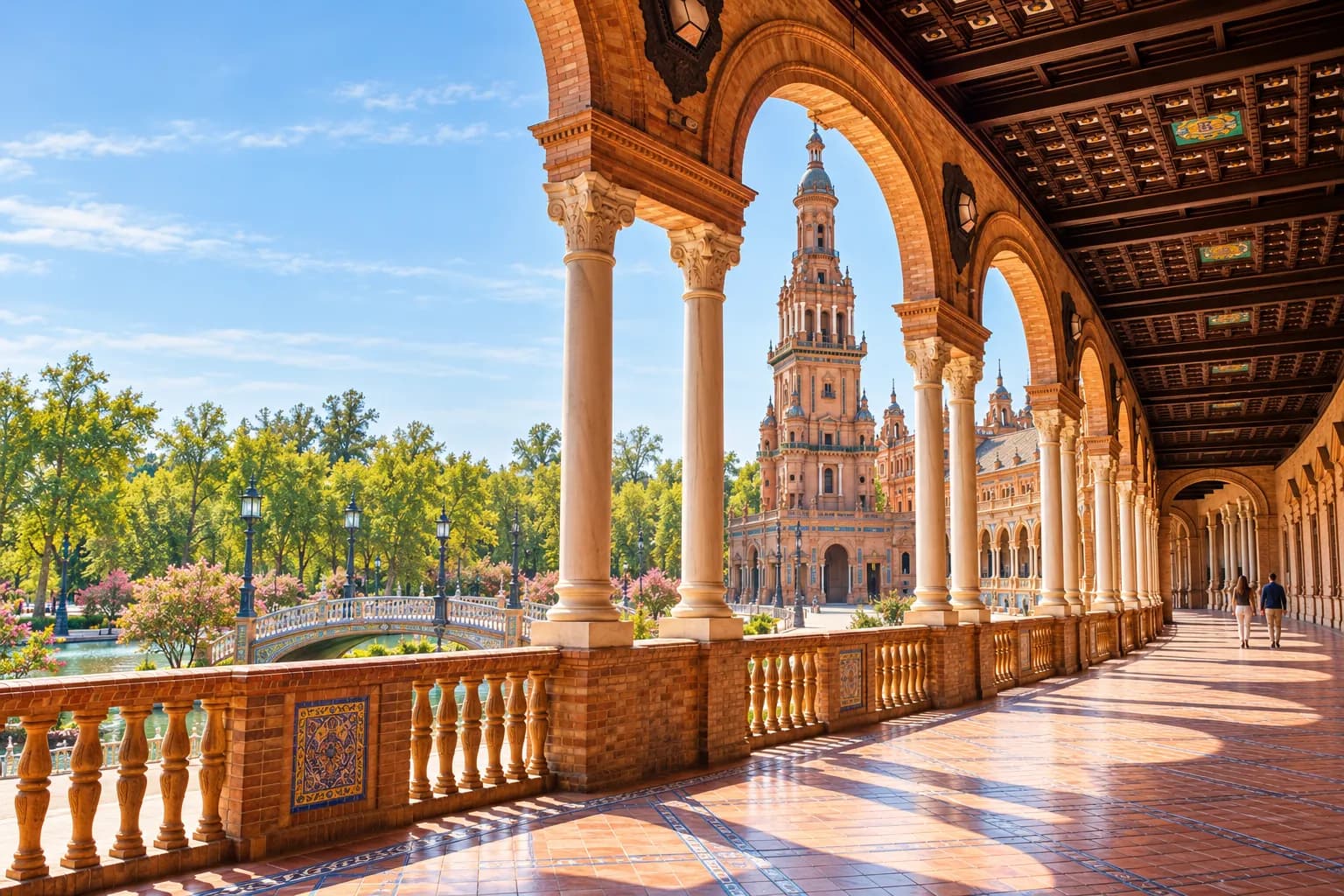
Andalusia’s capital on the Guadalquivir: the cathedral and Giralda, Plaza de España, the Triana quarter. The large old town is walkable; the airport is 8 km away.
To reach the sea without a car, trains from Seville’s stations run to Cádiz and Málaga.
Granada
At the foot of the Sierra Nevada: the Alhambra and the Albaicín quarter with viewpoints and houses in gardens. The airport is 17 km away, with few flights.
Winter nights are cold: the average January low is about 1 °C, so pack warm clothes.
Córdoba
From the station to the Mosque-Cathedral is just over a 20-minute walk. Medina Azahara’s ruins are 8 km away; in May comes the Courtyards Festival.
Easy as a day trip: the fast train takes about 40 minutes from Seville, 50 from Málaga.
Málaga
The Picasso Museum, Centre Pompidou, Alcazaba fortress and Gibralfaro Castle; most of the city’s museums are in the historic centre.
La Malagueta city beach is near the historic centre, so sea and museums are easy to combine.
Costa del Sol
Over 150 km of coast in Málaga province, from Nerja to Manilva and Casares. Beaches are mostly dark sand, gravelly in places, often with promenades.
Without a car, pick a resort on the commuter rail line: Torremolinos, Benalmádena or Fuengirola.
Resorts and places nearby
Torremolinos
5 km from Málaga airport. A promenade of over 6 km runs along the beaches, including La Carihuela in the old fishing quarter.
Nightlife centres on La Nogalera square and the Los Álamos promenade: for quiet nights, stay further away.
Benalmádena
Three parts: a white village on the hillside, lively Arroyo de la Miel, and Benalmádena Costa with 9 km of beaches and the Puerto Marina harbour.
For evenings, head to central Arroyo de la Miel; for quiet strolls, the old village.
Fuengirola
7 km of coast and four large beaches with calm water, lined by a long promenade; for children, the Bioparc zoo.
Some beaches are adapted for people with reduced mobility, with assisted bathing.
Marbella
27.9 km of coast and 24 beaches, mostly urban. An old town with orange trees and the Puerto Banús marina with luxury yachts and boutiques.
About 40 minutes by car from Málaga airport; Marbella has no railway station.
Estepona
21 km of coast; in the centre, La Rada beach has calm water and a palm-lined promenade, next to an old town full of flowerpots.
Málaga airport is about an hour away by car, further than from Marbella.
Nerja
A town on a rugged coast: the Balcón de Europa viewpoint with Calahonda beach beside it, and small coves among the Maro cliffs further on.
For a long beach day, Burriana is 1 km from the centre, with bars and restaurants.
Costa de la Luz
The Atlantic coast of Cádiz and Huelva provinces: over 200 km of light-sand beaches, dunes and pine woods, near Doñana National Park.
Cádiz province often gets wind and waves, and currents occur: if pulled out, swim parallel to shore.
Resorts and places nearby
Cádiz
A Phoenician-founded city almost surrounded by sea. Old-town La Caleta beach sits between two castles; La Victoria in the new town runs 2.8 km.
For the beach, stay in the new town near La Victoria; for sightseeing, the old town.
Tarifa
The southernmost point of the Iberian Peninsula, between the Atlantic and Mediterranean. About 38 km of mostly shallow, fine-sand beaches swept by the strong easterly levante wind.
Windsurfers go to Valdevaqueros beach; on windy days, swimming with children is harder.
Chiclana de la Frontera
La Barrosa beach runs 6 km with a gentle slope: an urban stretch with a promenade and an almost wild one; waves can be strong.
Seville airport is 136 km away; the drive from Seville takes about an hour and a half.
Islantilla
A resort shared by Lepe and Isla Cristina: a 1.4 km fine-sand beach, gently sloping, with a promenade along its whole length; a golf course.
The nearest airport is Faro in Portugal, about 90 km away; Seville airport is about 140 km.
Costa de Almería
Semi-desert land: Almería gets about 200 mm of rain a year. Cabo de Gata-Níjar Natural Park has volcanic cliffs, coves and wild beaches.
The park’s coves suit day trips: in summer, car access to some of them is restricted.
Resorts and places nearby
Roquetas de Mar
15 km of beaches and the province’s main hotel zone. Urbanización beach, about 2 km, is busy in summer; Serena beach, over 80 m wide, is calmer.
For an undeveloped shore, try 2.6 km Cerrillos beach in the Punta Entinas-Sabinar protected area.
Mojácar
White houses on a Sierra Cabrera slope with steep lanes; below, 17 km of coast with fine-sand beaches and mostly low-rise buildings.
In places the entry has a small drop: with children, choose beaches with lifeguards in season.
Madrid and the northern cities
Madrid offers museums and is the high-speed rail hub. In the north, Bilbao, Santander and Asturias have July highs of about 22-25 °C.
Madrid
The Prado, Thyssen-Bornemisza and Reina Sofía museums lie within just over a kilometre. Summer highs can top 35 °C, so life shifts to the evening.
By AVE train to the sea: Valencia in about 1 h 35 min, Málaga in 2.5 h.
Toledo
A UNESCO-listed city of three cultures: a cathedral, synagogues and a former mosque. Steep cobbled streets; from the station, about 20 minutes to the centre using escalators.
High-speed trains from Madrid Atocha take about half an hour and run roughly hourly; summers are hot.
Zaragoza
A walkable city on the Ebro: the Basilica del Pilar with works by Goya, the Hispano-Muslim Aljafería Palace, a large old town and tapas bars.
A stop on the Madrid-Barcelona line: about 1 h 20 min from Madrid by high-speed train.
Bilbao
A city on an estuary: the Guggenheim, new architecture and the Old Town, with the Siete Calles and bars serving pintxos, small bites.
Getxo’s beaches are about half an hour by metro; July highs are about 25 °C.
Santander
A bay city with sandy town beaches, El Sardinero and La Concha, the Magdalena Palace on its peninsula and the Centro Botín. Airport: 5 km.
With children: boat trips in season, a marine park; July highs are about 24 °C.
Asturias
About 400 km of coast: coves under cliffs, town beaches and long sandy ones, fishing villages. The Picos de Europa mountains rise within 20 km of the sea.
Summers are cool, with July highs of about 22 °C; beaches change with the tides.
Balearic Islands
The Balearics are seasonal: in January about 6% of hotel beds are open, in August nearly all. Choose an island by beach type and noise.
Mallorca
Around 300 beaches, from long sandy stretches with full services to small coves among rocks and pines, some undeveloped.
Waves build on the side of the island the wind blows from: head to the opposite side.
Resorts and places nearby
Palma
The island’s capital on a large bay: an old town with a cathedral, a seafront promenade, five fully equipped city beaches and eight bathing spots.
Palma suits a mix of beach and city; the farther beaches are reachable by bus.
Playa de Palma
A 4.6 km beach from Can Pastilla to S’Arenal: fine sand, a gentle slope and full services. Public transport links it easily with central Palma.
Part of S’Arenal bans drinking in the street; the Can Pastilla end suits family holidays better.
Alcúdia
Over 7 km of fine white sand, calm clear water and a very gentle slope. It is busiest from the promenade to a canal, wilder beyond.
The walled old town is nearby; ferries from the port reach Menorca in just over an hour.
Cala Millor
Almost 2 km of fine white sand and clear water, with a promenade and cycle path behind it; there are lifeguards and ramps. Many families holiday here.
Easy without a car: a tourist train runs along the beach, and buses serve the resort.
Santa Ponça
A wide beach in a large bay in Calvià municipality, ringed by a lively resort: hotels, water sports, wooden walkways for wheelchair users and a yacht club.
From May to September, bathing assistants and amphibious chairs are available, with no booking needed.
Cala d’Or
A resort town in the island’s south among small coves: strips of fine sand between low rocks, terraced sun decks and easy access by car or bus.
Mondragó Natural Park nearby has fine-sand beaches and walking trails.
Menorca
A UNESCO Biosphere Reserve. The south has coves of fine white sand and turquoise water between cliffs; the wilder north has reddish sand and cooler water.
In summer, buses serve more than 25 beaches, with a dedicated service to Macarella cove.
Ibiza
Large resorts with hotels, beach clubs and water sports sit by the beaches, while Ses Salines Natural Park keeps protected ones.
Calm family resorts lie east, in Santa Eulària municipality; nightlife centres on Ibiza Town.
Resorts and places nearby
Sant Antoni
A major resort on a bay, known for its sunsets over the sea, with popular coves around it.
Part of the centre bans drinking in the street; with children, stay outside that zone.
Santa Eulària
An eastern town 15 km from Ibiza Town: a town beach, a 2 km promenade and a marina, with about 20 safe-water beaches nearby.
The town beach was the first smoke-free beach in the Balearics: handy with children.
Formentera
The smallest Balearic island has no airport: you arrive by ferry from Ibiza, with sailings all year. The main tourist bases are La Savina and Es Pujols.
The ferry from Ibiza takes about 30 minutes; the island is flat, so bikes and buses work well.
Canary Islands
Warm air all year, 19-25 °C, and over 3,000 hours of sunshine a year. The islands differ: compare beaches, wind and the airport transfer.
Tenerife
The main resorts, with light-sand beaches and calm water, are on the drier, sunnier south. The north gets more rain and humidity.
The South airport is closer: about 20 minutes to Costa Adeje, versus an hour from the North one.
Resorts and places nearby
Costa Adeje
A resort coast with 14 beaches of different-coloured sand and 4-5* hotels. El Duque beach has 390 m of light grey sand with loungers and parasols.
A promenade links more than eight beaches, so you can walk and swim somewhere new each day.
Puerto de la Cruz
The Canaries’ first resort town: an old centre, a promenade, the Lago Martiánez pools and black-sand beaches; at Playa Jardín, waves can be bigger beyond the breakwaters.
About 25 km from the North airport, and over 90 km from the South one.
Los Cristianos
A former fishing village turned resort: a 345 m town beach with light sand and gentle waves, fishing boats moored offshore, and shops and restaurants nearby.
Ferries to La Gomera and La Palma leave from Los Cristianos port.
Gran Canaria
The south has wide beaches of mostly light sand with calm water; the north has small coves of dark sand or volcanic rock and bigger waves.
For a beach holiday, choose the south: its beaches are the easiest to reach and fully equipped.
Resorts and places nearby
Maspalomas
Over 3 km of golden sand from Playa del Inglés to the Maspalomas lighthouse along protected dunes, with the south’s biggest cluster of hotels and nightlife.
Families do best at the northern end of Playa del Inglés; further south there are more nudist areas.
Puerto de Mogán
A small fine-sand beach sheltered by a breakwater, so the water stays calm, beside a fishing harbour, canals with bougainvillea and a promenade of restaurants.
Las Palmas is about 80 km away by motorway, so plan a full day for a city trip.
Las Palmas
The island capital lies 20 km from the airport. Las Canteras city beach has over 3 km of sand; a natural reef shelters much of it from waves.
Swim between the beach and the reef for calmer water; surfers gather at the Alfredo Kraus Auditorium end.
Lanzarote
The easternmost Canary Island and a UNESCO Biosphere Reserve: lava fields, white houses, white and golden beaches, and little rain.
Distances are short: the airport is 5 km from the capital, Arrecife.
Resorts and places nearby
Puerto del Carmen
The island’s largest area of tourist accommodation: a string of golden-sand beaches with calm water along the seafront.
Playa Grande and Los Pocillos are busy and lifeguarded; the latter can be windy.
Playa Blanca
A relaxed southern resort with a marina. Playa Dorada beach has 300 m of fine white sand; it is usually windless, with calm water.
The protected Papagayo beaches nearby have golden sand and calm water.
Fuerteventura
Around 150 km of white and golden beaches and a UNESCO Biosphere Reserve. Trade winds, especially in spring and summer, make it a windsurfing and kitesurfing spot.
Caleta de Fuste, 7 km from the airport, has a beach sheltered from waves and currents.
Resorts and places nearby
Corralejo
A northern town facing Lobos island, with ferries to Lanzarote. Nearby, 9 km of white-sand beaches run along the largest dunes in the Canaries.
The beach closest to town is for kitesurfing; families do better at the lifeguarded beaches further on.
La Palma
A green island and Biosphere Reserve with mostly black volcanic sand. Los Cancajos bay is sheltered by a breakwater; some wild beaches have strong currents.
If there is no direct flight, connect via Tenerife or Gran Canaria: the hop takes 30-45 minutes.
La Gomera
A small island of about 20,000 people and a Biosphere Reserve, with mostly black volcanic sand and pebble beaches. Most accommodation is in Valle Gran Rey.
The airport handles only inter-island flights; the ferry from Tenerife takes about an hour.
Those words are not in this guide yet. Try a place name or clear the search to see every option.
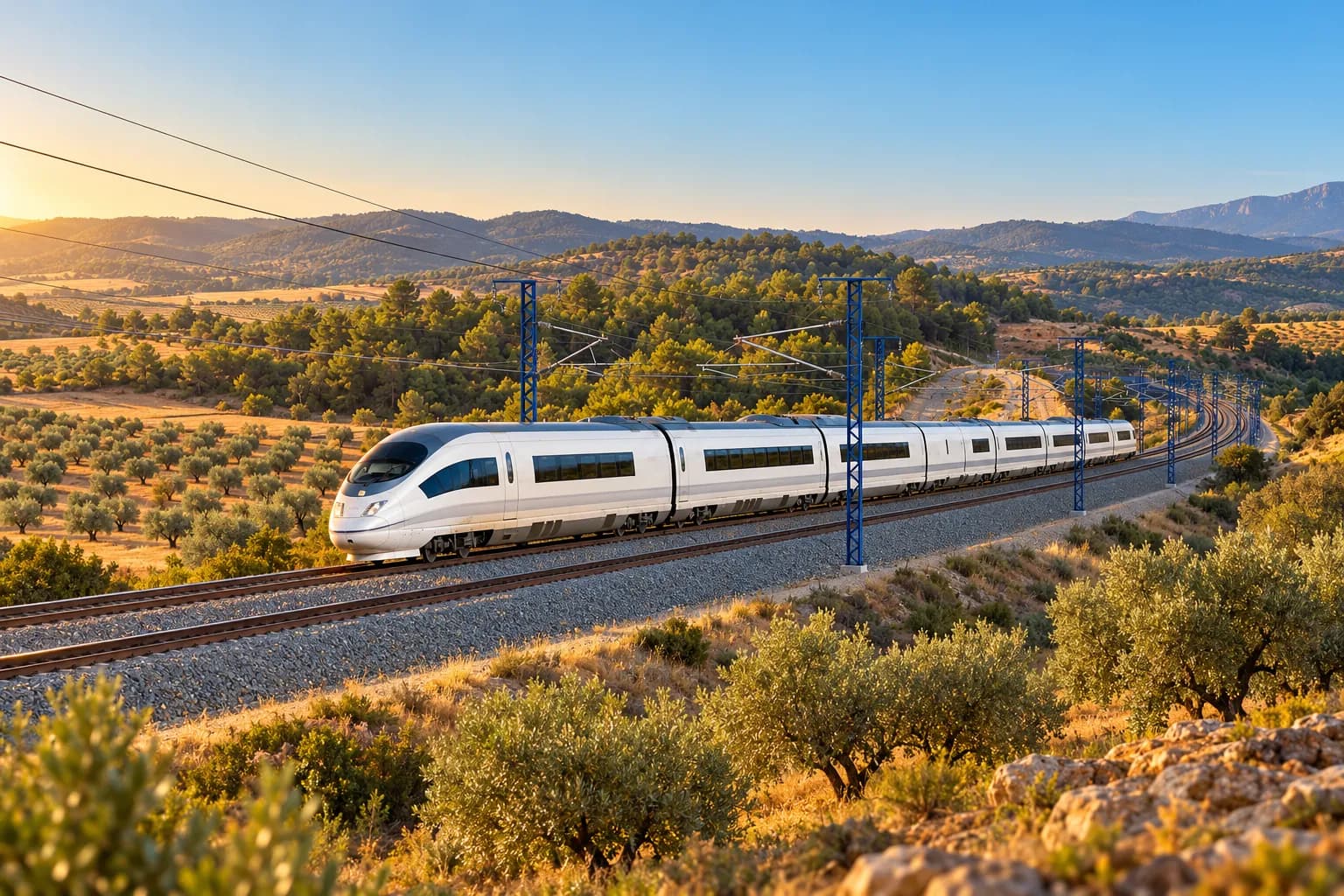
The airport and the road to your base
Choose the airport together with the resort: Girona or Barcelona for the Costa Brava, Reus for Salou, Alicante for Benidorm, Málaga for the Costa del Sol. On the islands you land in Palma, Tenerife South or Gran Canaria, for example, and from Madrid the AVE train heads south.
From the airport to your base
Each diagram shows a typical route from the airport to your base. Distances and times appear where an airport, tourist board or transport operator publishes them: a guide, not a guarantee.
Barcelona
- Barcelona Airport (BCN)
- Aerobús or train
- Central Barcelona
The airport is 16 km south of the city. Aerobús A1 and A2 run 24 hours to Plaça de Catalunya in about 35 minutes; the R2 Nord train runs from T2 to Sants.
Costa Brava
- Girona Airport (GRO)
- Bus or car
- Lloret, Tossa, Blanes
Girona Airport is a few kilometres from the city, and Girona to Lloret de Mar takes about 30 minutes; from central Barcelona, 80 km or about an hour. Buses run there from both airports.
Salou and the Costa Daurada
- Reus Airport (REU)
- Bus to the resort
- Salou, Cambrils, La Pineda
From Reus Airport, Autocars Plana buses run to Salou, Cambrils and La Pineda. Barcelona Airport is 80 km from the Costa Daurada, with Bus Plana coaches from there.
Benidorm
- Alicante Airport (ALC)
- AP-7 motorway
- Benidorm
Benidorm’s tourist office puts Alicante Airport 58 km away, 40-60 minutes by car. The direct ALSA bus takes about 45 minutes and runs hourly.
Costa del Sol
- Málaga Airport (AGP)
- C1 train or bus
- Costa del Sol resorts
The C1 commuter train takes about 12 minutes from the airport to central Málaga and, in the other direction, serves Torremolinos, Benalmádena and Fuengirola. Intercity buses run to Marbella, Estepona and Nerja.
Palma and Mallorca’s resorts
- Palma Airport (PMI)
- EMT or TIB bus
- Palma and resorts
EMT city buses run from the airport to Palma and Playa de Palma, and the TIB network links the airport directly with the island’s main resorts.
Costa Adeje and Los Cristianos
- Tenerife South Airport (TFS)
- TF-1 motorway
- Costa Adeje
Tenerife’s tourist board puts Costa Adeje 20 km and Los Cristianos 18 km from Tenerife South Airport, via the TF-1 motorway.
Maspalomas and the south
- Gran Canaria Airport (LPA)
- Bus 66 or 1
- Maspalomas
According to the airport, bus 66 links it with the Maspalomas resort area, and line 1 with the island’s capital and Puerto de Mogán.
Madrid and the train south
- Madrid Airport (MAD)
- Train to Atocha
- AVE heading south
- Seville or Málaga
From Terminal 4, the C1 commuter train runs to Atocha, where AVE trains leave for Seville and Málaga; an AVE ticket includes a commuter train ride.
Chapter 3 of 6Hotels
Hotels for families, couples and city breaks
From family resorts with pools and new luxury hotels on the islands to hotels in city centres. Each card says who the hotel suits and what to know before booking. This is a selection for comparison, not a ranking or confirmation of available rooms.
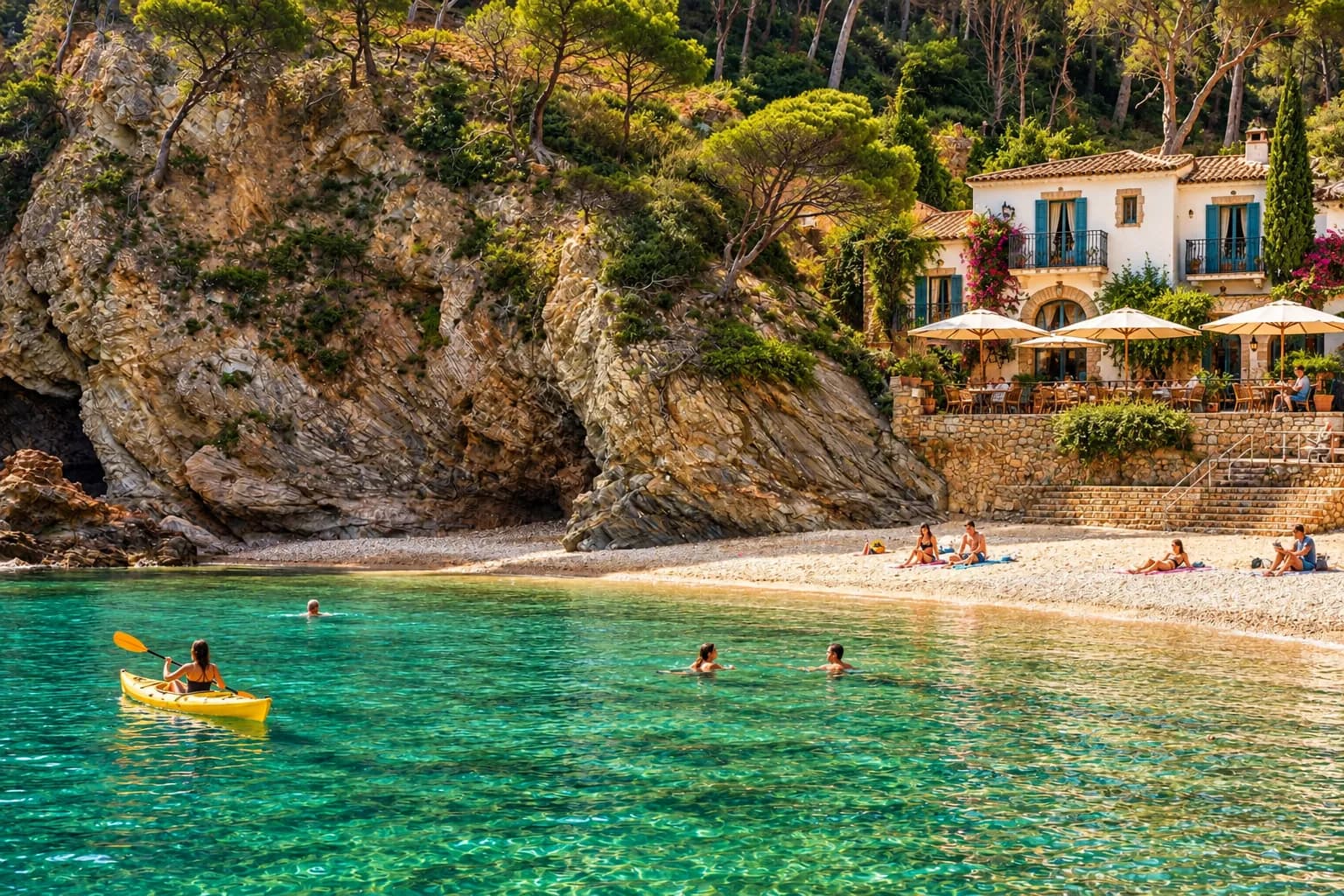
Barcelona and the Catalan coast: from the city centre to PortAventura
A city hotel in Barcelona or a resort on the coast: this decides the way to the beach, pools, kids’ clubs and opening season.
BLESS Barcelona
A hotel on Plaça de Catalunya with 119 rooms, a rooftop pool for guests only and the La Pajarera bar with city views. For couples who want the very centre.
Entry-level rooms face an inner courtyard; City View categories look over the city.
Hotel Arts Barcelona
A beachfront tower with a family pool for all ages and the adults-only Gehry Pool facing Frank Gehry’s Peix (fish) sculpture; children get the Arts Kids programme.
The final phase of renovation runs until June 2027, so some areas may close temporarily.
Catalonia Barcelona Beach
A 4-star hotel in Poblenou, a 5-minute walk from Mar Bella beach; every room has a balcony or terrace, and some family junior suites have two bathrooms.
Not every room has a sea view: look for Sea View in the room name.
Hostal de La Gavina
A 1932 hotel above Sant Pol Bay, its floors decorated with pieces the owning family collected abroad; there is a 25-metre Garbí pool with a Venus statue. For couples.
Children under 14 may use the spa and indoor pool only for one afternoon hour.
Guitart Central Park Aqua Resort
A water-play area with slides and waterfalls, two seasonal outdoor pools, a Kids Club for ages 4-7 and a Junior Club for 8-12. Good for families.
Lloret de Mar’s beaches are a few minutes away, and parking is charged per day.
AQUA Hotel Silhouette & Spa
Adults only from age 16: three outdoor pools, a spa with a heated indoor pool and 150 m to the beach in Malgrat de Mar. Suits couples.
There are shows and live music every night, worth knowing if you want quiet evenings.
Hotel Calipolis
A 4-star hotel on the Sitges seafront facing the beach, 10 minutes’ walk from the station. The terrace pool is open 1 April-1 November.
Parking spaces are limited, so book one together with your room.
Hotel Caribe, PortAventura World
Rooms spread over 14 buildings styled as Caribbean islands, and your stay includes unlimited PortAventura Park entry every day, arrival and departure days included. For families.
The white-sand pool is open only from May to September.
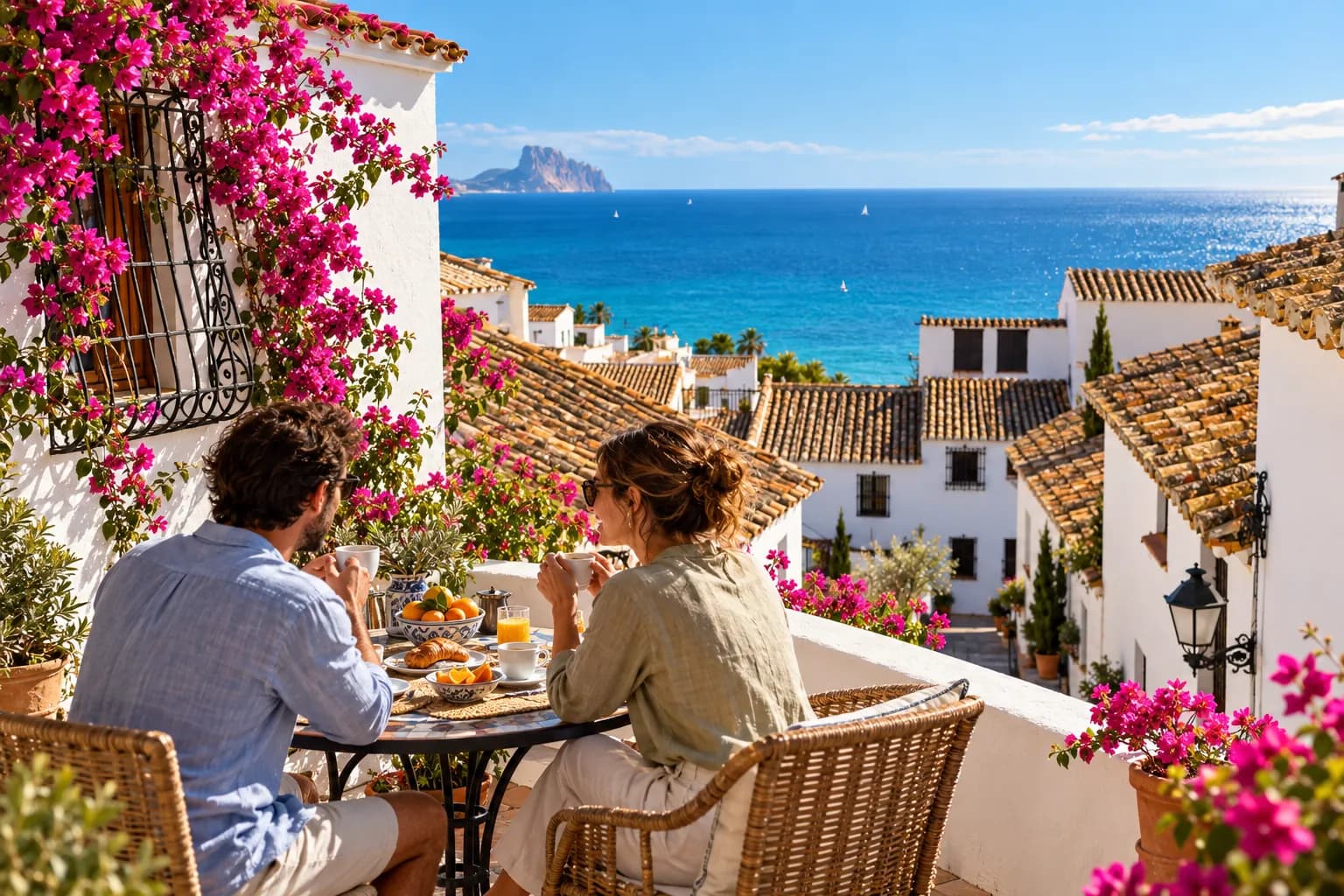
Valencia and the Costa Blanca
Historic city hotels, family resorts with kids’ clubs, an adults-only hotel and a golf resort. Compare the way to the beach and opening seasons.
Hotel Palacio Vallier
A 31-room palace in the historic centre: a renovation completed in 2019 uncovered the remains of a 3rd-century Roman perfumery, which inspired the restaurant. Suits couples.
Massages are given at the spa of sister hotel Plaza Mercado, not in the palace.
Hotel Neptuno Valencia
A small 48-room hotel on the seafront with direct access to the beach and promenade; some rooms face the sea or Marina Real, and there are connecting family rooms.
Restaurants and terraces with music surround it, so do not expect quiet.
Gran Hotel Peñíscola
A family 4* hotel by the beach: the Funny-Club for children runs at weekends, holidays and all summer, and kids’ spa sessions start at age 3.
The outdoor pool is open only from 1 May to 20 September.
Asia Gardens Hotel & Thai Spa
A 5* hillside resort overlooking Benidorm: tropical gardens, seven pools including an adults-only one, and a kids’ club from age 4. Suits couples and families.
The beach is 2 km away, so getting to the sea means a ride.
Magic Natura Resort
A resort of Polynesian-style lodges: stays include unlimited entry to Terra Natura zoo and Aqua Natura water park, and kids get water slides and the Komodo club.
The resort closes from early November to the second half of March; only some lodges have jacuzzis.
Sandos Monaco
A 4* hotel for guests aged 16 and over with a spa, yoga and Pilates; meal plans range from breakfast to all inclusive. Suits couples or friends.
Levante beach is 850 m away, and balconies face the town or the pool.
Hospes Amérigo
A 5* hotel in a former Dominican convent in central Alicante: a rooftop pool and spa face Santa Bárbara Castle, and the family room has two bedrooms.
The rooftop spa and pool open only in the daytime, not in the evening.
Grand Hyatt La Manga Club Golf & Spa
A 192-room 5* hotel between two of La Manga Club’s three golf courses, next to Calblanque Natural Park; the Family Suite sleeps up to 6.
You need your own car to reach La Cala cove and its beach club.
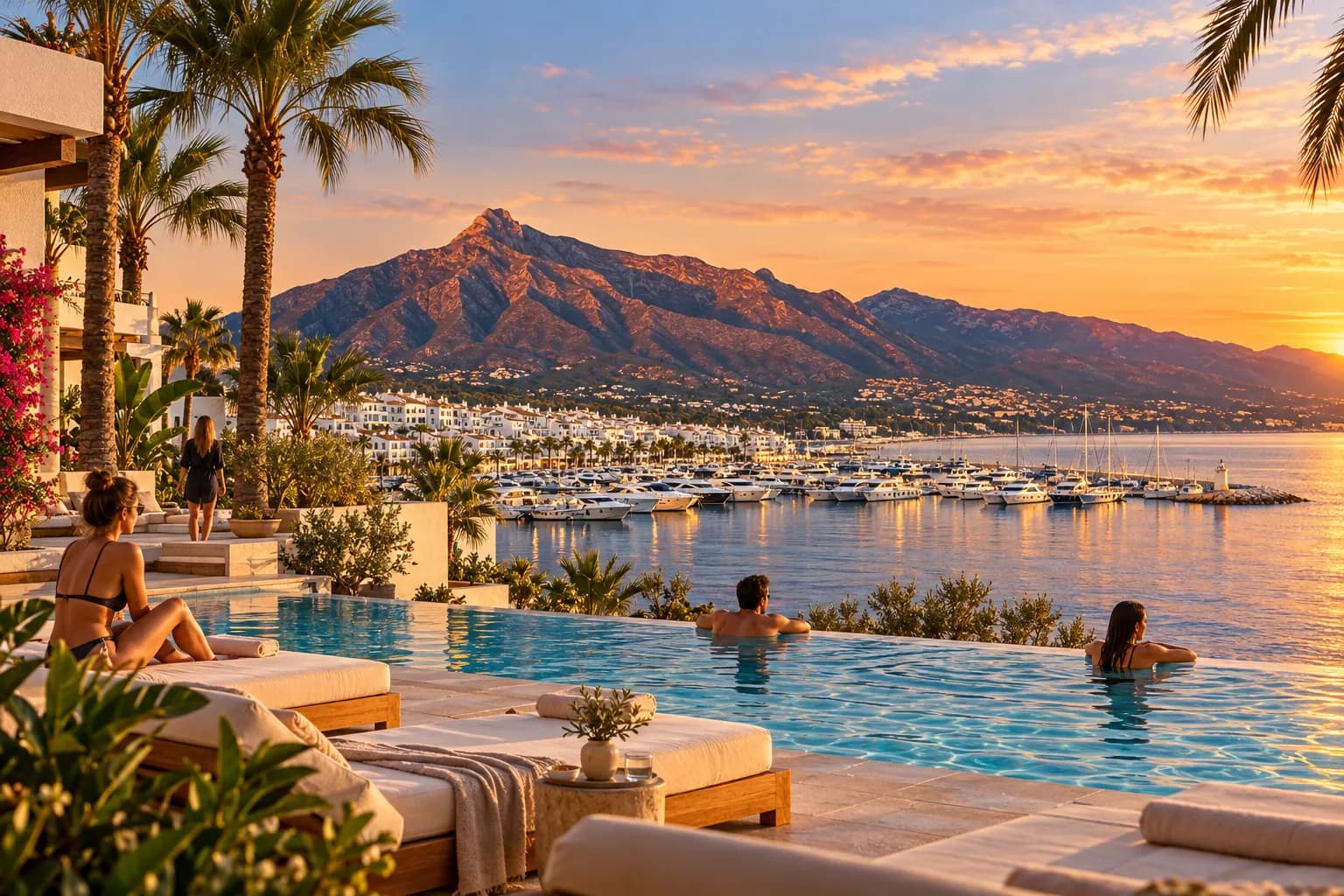
Costa del Sol and Andalusia
New and landmark resorts in Marbella, all inclusive in Estepona, palaces in Málaga and Granada. Compare the way to the sea and paid extras.
Marbella Club Hotel
A resort opened in 1954 on a former family estate: the kids’ club for ages 4-14 runs daily all year, and villas with private pools sleep 6-12.
Only 14 rooms, in a separate wing, have a direct sea view.
Gran Marbella Resort & Beach Club
A 135-room 5* resort by Real de Zaragoza beach, built in the Moorish tradition with horseshoe arches, zellige tiles and riad-style courtyards.
Amù Beach Club is a 5-minute walk away, and its sunbeds are paid even for hotel guests.
Ikos Andalusia
An all-inclusive resort: nine restaurants, local restaurants through the Dine Out programme, and daily activities for children from 6 months to 17 years.
The children’s tennis, football and swimming academies cost extra.
Gran Hotel Miramar
A seafront palace opened in 1926 as the Hotel Príncipe de Asturias; it later housed the courts and, once restored, became a 5* hotel again. Suits couples.
The seaside sunbed area is 150 m from the hotel and opens only in season.
Hotel Pez Espada
A 4* hotel opened in 1959 and renovated in retro style: the garden pool opens onto the promenade, and the upper Splash & Play pool with jets especially suits children.
In season, entertainment runs day and night, so quiet is not part of the offer.
Vincci Selección Aleysa
A 5* boutique hotel on Benalmádena’s beachfront with direct access to the sea and a spa with a heated pool; Puerto Marina is nearby and the airport 8 km away.
Superior Double rooms are on the lower floors, -1 and -2.
Hotel Alhambra Palace
An orange neo-Moorish palace from 1910 on the Alhambra hill, a 10-minute walk from central Granada, with mosaics, arches and a small theatre inside.
Not every Classic room has a city view, and parking is paid.
Corral del Rey
A 17th-century mansion in the old quarter, five minutes from the cathedral: 17 rooms and a roof terrace facing the cathedral and the Giralda. Suits couples.
Officially it is a 3* hotel, and the roof has only a small plunge pool.
Hotel Hurricane
A 4* hotel whose subtropical garden leads to kilometres of wild beach facing the Strait of Gibraltar and Morocco; family rooms have two bedrooms and a garden.
Beach-side rooms have no sea view because of the palms and tall trees.
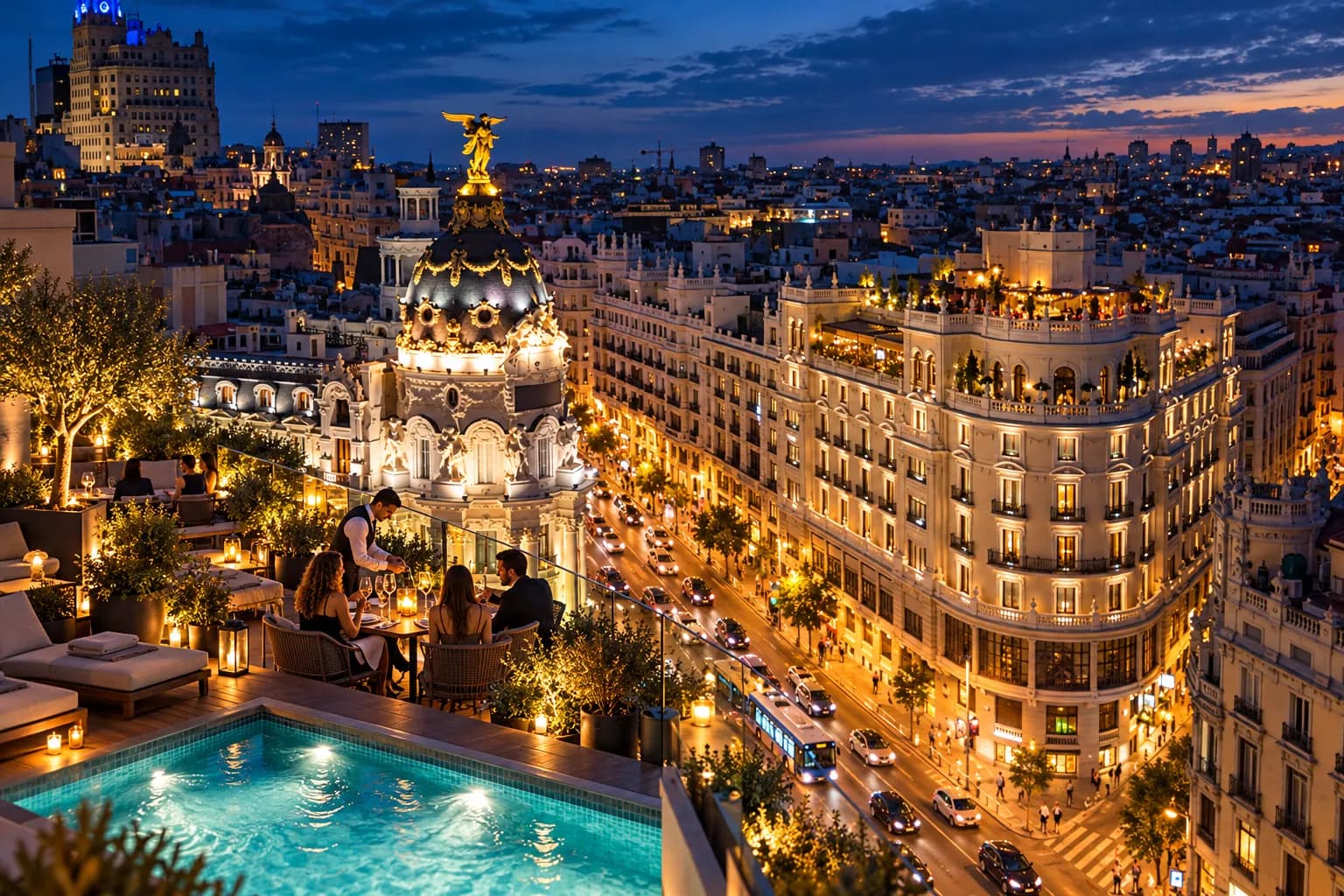
Madrid and other cities: new openings in the capital and century-old hotels
New upscale hotels in Madrid or historic buildings in Toledo, Bilbao and Santander: they differ in room size, pools and parking.
Mercer Madrid
The 1905 headquarters of a sugar company next to the Prado: 61 rooms and suites, a rooftop pool for guests only and chef Eneko Atxa’s restaurant. For couples.
The smallest rooms, Executive, are 20 m² and look onto an inner light well.
Nobu Hotel Madrid
Just 50 rooms and suites in a Japanese minimalist style, a three-level Nobu restaurant with an eight-seat sushi bar and a rooftop terrace. Suits couples.
The restaurant has a dress code: no shorts, sportswear or sporty sandals.
Catalonia Gran Vía Madrid
An early 20th-century building on Gran Vía with Talavera tiles on its façade, an eighth-floor rooftop infinity pool and family rooms for four.
The pool is open April to October, and the 28 m² family room has bunk beds.
Hacienda del Cardenal
Cardinal Lorenzana’s 18th-century residence inside Toledo’s walls, now a 4-star hotel with a pool, five dining rooms and junior suites with terraces over the garden. For couples.
Cristo de la Luz Mosque is a 5-minute walk, the cathedral and Alcázar 15 minutes.
Hotel Carlton
Inaugurated in 1926 on Plaza Moyúa in central Bilbao, the hotel housed the Basque Government in 1937; the 250 m² Imperial Suite has a terrace over the square.
In a low-emission zone: to use the hotel car park, ask reception for a vehicle invitation.
Eurostars Hotel Real
A white 1917 hotel on a hill above Santander Bay, facing Los Peligros beach; the breakfast room opens onto a garden with 80 kinds of roses. For couples.
A balcony in Deluxe rooms is not guaranteed; it depends on availability at check-in.
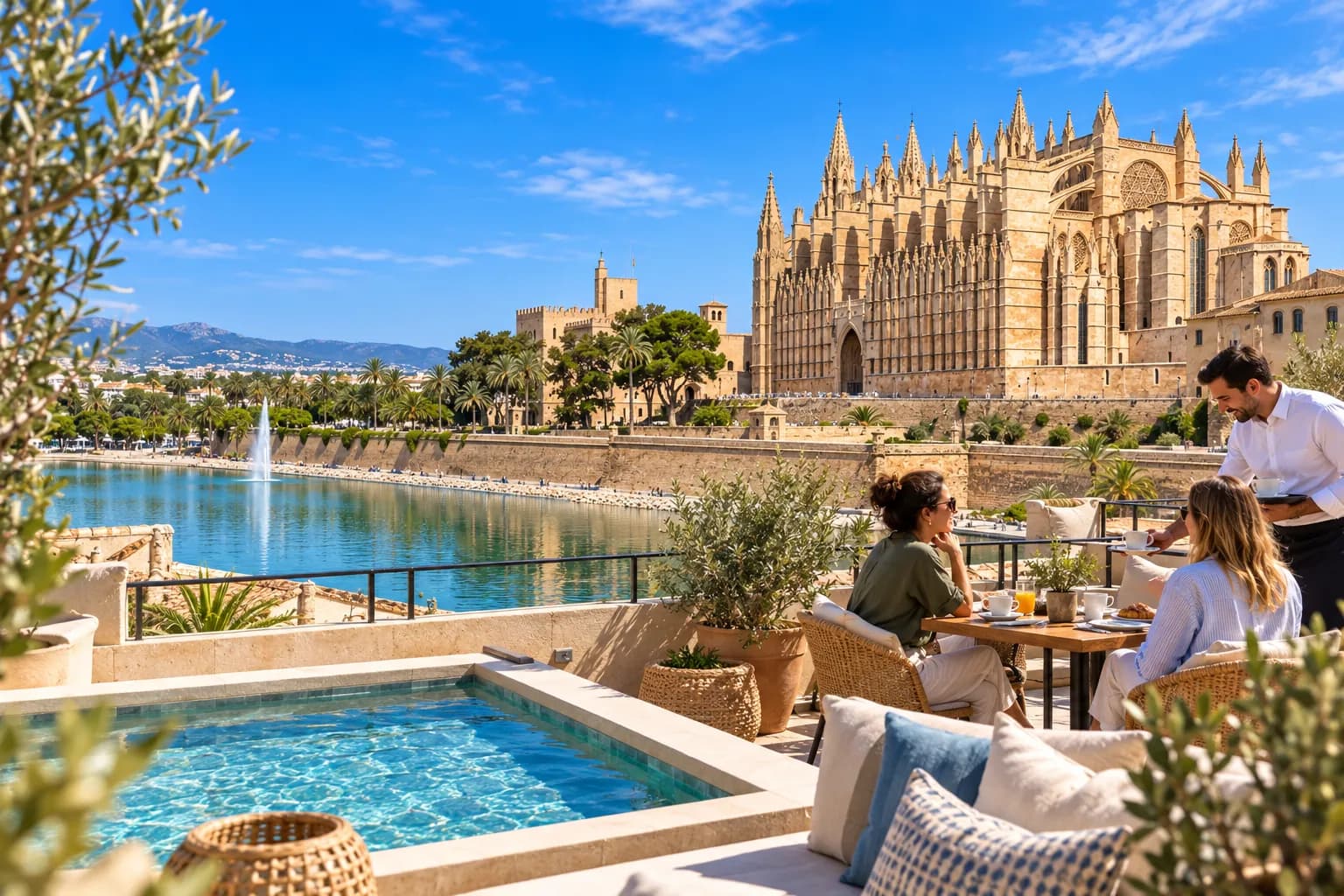
Balearic Islands
Here you find large family resorts on Mallorca, city and heritage hotels for couples and hotels on the other islands: compare beach access and season.
Four Seasons Resort Mallorca at Formentor
The restored, seasonal 1929 Hotel Formentor in a nature reserve at Mallorca’s northern tip: beach steps away, an adults-only pool and a kids’ club for ages 4-12.
In high season, daytime and evening car access to the peninsula requires registration through the hotel.
Mandarin Oriental Punta Negra, Mallorca
A resort on the site of the historic Hotel Punta Negra near Puerto Portals marina: 131 sea-view rooms and suites, some with private pools, and six restaurants.
Booking ahead is recommended for Matsuhisa and Leña by Dani García.
Can Bordoy Grand House & Garden
A restored 16th-century palace in Palma’s old town with a heated garden pool and a rooftop pool facing the cathedral. Suits couples who explore on foot.
Families are welcome, but the spa and rooftop may have age limits for children.
Hotel Riu San Francisco
An adults-only hotel right on the beachfront of Playa de Palma, with a pool, spa and gym, and buffet breakfasts and dinners. For couples or solo travellers.
Expect live music in the evenings, and lively Playa de Palma nightlife in season.
Zafiro Palace Alcudia
A family 5-star 450 m from Alcúdia beach: suites with a kitchen or private pool, pools with a pirate ship and slides, and kids’ clubs for ages 4-15.
The 12-15 club runs only in high season; for quiet, there is an 18+ pool.
Hipotels Cala Millor Park
A family 4-star a short walk from Cala Millor beach: optional all inclusive, apartments with a kitchen and a kids’ club for ages 4-12.
The mini club’s daily programme runs only in high season; in winter there is an indoor pool.
Torralbenc
A 5-star agritourism estate in southern Menorca with its own winery: every room has a balcony, terrace or garden, and there is a cottage with a private pool.
The sea is 3 km away, so plan on a car; the hotel can arrange a rental.
Parador de Eivissa-Dalt Vila
The first Balearic hotel of Spain’s state-run Paradores network, in a 16th-century fortress in UNESCO-listed Dalt Vila: 41 rooms, a pool, wellness area and excavations to visit.
It sits high in the old town above the port: a choice for history and walks.
Cala Saona Hotel & Spa
Run by a Formentera family with over 100 years in hospitality, on Cala Saona cove: 90 rooms, some directly facing the sea, an infinity pool and a spa.
Standard rooms are 21 m²; a family with two children does better in connecting rooms or a suite.
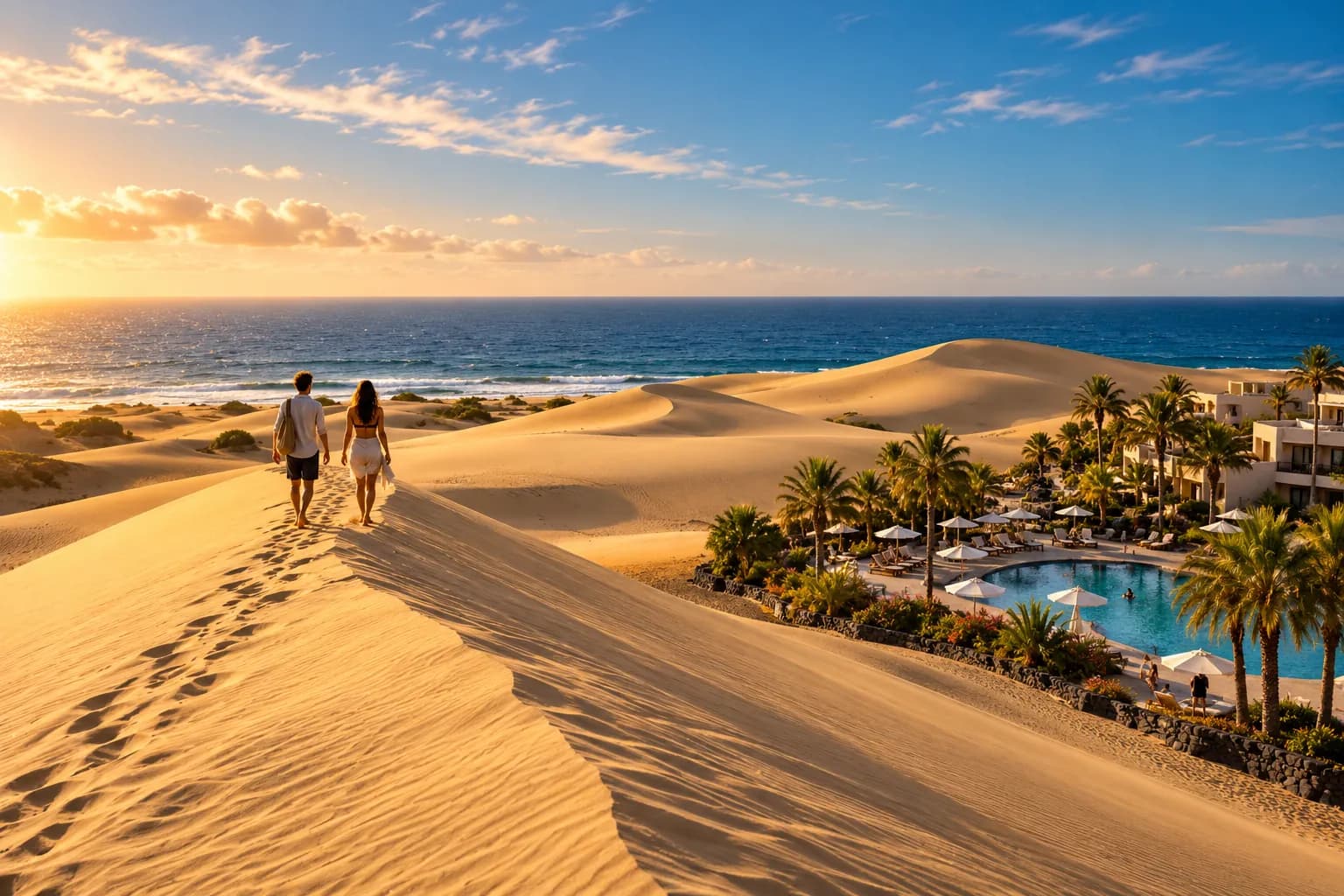
Canary Islands
These islands work in winter too: compare whether pools are heated, how far the beach is and whether you need a ferry.
Gran Hotel Taoro
A restored 1890 grand hotel in Taoro Park above Puerto de la Cruz: 199 rooms and suites and heated pools for adults and children.
There is paid, guarded parking, and pets up to 8 kg are welcome.
Domes Baobab Suites
A family 5-star above Costa Adeje bay: suites, some with a private pool and hot tub; a free kids’ club for ages 4-12 and 5-minute beach transfer.
Pools are heated only from late March to mid-May and throughout October.
Seaside Palm Beach
A 1970s 5-star design hotel in a palm grove by the Maspalomas dunes, refurbished by Alberto Pinto. Five pools; the main one is heated in cooler months.
Pepe’s Club takes children aged 4-12, while the spa pools are adults-only.
H10 Costa Mogán
An adults-only 4-star on Playa del Cura in southern Gran Canaria: suites from 38 m², and the main pool is heated from November to April.
Minimum guest age is 16, with 18+ recommended; Puerto de Mogán is 15 minutes by bus.
Princesa Yaiza Suite Hotel Resort
A family resort on Playa Dorada beach: the 10,000 m² Capitan Park kids’ area and a Baby Club for little ones from 4 months to 3 years.
Creative workshops at Capitan Park are paid and need booking in advance.
Club Jandía Princess
An all-inclusive 4-star right on Esquinzo beach in southern Fuerteventura: a family area with a kids’ pool and an 18+ zone, both with direct beach access.
The beach is reached by steps; in the 18+ zone, one of the three pools is for nudists.
Hotel Jardín Tecina
A hotel in a botanical garden above Playa de Santiago: five pools heated from November to April, a kids’ club for ages 4-13 and an adults-only area.
A lift serves the beach club below the cliff; guests with reduced mobility reach it only by road.
Hotel LIVVO Puerto de Mogán
A 4-star hotel in Puerto de Mogán’s marina, 50 m from the beach; steps lead from the pool to the sea. All ages are welcome, but it stays calm.
The spa, with its heated indoor pool, needs booking; under-16s must come with an adult.
Chapter 4 of 6Experiences and trips
What to see and where to set off from
Barcelona’s architecture and Madrid’s museums, Andalusian palaces, Canary volcanoes, Balearic coves, parks for children and local food. The cards say where to set off from and what to book in advance.
The tag on a card shows how long the visit or ride itself takes, as the venue states; add the trip from your hotel and back on top.
Barcelona, Madrid and the big cities
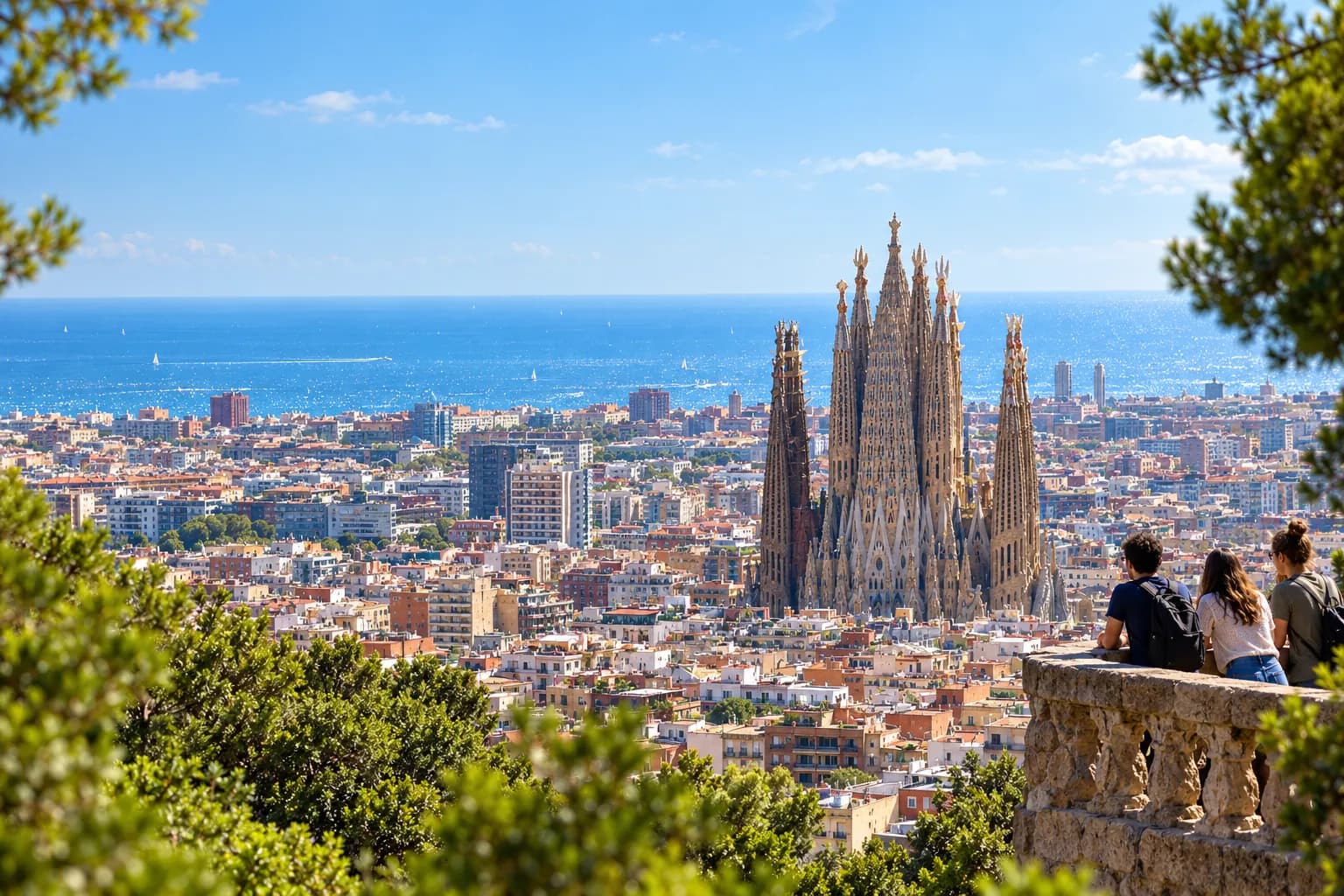
Gaudí’s sites admit visitors on timed tickets, and the Sagrada Família’s are named and checked against your passport. Book before you travel.
Sagrada Família
Gaudí’s basilica. Tickets are named and valid only for the chosen time: arrive late and you won’t get in. Sales open about two months ahead.
Shorts and skirts must reach mid-thigh; towers are for ages 6 and up, and you walk down.
Park Güell
Gaudí’s Monumental Zone opens on timed tickets, up to 700 people per half hour. Once you leave, you can’t go back in.
From Lesseps or Vallcarca metro (line L3) it’s about a 20-minute walk; use the entrance with an escalator.
Casa Batlló
Gaudí’s house in central Barcelona, toured with an audio guide. Enter within 15 minutes of your time slot, never earlier.
The house and roof are wheelchair accessible; pushchairs stay at the entrance and baby carriers are offered instead.
Prado Museum
8,600 paintings and over 700 sculptures, including Velázquez’s Las Meninas and Goya’s The Third of May 1808. Closed on 1 January, 1 May and 25 December.
Decide in advance what to see: the museum’s website suggests 1, 2 and 3-hour routes.
Royal Palace of Madrid
The official residence of the King of Spain: over 135,000 m² and 3,418 rooms. It sometimes closes to visitors for official events.
Visitor numbers are limited: buy tickets online in advance and leave large backpacks and suitcases behind.
Guggenheim Museum Bilbao
Frank Gehry’s sculpture-like building has about 9,000 m² of galleries on three levels around the Atrium. Every ticket includes an audio guide.
The museum usually closes on Mondays outside summer; buy tickets only on its official website.
Palaces, flamenco and southern mountains
Book the Alhambra and the Alcázar ahead, and dress appropriately for the Mosque-Cathedral. Ronda and the Caminito del Rey are trips from Málaga.
Alhambra
The Alcazaba, the Nasrid Palaces and the Generalife gardens. The Nasrid Palaces admit you only at the time on your ticket; latecomers miss them.
Tickets are named, so bring your passport; bags up to 40×40 cm, with backpacks worn on the front.
Mosque-Cathedral of Córdoba
An 8th to 10th-century mosque, with a Gothic nave and cathedral added from the 14th century; today it is Córdoba’s main Catholic church.
Dress appropriately and remove hats; the bell tower is for ages 7+, about 40 m up narrow stairs.
Royal Alcázar of Seville
A palace complex that grew from a residence begun in 913: a Gothic palace, Pedro I’s mid-14th-century Mudéjar palace and gardens full of water.
A general ticket covers the palaces’ ground floor and gardens; the Upper Royal Quarters are a separate, organised visit.
A flamenco evening
Flamenco has been UNESCO intangible heritage since 2010. The earliest evidence comes from 18th-century Triana, Jerez and Cádiz; Granada’s Sacromonte caves host zambra.
Every two years in autumn, Seville holds the Flamenco Biennial, with shows in the city’s main theatres.
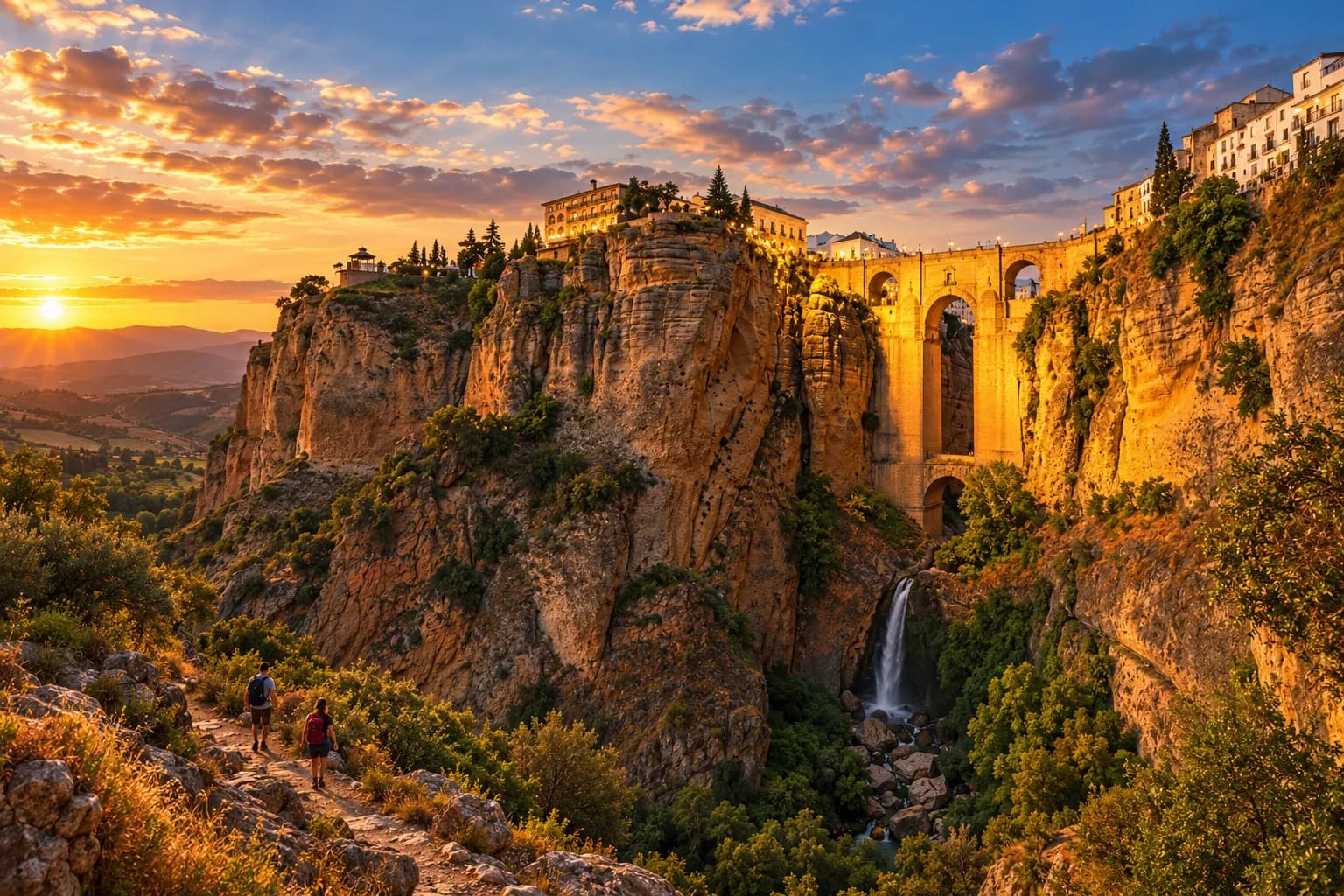
Ronda and the New Bridge
Ronda is an hour and a half from Málaga Airport. The 98-metre New Bridge spans El Tajo gorge, joining the old town and the Mercadillo district.
A ticketed path through the gorge leads to the foot of the bridge; children under 8 are not admitted.
Caminito del Rey
A one-way 7.7 km route with boardwalks over the gorge and a footbridge 105 m up; it may close in bad weather.
Ages 8+; under-18s need an adult and ID; a helmet is provided, and flip-flops and heels are banned.
Trips from your base
Montserrat, Figueres and Girona are day trips from Barcelona, Segovia from Madrid. Book the museum and monastery tickets ahead.
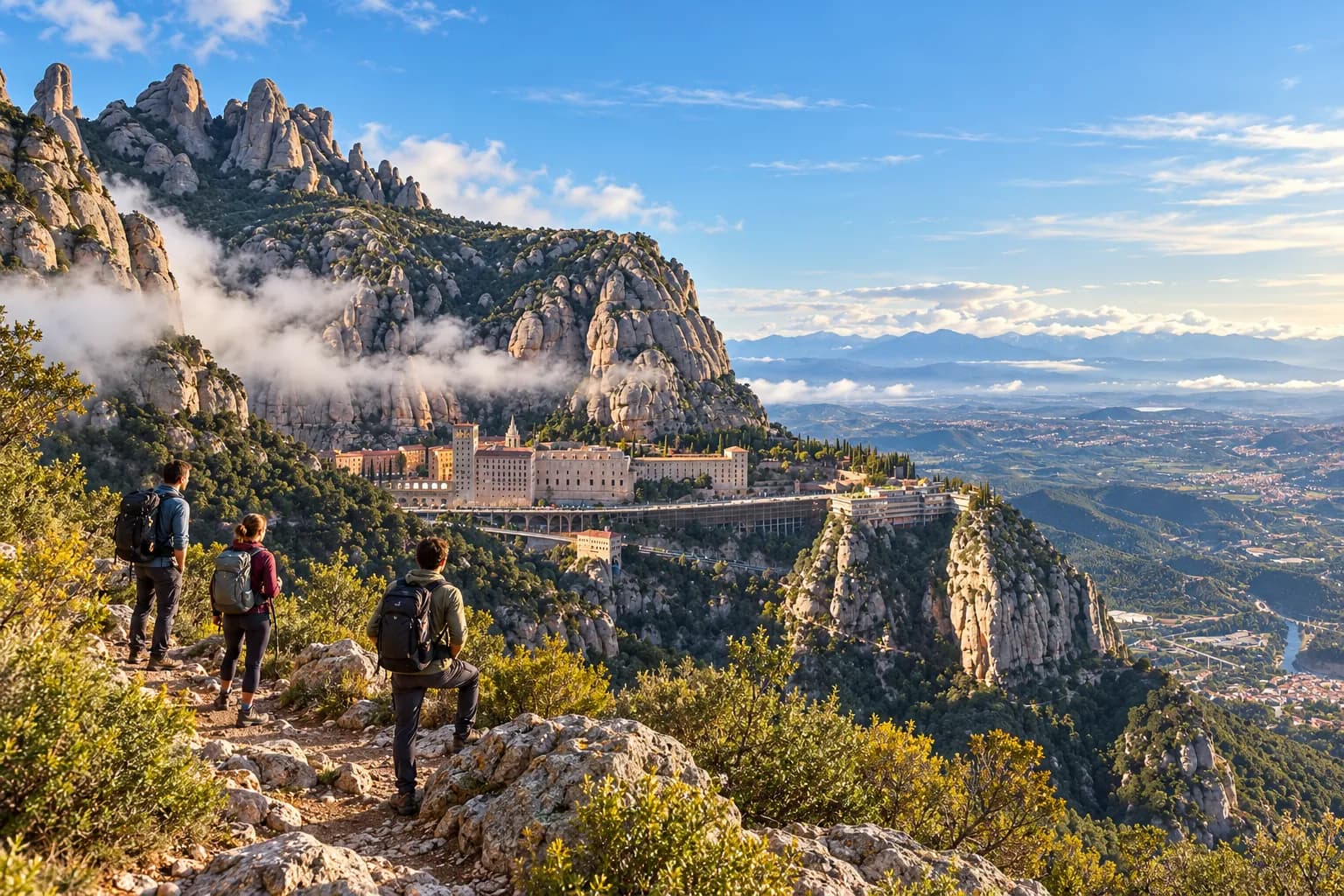
Montserrat Monastery
A monastery founded in 1025; Our Lady of Montserrat is the patron saint of Catalonia. Hourly trains from Barcelona connect with the rack railway and cable car.
Tourist visits to the basilica need a ticket; Throne of Our Lady packages are timed for the Throne.
Dalí Theatre-Museum, Figueres
A museum Dalí designed himself in Figueres’ former theatre, with over 1,500 works. The R11 regional train runs there from Barcelona-Sants.
Book ahead; backpacks worn on the back, pushchairs and items over 35×35×25 cm are not allowed in.
Girona Old Town
A city 100 km from Barcelona: 9th-century walls with lookout towers, the lanes of the Call Jewish Quarter and colourful houses on the Onyar.
The wall walk is open from morning to evening, and until late evening from June to August.
Segovia’s aqueduct and Alcázar
A Roman aqueduct of granite blocks laid without mortar, and the Alcázar on a crag between two rivers, its tower reached by a steep spiral staircase.
The high-speed train from Madrid takes about 30 minutes, but Segovia-Guiomar station is 6 km from the centre.
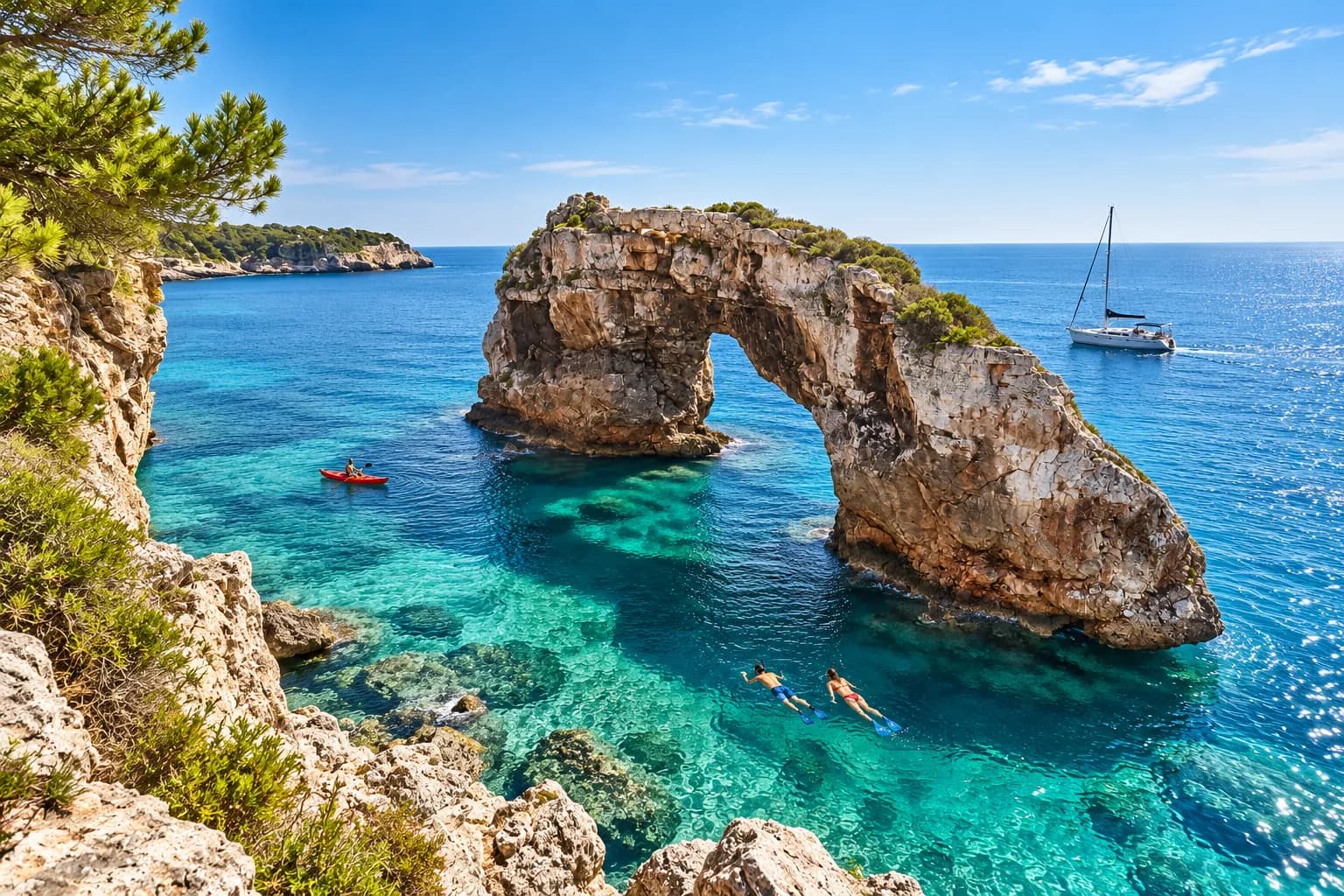
Coves and mountains of the Balearics
Mallorca for the Serra de Tramuntana, the Sóller train and the Caves of Drach; Menorca for coves; Ibiza for Dalt Vila; Formentera for Ses Illetes beach.
Serra de Tramuntana mountains
A range of about 90 km along north-west Mallorca, a UNESCO cultural landscape since 2011: terraces held up by mortarless dry-stone walls.
The road down to Sa Calobra cove is 14 km of hairpins with a 360° loop; boats go there too.
Wooden train to Sóller
A century-old wooden train runs from Palma to Sóller: an hour through 13 tunnels in the Serra de Tramuntana, then a half-hour tram to the sea.
It gets busy in high season: be at the station 30 minutes early; tickets are non-refundable.
Caves of Drach, Porto Cristo
In Porto Cristo, south-east Mallorca, a 1,200 m route leads past stalactites to Lake Martel, where a live classical concert is played.
The route has steps, so prams and wheelchairs cannot be used in the caves.
Menorca’s coves and the Camí de Cavalls
The 185 km Camí de Cavalls circles all of Menorca; in the south it reaches the Turqueta and Macarella coves, where oak-wooded gorges meet the sea.
The stage from Cala Galdana to Turqueta, past Macarella, is 6.4 km, partly shaded in the gorges.
Dalt Vila, Ibiza’s old town
Ibiza’s old town sits within 16th-century Renaissance walls with seven bastions; together with the Posidonia meadows it has been UNESCO-listed since 1999.
Children enjoy the cannons on the walls and the interactive spaces in the Sant Pere and Sant Jaume bastions.
Ses Illetes beach, Formentera
Ses Illetes lies at the far north of Formentera, in Ses Salines Natural Park: over 450 m of white sand and shallow turquoise water.
Entry to the park is free on foot or by bike; cars and motorbikes pay a small fee.
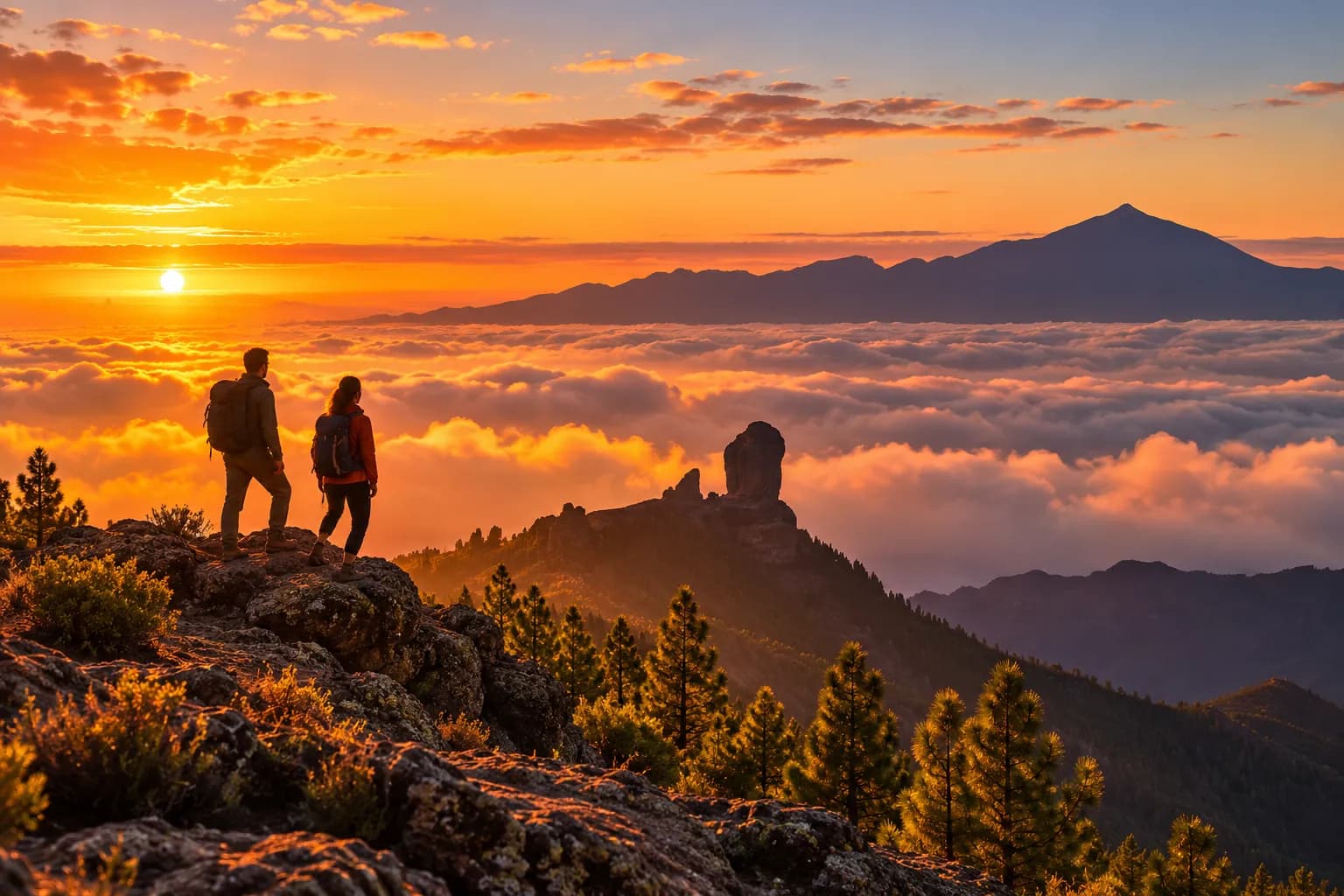
Volcanoes and nature of the Canaries
Choose by island: Tenerife for Teide and the sea, Lanzarote for Timanfaya, Gran Canaria for dunes, La Gomera for forest, La Palma for stars.
Teide Cable Car
The cabin climbs to 3,555 m in under 8 minutes; wind can halt service. The 3,715 m summit requires a Tenerife ON permit.
Pregnant women, children under 3, people with heart conditions or reduced mobility may not ride; wear closed sports shoes.
Whales and dolphins off Tenerife
Pilot whales and bottlenose dolphins live year-round in the Teno-Rasca marine area off western Tenerife. Boats leave from Los Cristianos, Puerto Colón and Los Gigantes.
Pick a boat with the “Barco azul” flag: it keeps a 60 m minimum distance; swimming with animals is banned.
Timanfaya National Park, Lanzarote
Timanfaya’s craters and lava fields are seen from a coach on the roughly 14 km Route of the Volcanoes; you can’t explore the park on your own.
Tickets are sold online only, for a set time; arrive 15 minutes early, as late arrival voids the ticket.
Maspalomas Dunes
A 400-hectare reserve in southern Gran Canaria with moving dunes, a palm grove and a brackish lagoon. Walking is allowed only on 8 km of marked trails.
Start at the dunes viewpoint and information office in Playa del Inglés; building stone shelters is forbidden.
Garajonay forest, La Gomera
Garajonay National Park holds over half of the Canaries’ mature laurel forest, fed by fog rising from the ocean.
It’s a fog forest: bring a warm layer and a raincoat, and keep to the marked trails.
La Palma’s starry sky
Since 1988 a law has protected La Palma’s sky from light pollution; the island is a Starlight Reserve and Destination, with astronomical viewpoints.
Tours of the Roque de los Muchachos Observatory run by day only, with a Starlight guide and advance booking.
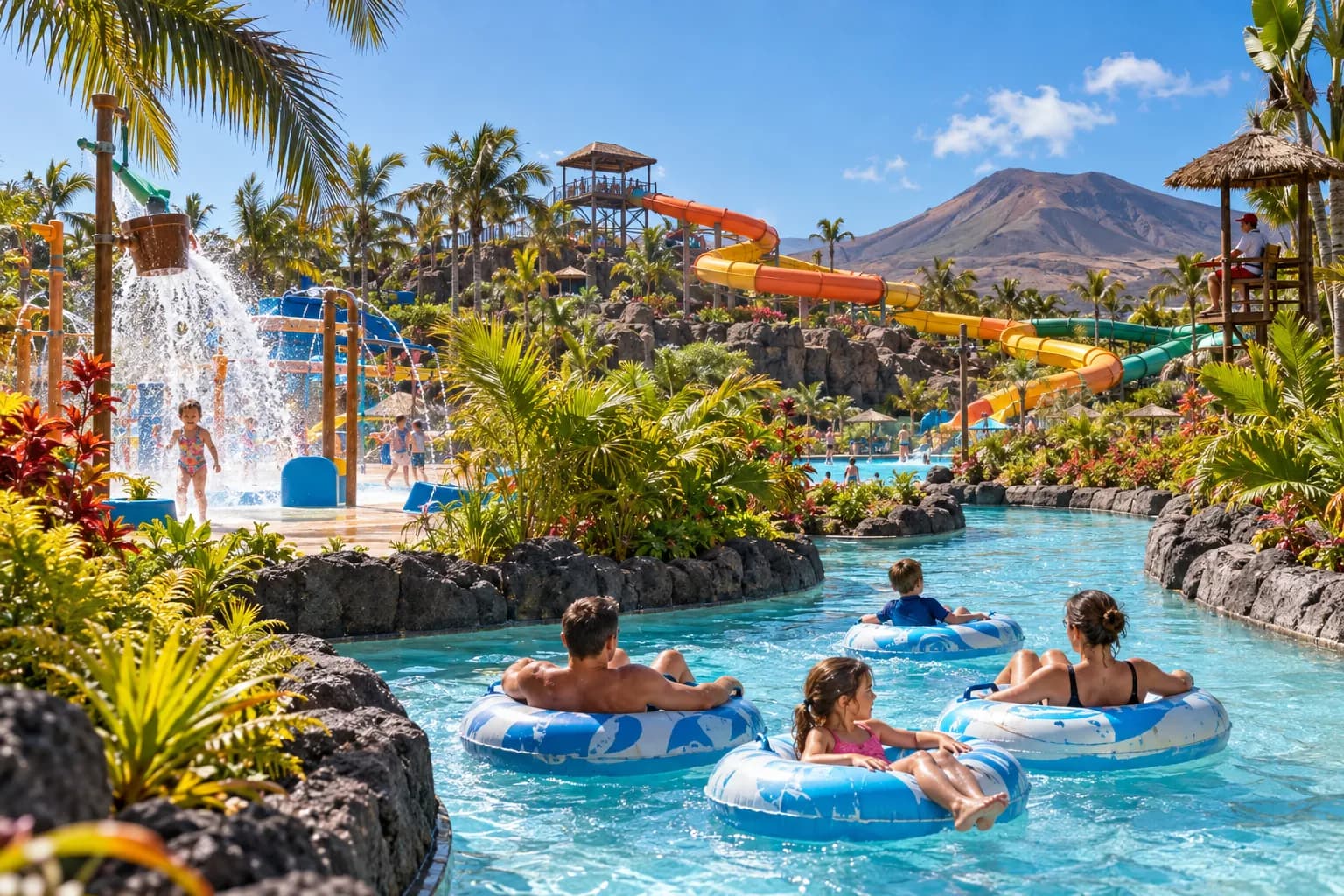
Parks and museums for the whole family
Each park suits a base: PortAventura the Costa Daurada, Siam Park and Loro Parque Tenerife, Aqualandia Benidorm, the Oceanogràfic and Science Museum Valencia.
PortAventura World, Costa Daurada
A Costa Daurada resort with three parks: PortAventura Park, Caribe Aquatic Park and Ferrari Land; it has its own train stop, and Reus airport is 15 minutes away.
Dragon Khan and Furius Baco need a height of at least 1.40 m; toddlers have the SésamoAventura world.
Siam Park water park, Adeje
A Thai-themed water park in Adeje, southern Tenerife: 19 attractions, a 3 m wave and the 28 m Tower of Power slide.
Little ones have Lost City with waterfalls, bridges and slides; many thrill rides suit families with teenagers.
Loro Parque, Puerto de la Cruz
A zoo in Puerto de la Cruz, northern Tenerife, with over 300 parrot species, a penguin house, a shark aquarium, plus dolphins, orcas and sea lions.
The park opens daily and has play areas for little ones; don’t feed or disturb the animals.
Aqualandia water park, Benidorm
A Benidorm water park with 17 slides, 12 pools and 10 children’s areas; its water is salty, drawn from its own wells.
Most slides need a height of 1.20 m and the ability to swim; toddlers have the children’s areas.
Oceanogràfic, Valencia
An aquarium in Valencia’s City of Arts and Sciences: over 27,000 animals of 750 species, in habitats from the Arctic to tropical mangroves.
Tickets give entry from your chosen time until closing; every building is accessible with a pram.
City of Arts and Sciences
Calatrava’s complex in the old Turia riverbed: the interactive Science Museum, Hemisfèric cinema and opera house. Most venues are indoors, so it suits rainy days.
Give the museum and Hemisfèric one day and the Oceanogràfic another; in high season and at weekends, book Hemisfèric ahead.
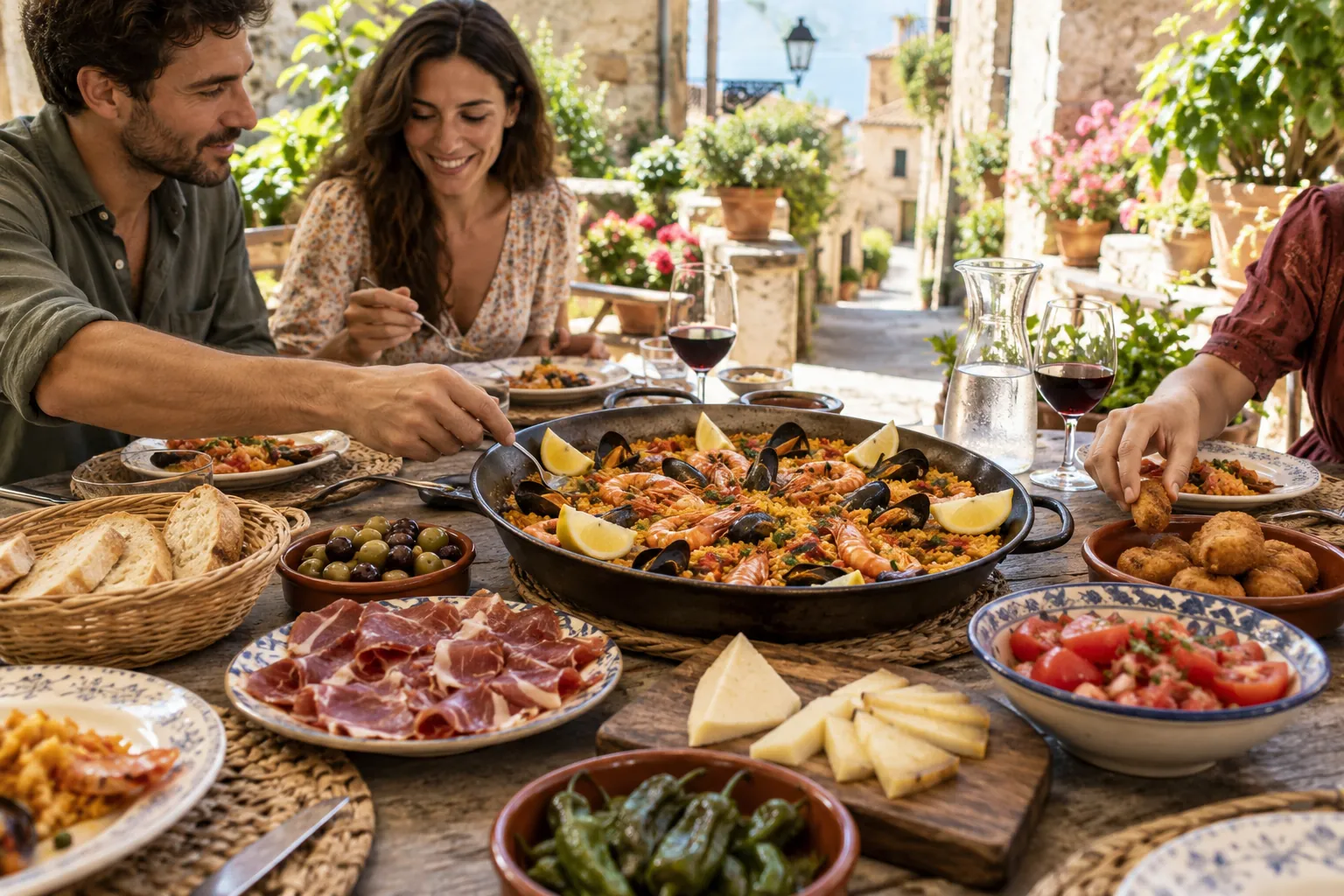
Food and wine
Four tastes of Spain where they belong: tapas in Madrid bars, paella in Valencia, sherry in Jerez bodegas and Cava in the Penedès.
Tapas in Madrid
Many Madrid bars give a free tapa with your drink: olives, crisps or bread with a cold cut. Larger plates (ración, media ración) cost extra.
Madrid classics are patatas bravas, Spanish omelette and croquettes, with a caña (small draught beer) or vermouth.
Paella in Valencia
Paella was born in the Albufera in the 16th century. Classic paella valenciana is rice with chicken, rabbit, green beans and big white garrofó beans.
It’s a lunchtime dish, cooked to order, usually for at least two people, so book a table ahead.
Sherry bodegas of Jerez
Jerez de la Frontera is the heart of sherry country. Its bodegas, called “cathedrals of wine”, show the solera and criadera system used to age sherry.
Sherry is also poured straight from the cask in the city’s tabanco bars, no bodega tour needed.
Cava in the Penedès
The Penedès, 45 km from Barcelona, is the birthplace of Cava. Sant Sadurní d’Anoia has historic cellars and an interpretation centre in an 1814 distillery.
Without a car: Rodalies trains R2 and R4 reach Vilafranca del Penedès from Barcelona in about an hour.
Chapter 5 of 6Seasons, entry and travel
When to go to Spain, entry and getting there
The season on the mainland and the islands, entry with a Ukrainian passport, the journey to your hotel and local rules. Rules checked on 27 October 2026; confirm them for your dates and route before paying.
Seasons on the mainland and the islands
Mainland beaches
best: June, September; heat or peak season: July, August
Catalonia, the Valencia region and Andalusia set the official bathing season, when the water is regularly tested, from June to September. July-August is hottest: Barcelona and Alicante average 28-31 °C by day (1981-2010 normals).
Balearic Islands
best: June, September; possible: May, October; heat or peak season: July, August
The Balearics have a longer official bathing season than the mainland: May to early October. July-August is hottest, with Palma averaging 29-30 °C by day; May and October bring 22-24 °C (1981-2010 normals).
Canary Islands
best: July-October; possible: November-June
The Canaries have Spain’s longest official bathing season, up to ten months: February to November. July-October is warmest, with southern Tenerife averaging 27-28 °C by day, and 22-23 °C in December and January (1981-2010 normals).
Heat in Seville and Madrid
heat or peak season: July, August
In July-August, daytime averages reach 35-36 °C in Seville and 31-32 °C in Madrid (1981-2010 normals). Plan city walks for mornings and evenings.
Ski season at Baqueira-Beret
best: December-March; possible: April, November
Baqueira-Beret in the Pyrenees usually opens in late November or early December and plans to close in April, weather permitting. Exact dates are announced each year.
Entry with a Ukrainian passport
For Ukrainian citizens
90 days visa-free
Within any 180-day period, only with a biometric Ukrainian passport; days in all Schengen countries add up. The EU online calculator shows what is left by passport number.
Passport validity
Passport: 3 months more
After your planned exit from Schengen; the passport must have been issued within the last 10 years.
Electronic travel authorisation
No ETIAS needed yet
No applications are taken; the EU will announce the start several months ahead. Then it will cost €20 and last up to 3 years or until the passport expires. The official site uses the europa.eu domain; intermediaries add fees.
Biometrics on first entry
Photo and 4 fingerprints
The EES takes them at the first Schengen border, along with a passport scan; no stamp goes in the passport. Fully running since 10 April 2026. Refusing biometrics means refused entry, and overstayers are added to a list.
Documents at the border Officers may ask about your trip and request a return ticket, a hotel or tour booking and funds per person: 10% of Spain’s monthly minimum wage a day, at least 90% of it in total. Cash, or a card with a bank statement; no online statements.
Travelling with children At the Schengen border children get the same checks as adults. Officers check the adult’s parental responsibility or guardianship, especially if only one adult travels and unlawful removal is suspected; children travelling alone get thorough document checks. Leaving Ukraine follows Ukrainian Border Guard rules.
Temporary protection It is a separate legal basis for staying in the EU, not 90/180 visa-free travel. This section covers tourist trips on a biometric passport.
Flights and onward travel
From Ukraine to Spain
- Overland to an airport in a neighbouring country
- Flight to Spain
- Transfer to your hotel
There are no direct flights: according to Spain’s Foreign Ministry, Ukraine’s airspace has been closed since February 2022. Travellers fly from Poland, for example: Rzeszów to Alicante, and Kraków to Barcelona, Madrid, Málaga, Valencia, Palma and Tenerife, among others.
Arrival airports
Aena airport names hint at the coast: Girona-Costa Brava, Málaga-Costa del Sol. In the Balearics, Mallorca, Ibiza and Menorca have airports; in the Canaries, each of the seven main islands does, and Tenerife has two, North and South.
High-speed trains
Renfe’s AVE high-speed trains link Madrid with Barcelona and Valencia, among other cities. Low-cost options from Madrid include Renfe’s Avlo to Valencia, Alicante, Málaga and Seville, and Ouigo to Barcelona, Valencia and Alicante.
Between the islands
Formentera is reached only by sea, through La Savina port, with ferries from Ibiza port. Between the Canaries, flights take under an hour (Binter, Canaryfly), and Armas and Fred. Olsen run ferries; boats to La Gomera leave mainly from Los Cristianos on Tenerife.
If you drive
Driving on a Ukrainian licence Licences issued outside the EU, including Ukrainian ones, are valid in Spain together with an International Driving Permit and a passport. The licence must be current, and the driver must meet Spain’s minimum age for that category. The car needs its papers and valid liability insurance.
Low-emission zones Towns with over 50,000 residents must have low-emission zones (ZBE), including Madrid, Barcelona, Valencia, Seville and Málaga. Access mostly depends on the DGT sticker (0, ECO, C or B); some zones only let you reach a car park. See the city council’s rules.
Toll motorways On toll motorways you usually take a ticket on entry and pay on exit, in cash or by card; some sections charge one fee for the whole stretch. Prices may vary by vehicle type and time of day, and a free ordinary road is always available.
Money, beaches and local rules
Catalonia and Barcelona
Tax up to €12 a night
Charged by the hotel per person, up to 7 nights. Barcelona: 5* €7, 4* €3.40, plus a €5 city surcharge; elsewhere €4.50 and €1.80, more in Castelldefels and 6 other towns. Free for ages 16 and under; rates valid to 31 March 2027.
Balearics: sustainable tourism tax
€1-4 per person a night
May-October: €3 at a 4* hotel, €4 at a 4* superior or 5*, plus 10% VAT. November-April it is 75% less, and from the 9th night in one hotel it halves again. Under-16s are exempt; the hotel collects it.
Emergencies
Call 112
Medical help, fire, rescue and other danger: free, 24/7 and with no prefix across Spain and the EU. From a mobile it works even without a PIN or your own network, if another network is available.
Cash and large payments
Declare €10,000 or more
This much in cash, bearer cheques or prepaid cards must be declared when entering or leaving Spain. Visitors who show they live outside Spain may pay less than that in cash per purchase; larger sums go by card or transfer.
Swimwear and drinking: Barcelona
Fine €120-300
That is the fine for swimwear away from beaches, pools, the seafront and streets next to the beach, or for a bare torso. Drink outdoors only where allowed; fines: glass or cans €30-100, near children or in night-noise zones up to €1,500.
Street drinking: Balearics
Fine €500-1,500
That is the fine for drinking on designated streets of the resort zones in Calvià (Magaluf), Palma and Llucmajor on Mallorca and Sant Antoni on Ibiza, except on venue terraces. Shops selling alcohol there must close from 21:30 to 8:00.
Beaches and flags Spanish beaches are public and free: anyone may walk, relax and swim there, and none is private; loungers and kiosks need a permit. Flags in Catalonia and the Balearics: green - swim, yellow - caution, red - no swimming; in the Balearics orange means no lifeguard.
Smoking, tax free, drones and balconies
Smoking on Barcelona beaches All city beaches are smoke-free year-round, nicotine devices included, on the sand and in the water; seasonal beach bars on the sand are the exception.
VAT refund (tax free) Non-EU residents: ask the shop for a DER, take the goods out of the EU within 3 months and validate it at a DIVA kiosk at a Spanish airport or port. Leaving via Poland? Have a paper DER stamped there. Canary Islands purchases are excluded.
Drones Drones from 250 g, or with a camera: the operator registers in the first EU country of flight (in Spain, free with AESA) and puts the number on the drone. Pilots need training for their category. No-fly zones: ENAIRE Drones app; fines from €4,500.
Balconing in the Balearics On all the islands, climbing between balconies or jumping from one into a pool is banned: the guest is evicted at once.
Chapter 6 of 6Comfort and comparison
Comfort details: children, room, transfer
Mark the conditions you need for a comfortable holiday. These are preferences for planning, not a guaranteed service: the offer for your dates will show what is actually possible.
Quiet room
Away from the bar-lined promenade, the road and the restaurant. We will ask for the floor and side of the building to be considered.
Beach without crossing a road
A promenade, road or railway line often runs between the hotel and the sea. Mark this if reaching the beach without crossing one matters.
Step-free access
Hotels above coves and in old towns have steps and slopes. Mark this if anyone in your group finds climbing hard.
Heated pool
In winter and spring the sea is cooler, so a heated pool can matter. Mark this and we will check it with the hotel.
Meal plan
Breakfast, half board or all inclusive. Mark your preference and we will check what exactly the chosen hotel includes.
Private transfer
After a late arrival or a long drive from the airport, a private car is easier than a shared transfer with several stops.
Child seat in the transfer
Give the children’s ages and number so the car has suitable seats.
Family room layout
Separate bedrooms, a family room or an apartment instead of one room. Mark how many beds you need.
Questions before your request
Can we save several options while we decide?
Yes. Save, say, Mallorca and the Costa Blanca with hotels in both while you choose dates. In your request, say what the choice depends on: the beach, peace and quiet or budget.
What should we put in our request?
A budget guide, your departure city or airport and what matters most: the beach, a city or the islands. You add exact dates and your group at the details step. The wish list does not book a tour.
Wishes on your list: 0
Your Spain trip is taking shape
Your saved options will carry over to the request form. There you can add a budget and your own wishes, then enter dates and your group at the details step.
Your list is empty for now. You can go ahead with a request and describe the Spain holiday you need.
Wishes stay in this browser until you reset them or the form’s submission is confirmed.
Destination search: Spain
Search opens with your chosen country. You choose the dates, travellers, meals and transport.
Send an enquiry to discuss the trip and current terms with DAMAX. An enquiry does not reserve a tour or require payment.
Questions about your choice?
Tell us what matters for your trip in your preferred messaging app. A hotel name or offer link will help us discuss the actual details.